
24 Hour Pediatric Nursing Care: A Family Guide
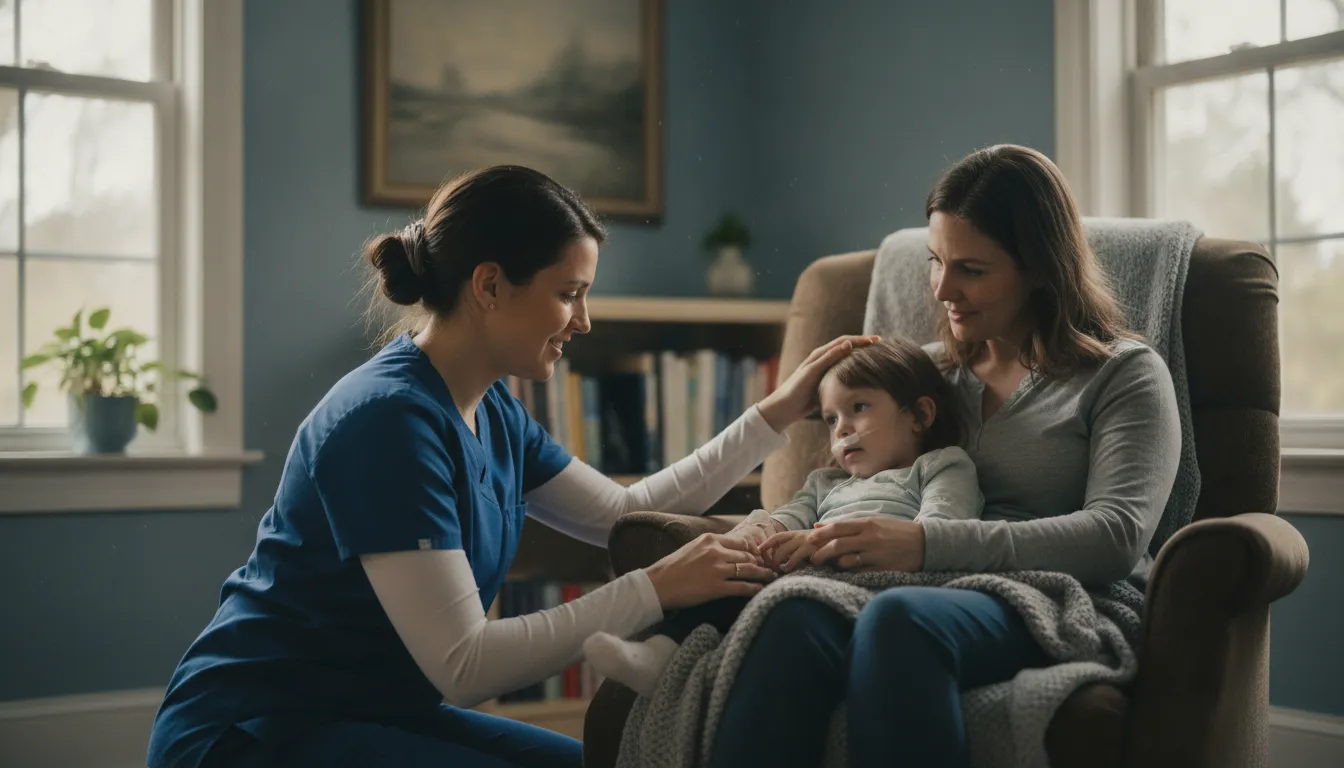
When a child needs hands-on help with breathing, feeding, seizure monitoring, or complex medications, families may wonder whether nursing support at home should extend beyond occasional visits. The right level of care depends on the child’s clinical needs, home situation, physician guidance, and any applicable authorization.
24 hour pediatric nursing care may be considered when a medically fragile child needs skilled monitoring or treatment throughout the day and night, but it is not automatic. In Georgia, GAPP may support eligible children under 21 who meet program requirements and medical-necessity criteria. A nursing agency can discuss needs and help organize an individualized plan, while Medicaid and the designated review process determine eligibility and authorization.
Understanding what around-the-clock skilled support involves can help families prepare for a more focused conversation about safety, routines, and clinical oversight at home.
What Does 24 Hour Pediatric Nursing Care Mean?
24 hour pediatric nursing care describes a possible level of in-home skilled support for a child whose medical needs may require nursing attention throughout the day and night. It does not automatically mean that 24 hours will be approved, staffed, or appropriate. A child’s physician orders, medical needs, program requirements, and authorization review help determine whether continuous support may fit the situation.
How Is Skilled Nursing Different From Routine Supervision?
Skilled nursing involves clinical tasks that require appropriate training, assessment, and judgment. Depending on a child’s individualized plan, care may include tracheostomy care, suctioning, ventilator support, oxygen management, G-tube feeding, medication administration, or seizure monitoring. These tasks can involve recognizing changes in a child’s condition and responding according to established clinical instructions.
Routine supervision is different. It may involve watching a child, helping with ordinary daily activities, or providing companionship. But it does not replace nursing care when a child needs clinical monitoring or intervention. Some families need a combination of skilled nursing and personal care support. The right mix depends on the child’s assessed needs and the services authorized for that child.
| Skilled nursing support | Routine supervision |
|---|---|
| Provides clinical monitoring or treatment within an individualized plan. | Provides ordinary supervision, companionship, or daily-activity help. |
| May include airway, feeding-tube, medication, oxygen, or seizure-related tasks when authorized. | Does not replace nursing assessment or clinical intervention. |
| Requires appropriate training, care coordination, and clinical oversight. | May be one part of broader family support, depending on the child’s needs. |
What Can a Continuous Schedule Look Like?
Service hours may range from a limited schedule to continuous care when medical necessity supports that level and the required authorization is granted. The phrase “24 hour” should therefore be understood as a potential care schedule, not a guarantee. It also does not mean that every task requires a nurse or that a family has no caregiving role.
For Georgia families, understanding the difference between general home support and clinical nursing can make conversations with healthcare professionals and agencies more productive. Learn more about pediatric home health care in Georgia, including how individualized planning can support children with complex medical needs. An agency discussion can clarify possible services, but Georgia Medicaid and program reviewers make the formal eligibility and authorization determinations.
What Signs Suggest a Child May Need Continuous Nursing Support?
A child may need more intensive in-home skilled nursing when daily care involves frequent clinical decisions. Specialized equipment, or interventions that must be performed safely throughout the day and night. These signs do not diagnose a need for 24 hour pediatric nursing care, and no single condition guarantees eligibility. A child’s medical history, current needs, physician orders, and formal medical-necessity review all matter.
Respiratory needs that require close monitoring
Respiratory support can create a need for consistent skilled attention, especially when a child has a tracheostomy, uses a ventilator, or depends on supplemental oxygen. Frequent suctioning may be needed to help manage airway secretions. A child with aspiration risk may also require careful observation during and after feeds because material entering the airway can cause serious complications. The care team may consider how often interventions occur, how quickly the child’s condition can change, and what training caregivers need to respond appropriately.
Feeding, medication, and neurological complexity
Feeding tubes, such as a G-tube, can require an organized routine for feeding, site care, flushing, and observation for changes. Complex medication schedules may involve multiple medicines, precise timing, or monitoring for side effects. Seizure monitoring can require caregivers and nurses to recognize a child’s typical pattern, follow the prescribed response plan, and document episodes for the clinical team.
Multiple chronic conditions can increase the coordination required at home. For example, a child may have respiratory support needs alongside a feeding tube, seizure disorder, and medication routine. In these situations, an RN-led assessment can help organize the child’s needs into an individualized Model of Care rather than treating each task separately. Greater Living Home Care provides clinical coordination and oversight as part of its in-home pediatric nursing approach.
Family safety and changing care needs
Families should also tell the care team when needs have become difficult to manage safely, when interventions occur unexpectedly, or when a child’s condition has changed. These concerns do not determine coverage or a schedule by themselves, but they provide important context for an assessment. A licensed clinician can help the family discuss the child’s needs, while Georgia Medicaid and GAPP reviewers make eligibility, medical-necessity, and authorization decisions.
How Do Georgia Medicaid and GAPP Shape 24 Hour Pediatric Nursing Care?
For Georgia families exploring 24 hour pediatric nursing care, Medicaid and the Georgia Pediatric Program (GAPP) may be part of the eligibility and authorization conversation. GAPP serves eligible children under 21 who are medically fragile and need medically necessary skilled nursing and/or personal care support. The program’s criteria focus on the child’s documented medical needs, not simply the number of hours a family requests.
What does GAPP consider?
The Georgia Department of Community Health fact sheet explains that members should be receiving physician-ordered services to be considered for GAPP. A physician’s orders and supporting clinical information help describe why skilled care may be medically necessary in the home. This documentation does not guarantee approval, a specific schedule, or continuous coverage. A designated review process makes the medical-necessity and prior-authorization determinations.
GAPP services require prior authorization, and requests must be submitted through a Medicaid-approved GAPP nursing agency. Families can learn more about Georgia Medicaid in-home nursing coverage, including the role of medical necessity and authorization, before discussing their child’s situation with an agency.
How does an agency support the process?
A qualified agency can help organize the intake conversation, review the child’s documented care needs, and explain which information may be needed for a request. Greater Living’s GAPP in-home nursing service information describes care planning for eligible children and coordination with families. The agency conversation is separate from Medicaid enrollment and program approval, so families should treat any proposed hours as subject to clinical review and authorization.
Depending on medical necessity and authorization, service hours may range from limited scheduled support to continuous care. The approved schedule must reflect the child’s needs and the program’s determination. Asking about physician orders, required records, review steps. And what happens if needs change can help a family plan without assuming that a particular level of care will be approved.
How Is a Safe In-Home Nursing Plan Built?
A safe plan begins with a clear understanding of the child’s medical needs, daily routines, and home environment. Families can describe what happens during a typical day, which tasks require skilled nursing, and where care becomes difficult or unsafe to manage alone. This discussion helps the clinical team determine what information requires closer review. It does not, by itself, establish Medicaid eligibility, medical necessity, or authorization for 24 hour pediatric nursing care.
Starting With Assessment and Family Input
Greater Living Home Care describes a process that may include an initial needs discussion followed by an in-home visit. During the assessment, the care team can review factors such as respiratory support, suctioning, oxygen management, G-tube feeding, medication administration, seizure monitoring, and other condition-specific needs. The purpose is to understand how these needs affect the child’s safety and routine, rather than to fit every family into a standard schedule.
Parents and guardians contribute important information that clinical records may not show. They can explain the child’s communication cues, usual sleep and feeding patterns, equipment routines, known triggers, and the practical support needed during school, appointments, or overnight hours. That context helps the agency coordinate care around the child and family while keeping clinical requirements central.
Documenting Care and Coordinating the Team
After the needs review, RNs help develop an individualized Model of Care plan. It can describe the skilled tasks to be performed, relevant precautions, communication expectations, and the responsibilities of the people involved in the child’s care. The plan should be understandable to the family and usable by the nursing team. Greater Living’s RNs provide care coordination and clinical oversight rather than simply matching a family with an independent nurse.
Family communication continues after the plan is created. Families may share changes in symptoms, equipment, routines, or caregiver concerns so the clinical team can determine whether the plan needs review. Supervisory nurses may conduct home visits to review care-plan adherence and support communication among caregivers and clinicians. Nursing schedules follow assessed medical necessity and the hours authorized through the applicable program. A plan should therefore be discussed with the agency and reviewed through the Georgia Medicaid and GAPP authorization process. Not treated as a guarantee of a particular schedule or staffing arrangement.
What Should Families Ask Before Choosing Pediatric Nursing Care?
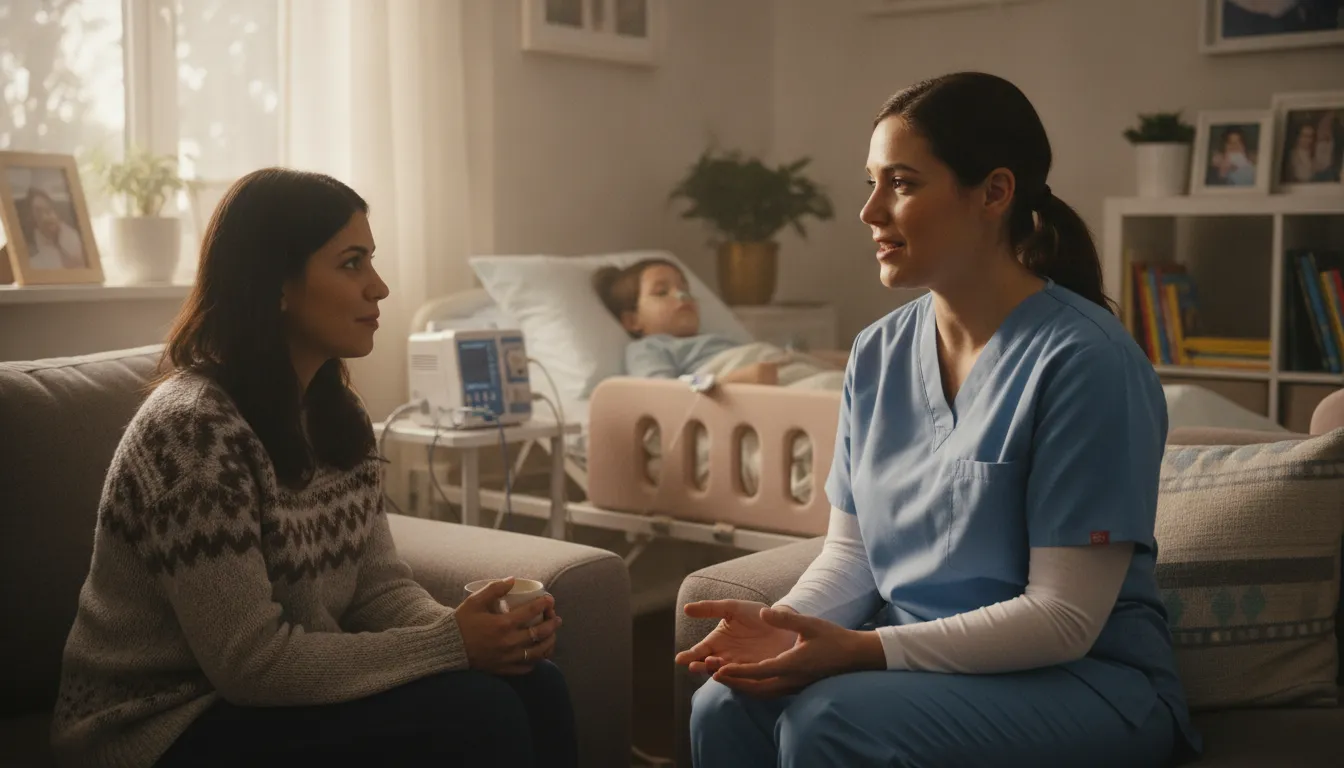
A careful conversation with a pediatric home nursing agency should help you understand how clinical needs, family routines, and authorization requirements fit together. The goal is not to secure a promised schedule. It is to determine whether the agency’s clinical approach is appropriate for your child’s needs and whether 24 hour pediatric nursing care may be considered through the applicable review process.
Questions about clinical experience and oversight
- Which pediatric skills match my child’s needs? Ask whether the clinical team has experience with tracheostomy care, suctioning, ventilator support, oxygen management, G-tube feeding, medication administration, or seizure monitoring when those needs apply. Ask how competency is assessed and updated, rather than assuming that every nurse handles every type of care.
- Who develops and supervises the care plan? Find out whether an RN evaluates your child’s needs, coordinates care, and helps develop an individualized Model of Care plan. Ask how supervisory nurses review care-plan adherence and how changes are documented after a child’s condition or routine changes.
- How will communication work at home? Clarify who your family contacts with questions, how concerns move to the clinical team, and how caregivers participate in planning. Ask how the agency communicates with physicians, therapists, school personnel, or other members of the child’s care team when coordination is needed.
- How are authorization and service hours handled? Ask what information the agency needs to discuss potential services and what role physician orders, Medicaid enrollment, medical-necessity review, and prior authorization may play. A conversation with an agency is not the same as a formal Georgia Medicaid or GAPP determination. So ask which decisions belong to the program or its designated reviewers.
- How does the agency approach continuity? Ask how care is coordinated across shifts, how important clinical information is shared, and how the team responds when a plan needs revision. No agency should promise uninterrupted staffing or a specific number of hours before the child’s needs and authorization are reviewed.
Families comparing providers may also find this guide to choosing a pediatric home health agency useful. Bring your child’s current diagnoses, equipment information, medication list, and questions to the discussion so the agency can focus on an accurate, individualized assessment.
Frequently Asked Questions
Does 24 hour pediatric nursing care mean a nurse is present every hour?
Not necessarily. A continuous schedule may be considered when a child’s medical needs require skilled monitoring or intervention. But the authorized hours and schedule depend on medical necessity and the approved plan. Families should distinguish clinical nursing coverage from routine childcare.
Who may qualify for Georgia Medicaid GAPP nursing support?
GAPP serves eligible Georgia Medicaid members under age 21 who are medically fragile and need medically necessary skilled nursing or personal care support. Eligibility is not automatic, so a child’s care needs, enrollment, physician orders, and program criteria must be reviewed. Georgia DCH explains GAPP eligibility.
Does GAPP automatically approve a 24-hour schedule?
No. GAPP services require prior authorization, and requests must be submitted through a Medicaid-approved GAPP nursing agency. The review determines whether requested services and hours are medically necessary, so contacting an agency does not guarantee approval or a specific schedule.
What information should families gather before requesting an assessment?
Gather current physician orders, diagnoses, medication information, equipment details, recent changes in care, and examples of tasks that require skilled support. Include questions about respiratory care, feeding tubes, seizure monitoring, or safety concerns. This information helps the clinical team understand the child’s daily needs.
Can nursing hours change as a child’s needs change?
They may, but any change typically requires clinical review and authorization under the applicable program. Families can discuss changes in symptoms, equipment, school routines, caregiver capacity. Or safety needs with the child’s medical team and nursing agency, then ask what documentation and review steps are required.
Ready to Discuss Your Child’s Nursing Needs?
Understanding your child’s clinical needs, daily routines, and potential care options can help your family plan a thoughtful next step. Contact Greater Living Home Care to discuss your child’s needs and possible next steps, or call (912) 446-5838. A conversation with the care team does not guarantee Medicaid or GAPP approval, but it can help clarify questions about assessment, care coordination, and the authorization process.
