RN vs LPN vs CNA Home Health
RN vs LPN vs CNA pediatric home health roles differ by clinical responsibility, training, and the child’s authorized plan. RNs assess and coordinate care, LPNs provide assigned skilled nursing, and CNAs or PCAs generally support personal care and daily routines. The right combination depends on medical needs, physician orders, staff qualifications, and Georgia Medicaid GAPP authorization.
Talk with Greater Living Home Care at (912) 446-5838 about your child’s care needs.
RN vs LPN vs CNA Pediatric Home Health: What Each Role Provides
In pediatric home health, an RN generally leads assessment, care planning, and clinical oversight. An LPN may provide ordered skilled nursing, while a CNA or PCA may assist with daily living. Greater Living Home Care connects each assignment to the child’s plan, qualifications, physician direction, and authorized services.
This guide explains what each role may contribute and how the roles can work together. It is educational information, not a promise of eligibility, hours, staffing, approval, or a specific staff mix. Families should confirm the child’s current orders and authorized services with the care team.
For a broader explanation of program and agency considerations, read our guide to pediatric home health care in Georgia. You can also review the Georgia Pediatric Program service information before speaking with an agency.
How Do RN vs LPN vs CNA Pediatric Home Health Roles Differ?
RN vs LPN vs CNA pediatric home health roles differ mainly in scope and responsibility. RNs assess and coordinate, LPNs deliver assigned skilled nursing, and CNAs or PCAs support personal care. Greater Living Home Care uses the child’s orders, care plan, qualifications, and GAPP authorization to guide assignments.
Job titles provide a starting point, but they do not answer every family question. A child’s condition may require clinical assessment, direct nursing interventions, personal care, or several kinds of support in the same home. The care plan should identify what needs to happen, who may perform each task, who provides supervision, and how changes are reported.
| Role | Typical contribution | Assignment is guided by |
|---|---|---|
| RN | Assessment, care planning, coordination, clinical oversight, and complex nursing when ordered. | Child’s condition, physician orders, care plan, qualifications, and authorization. |
| LPN | Direct skilled nursing, monitoring, treatments, documentation, and communication. | Assigned duties, license, training, supervision, orders, and authorized care. |
| CNA | Personal care, daily living assistance, and permitted delegated support. | Training, delegation, supervision, care plan, and Georgia requirements. |
| PCA | Daily activities, comfort, supervision, and non-clinical personal support. | Personal care needs, training, care plan, and authorized services. |
The distinctions are not a ranking of one professional over another. A nurse is not automatically the best choice for every task, and a personal care worker is not a substitute for skilled nursing. The safest assignment is the one that matches the child’s needs and the worker’s permitted responsibilities.
Why the care plan matters more than the title
The written plan connects the child’s needs to daily care. It can describe routines, ordered treatments, equipment, safety concerns, communication expectations, and escalation steps. It should also make clear which duties require licensed nursing and which tasks involve personal care. When a child’s condition changes, the clinical team may need to reassess the plan rather than simply add tasks to an existing shift.
Families should ask for plain-language explanations. Which tasks require an RN or LPN? Which activities can a CNA or PCA perform? Who reviews documentation? Who should the family call if breathing, feeding, alertness, comfort, or mobility changes? Clear answers help families understand the service without assuming that a particular role or number of hours is guaranteed.
What Does an RN Do in Pediatric Home Health?
An RN in pediatric home health assesses the child’s condition, develops or reviews the Case Model of Care, coordinates with the family and physician, and provides clinical oversight. At Greater Living Home Care, the RN-led process connects daily observations with changing needs and authorized services.
A registered nurse brings clinical judgment to the home setting. The RN may review medical history, physician orders, current treatments, equipment, routines, caregiver concerns, and warning signs. This broad assessment helps the team distinguish between needs that call for licensed nursing and needs that call for personal care support.
RN assessment and care planning
An RN may assess a child who has a tracheostomy, oxygen dependence, ventilator support, a feeding tube, aspiration risk, frequent suctioning needs, or another complex condition. The assessment does not turn every home activity into a nursing task. Instead, it helps the team identify risks, ordered interventions, supervision needs, and practical routines that the family and caregivers can follow.
The RN can help develop or update a Case Model of Care. A useful plan is specific about the child’s routine and safety needs while remaining open to clinical review. Parents and guardians contribute important information because they know the child’s usual breathing, feeding tolerance, communication, comfort cues, and behavior.
RN coordination and clinical oversight
Coordination keeps the family, physician, nurses, and agency connected. The RN may review care notes, communicate relevant observations, explain next steps, and help the team respond when a child’s condition changes. Supervisory oversight also creates a process for reviewing whether care is being delivered according to the plan.
Greater Living Home Care’s positioning is different from a service that merely matches a family with an independent worker. Its RNs directly handle care coordination, Case Model of Care planning, and clinical oversight. Families should still ask what supervision process applies to their child’s specific plan, because services and assignments depend on authorization and clinical need.
Parent question: Does the RN replace my child’s doctor?
Answer: No. The RN provides in-home nursing assessment, coordination, and oversight. The child’s physician remains responsible for medical direction and physician-ordered services. GAPP authorization and medical necessity also shape what may be provided at home.
What Does an LPN Do in Pediatric Home Health?
An LPN may provide hands-on pediatric skilled nursing under an established plan when the child’s orders, authorization, training, and scope of practice support the assignment. The LPN documents care and reports observations to the supervising clinical team. An LPN does not replace RN assessment or physician direction.
A licensed practical nurse often provides direct care as part of a coordinated team. The LPN follows the established plan and works within the LPN’s license, training, agency procedures, and assigned duties. The exact responsibilities are child-specific. A task that fits one child’s orders may not fit another child’s plan.
Examples of LPN responsibilities
When included in the authorized plan and permitted by applicable requirements, an LPN may:
- Monitor breathing, alertness, comfort, skin condition, feeding, or other health indicators.
- Provide ordered medications or treatments when permitted and properly trained.
- Support feeding-tube routines, oxygen support, suctioning, or other ordered interventions.
- Record care delivered and observations that help the team identify changes.
- Report concerns to the RN, family, physician, or agency contact under established procedures.
This list is not a universal task list. The child’s orders, plan, staff qualifications, supervision, and applicable Georgia requirements control the assignment. A responsible agency should explain those boundaries before care begins and provide a clear way for the family to raise a concern.
How LPN care connects to RN oversight
LPN care is most effective when it connects to a larger clinical process. The RN can review the child’s needs, coordinate with the physician and family, and provide oversight. The LPN can share observations from daily care. That feedback may show a change in tolerance, a new symptom, or a reason for reassessment.
Families should ask who is available when an LPN identifies a change. They can also ask how the agency documents missed care, urgent concerns, hospital discharges, and new physician orders. These questions do not predict a specific staffing arrangement, but they help the family evaluate communication and continuity.
Parent question: Is an LPN always the right nurse for my child?
Answer: Not always. An LPN may be appropriate when the child’s authorized needs match the LPN’s qualifications and assigned duties. The supervising RN, physician-directed plan, medical necessity, and applicable requirements help determine whether an LPN, RN, or combination is suitable.
What Do CNAs and PCAs Provide at Home?
CNAs and PCAs generally assist with personal care and daily activities, including hygiene, positioning, mobility, meals, comfort, and supervision. They do not substitute for licensed nursing when a child needs clinical assessment, medication administration, airway care, or another skilled intervention. The care plan defines each assignment.
Certified nursing assistants and personal care assistants can support daily routines for children and caregivers. Their work generally focuses on personal care, comfort, supervision, and activities of daily living rather than independent nursing assessment or clinical decision-making.
Common personal care and daily living support
Depending on the child’s plan and the worker’s training, a CNA or PCA may assist with:
- Bathing, dressing, grooming, and other hygiene routines.
- Positioning, mobility, transfers, and comfort measures.
- Meals or routine support related to daily activities, as permitted by the plan.
- Supervision, companionship, and age-appropriate activities.
- Practical support that helps the family maintain an organized home routine.
A CNA may have training that supports specific delegated duties, while a PCA generally focuses on non-clinical personal care. Neither title alone tells a family what a worker may do for a particular child. Training, supervision, delegation, the written plan, and Georgia requirements must guide the assignment.
When personal care is not enough
Some needs require licensed nursing judgment. Tracheostomy care, ventilator or breathing-machine support, feeding-tube management, frequent suctioning, medication administration, and monitoring for clinical changes may require an RN or LPN when ordered and authorized. A CNA or PCA should not substitute for a nurse when the child’s needs call for skilled nursing.
Families can ask three practical questions: Which tasks require a licensed nurse? Which tasks are personal care? Who supervises the team if the child’s condition changes? For added context, read about skilled nursing versus personal care for children with disabilities in Georgia.
How Does RN vs LPN vs CNA Pediatric Home Health Support GAPP Care?
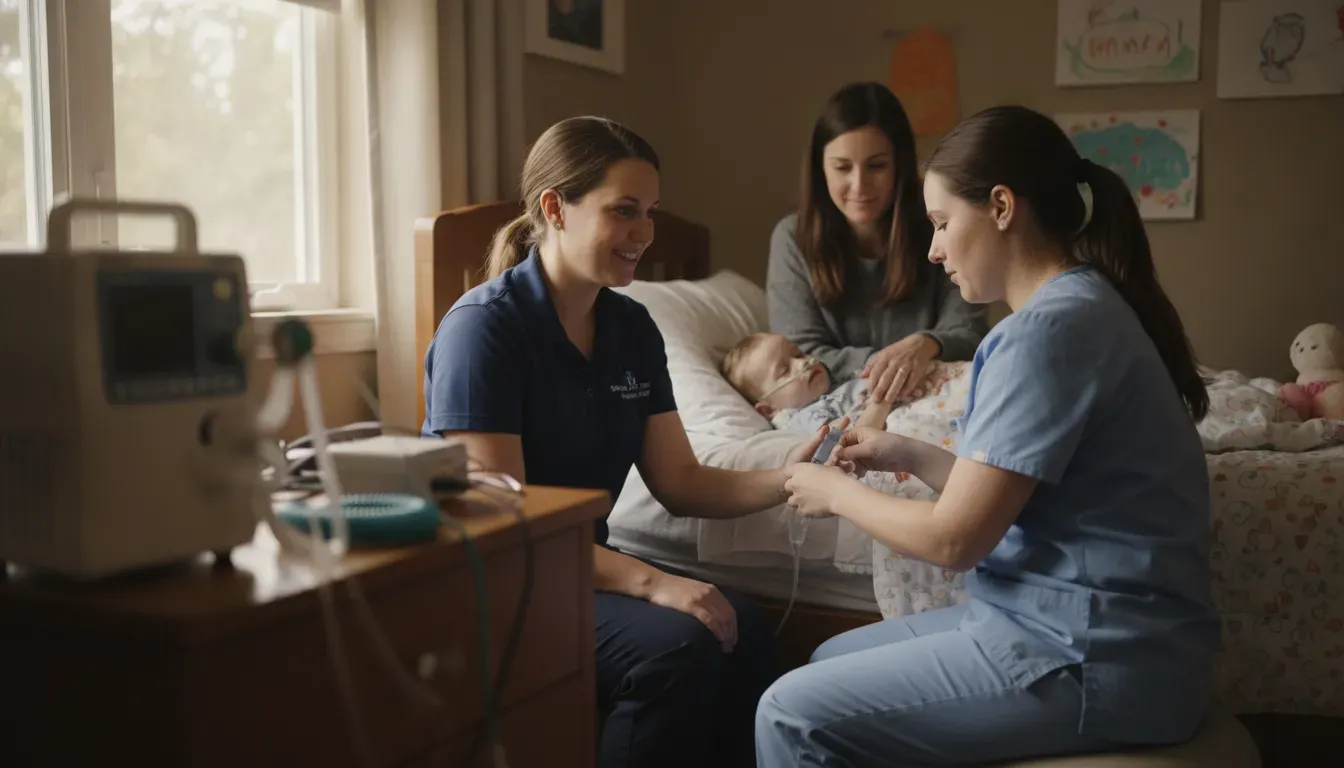
A coordinated pediatric home health team assigns responsibilities according to the child’s condition, physician orders, care plan, authorized services, and staff qualifications. An RN may oversee the plan, an LPN may deliver skilled care, and a CNA or PCA may support daily living. Greater Living Home Care coordinates these roles through an RN-led model.
Many children need a coordinated team rather than one professional doing every task. The combination should reflect medical complexity, daily routines, physician orders, authorized services, staff qualifications, and family needs. A clear division of responsibility reduces confusion for the child and the people providing care.
Questions to ask about team coordination
- Who completes the initial assessment and updates the Case Model of Care?
- Which tasks are assigned to the RN, LPN, CNA, or PCA?
- Who reviews documentation and communicates with the physician?
- Who should the family contact after a missed shift or change in condition?
- How will the agency communicate after a hospital discharge or new order?
- How are assignments adjusted when authorization or medical needs change?
Greater Living Home Care’s RNs coordinate care and provide clinical oversight rather than leaving families to manage every independent worker on their own. Families can learn more about in-home nursing for medically complex children when a child’s needs require continuous or highly coordinated support.
Which Staff Level Does My Child Need Under GAPP?
GAPP does not assign every child the same staff level. The authorized mix of RN, LPN, CNA, or PCA support depends on eligibility, medical necessity, physician information, clinical assessment, program rules, and prior authorization. Families should confirm approved services instead of assuming a preferred title guarantees coverage.
The Georgia Pediatric Program is designed for eligible children under 21 who have medically necessary skilled nursing needs, personal care needs, or both. A family cannot select a staff title and assume that GAPP will authorize the requested role. The clinical record and program review connect the child’s needs to the services that may be provided at home.
How clinical needs influence the proposed team
A child who needs clinical assessment, medication administration, tracheostomy care, ventilator support, feeding-tube care, or frequent suctioning may require skilled nursing. A child may also need help with hygiene, mobility, meals, positioning, or daily routines. One child may need an RN and LPN, another may need an LPN with personal care support, and another may need a different combination. The plan and authorization determine the appropriate arrangement.
Families should gather current physician information, diagnoses, treatment instructions, equipment needs, daily routines, and caregiver observations. They should describe what happens during a typical day and what changes require a nurse’s response. Specific information helps the clinical team evaluate needs without promising a particular result.
What GAPP authorization does and does not establish
Authorization connects documented needs to approved services. It does not mean that every requested hour, task, or professional title will be approved. It also does not replace the need for ongoing communication when a child’s condition changes. Families should ask which services and hours were actually authorized and who handles a request for reassessment.
For current program information, review the Georgia Pediatric Program guidance from Georgia Medicaid and the Georgia Pediatric Program fact sheet. Confirm eligibility and authorization through the appropriate Georgia Medicaid and GAPP process. An agency conversation cannot guarantee approval, hours, or a particular staff mix.
How Does GAPP Determine the Authorized Level of Care?
GAPP authorization connects documented medical needs with services that may be delivered at home. Physician information, clinical assessment, the proposed Case Model of Care, program requirements, and prior authorization all matter. The final plan, not a job title alone, determines the services and assignments a child may receive.
The authorization pathway is intended to make the proposed care specific to the child. Families can participate by sharing accurate records and describing the support required at home. The care team then uses that information to develop a plan and identify the clinical oversight needed for safe delivery.
A practical pathway for families
- Describe current needs. Gather diagnoses, treatments, equipment needs, daily routines, safety concerns, and caregiver observations.
- Review the Georgia Medicaid and GAPP framework. A screening conversation can identify questions to explore, but it is not final approval.
- Complete a clinical assessment. The clinical team considers risks, interventions, supervision, and the support needed at home.
- Develop the Case Model of Care. The proposed plan connects physician information and assessment findings to daily services.
- Submit for prior authorization. The appropriate review process determines which services and hours are authorized.
- Reassess when needs change. New equipment, a hospitalization, a new order, or a meaningful change in condition may require clinical review.
This process explains why the answer to “Which staff level does my child need?” is individual. The role is one part of a larger plan that includes medical necessity, orders, supervision, training, and authorization. Families should ask the agency to explain what is known, what is proposed, and what still requires approval.
To compare broader agency trust and coverage questions, read our guide to pediatric home health care in Georgia and review the Greater Living Home Care FAQ. Those resources can help families prepare for a focused conversation about services without treating general information as a clinical determination.
Frequently Asked Questions
Is an RN more qualified than an LPN for every pediatric home health task?
No. RNs and LPNs have different licenses, training, and responsibilities. An RN may lead assessment, planning, coordination, and oversight. An LPN may provide assigned skilled nursing when the child’s orders, authorization, training, and scope of practice support that work. The child’s plan determines the assignment.
Can a CNA or PCA provide skilled nursing care?
CNAs and PCAs generally provide personal care and daily living support. They should not substitute for a licensed nurse when a child needs clinical assessment, medication administration, airway care, or another skilled intervention. The care plan, training, supervision, delegation, and Georgia requirements guide what each worker may do.
Does GAPP guarantee that my child will receive an RN, LPN, CNA, or PCA?
No. GAPP authorization depends on eligibility, documented medical necessity, physician information, clinical assessment, program requirements, and prior authorization. Families should confirm which services and hours are authorized. A preferred staff title does not by itself establish coverage.
What should I ask a pediatric home care agency before services begin?
Ask who assesses the child, who develops the Case Model of Care, which tasks each staff level may perform. Who supervises the team, how changes are reported, and which services have been authorized. Also ask how the agency communicates with the family after a missed shift, hospital discharge, or change in physician orders.
