Scoliosis in Home Nursing Support Children Georgia: When Is It Needed?
Spinal fusion recovery, worsening curvature, and breathing problems can turn ordinary care at home into a complex clinical responsibility. If your child needs skilled monitoring after surgery or support for respiratory equipment, call (912) 446-5838 to discuss a family-centered care plan with Greater Living Home Care.
scoliosis in home nursing support children georgia may become appropriate when a child needs skilled nursing to manage post-surgical recovery, respiratory complications, feeding needs, or other high-acuity medical tasks that exceed routine caregiver support. Eligibility is not automatic: families must meet the clinical and financial requirements for the Georgia Pediatric Program through Georgia Medicaid.
Understanding the severity of your child’s condition, recent procedures, and daily medical needs can help your family discuss the right level of support with the care team. The first consideration is how the spinal condition affects safety, recovery, and ongoing clinical monitoring at home.
Scoliosis In Home Nursing Support Children Georgia: When Does It Become Severe Enough?
Scoliosis severity is not measured by the curve alone. A child may need in-home nursing when the spinal condition creates complex medical needs that require skilled monitoring. Treatment, or recovery support beyond what a family can safely provide without clinical help.
Children’s Healthcare of Atlanta reports that scoliosis affects about 3% of children. Curve size can help the medical team estimate risk: a thoracic curve below 30 degrees at skeletal maturity has a 0% likelihood of progression. While a curve greater than 60 degrees at skeletal maturity has a 100% likelihood of progression. These figures describe progression risk, not automatic nursing eligibility. The child’s symptoms, age, growth stage, respiratory status, functional limitations, and treatment plan also matter. Children’s Healthcare of Atlanta explains scoliosis and curve progression.
Clinical signs that may increase nursing needs
Home nursing becomes more relevant when scoliosis contributes to breathing difficulty, reduced mobility, feeding concerns, significant pain, or dependence on medical equipment. Kyphosis, an excessive forward curve of the spine, can create similar complications and may also require skilled support. After spinal fusion for scoliosis or kyphosis, children may need specialized post-surgical care, including pain management, wound observation, and respiratory monitoring.
The practical threshold is medical necessity. If a child needs recurring skilled interventions, close observation for complications, or coordinated care that exceeds routine supervision, an RN can assess whether in-home services are appropriate. At Greater Living Home Care, RNs develop an individualized Model of Care plan for high-acuity pediatric needs and coordinate care around the child’s orders and daily risks. Families can also review our guidance on high-acuity pediatric home nursing for examples of conditions that may require this level of support.
Post-Surgical Nursing Support for Children After Spinal Fusion
After spinal fusion for scoliosis or kyphosis, a child may need more than routine supervision at home. Pain control, incision care, mobility, and breathing all require close attention while the body heals. Greater Living Home Care provides skilled nursing after spinal fusion with clinical oversight designed around the child’s discharge instructions and changing needs.
Managing pain while supporting safe recovery
Enhanced recovery pathways for adolescent idiopathic scoliosis surgery use coordinated perioperative strategies to improve outcomes. Research also describes pre-emptive, opioid-sparing medication protocols that can reduce pain and shorten the hospital stay after posterior spinal fusion. At home, an RN follows the surgeon’s prescribed medication schedule, observes the child’s comfort and alertness, and communicates concerns promptly. Families should never change medication doses without direction from the surgical team.
Skilled nursing can help the child transition safely from hospital care to recovery at home. A nurse may reinforce positioning and activity instructions, watch for changes in pain that do not follow the expected pattern. And help caregivers understand when the surgeon needs to be contacted. The goal is not to replace the surgical team, but to extend coordinated clinical monitoring into the home.
Watching the incision and breathing
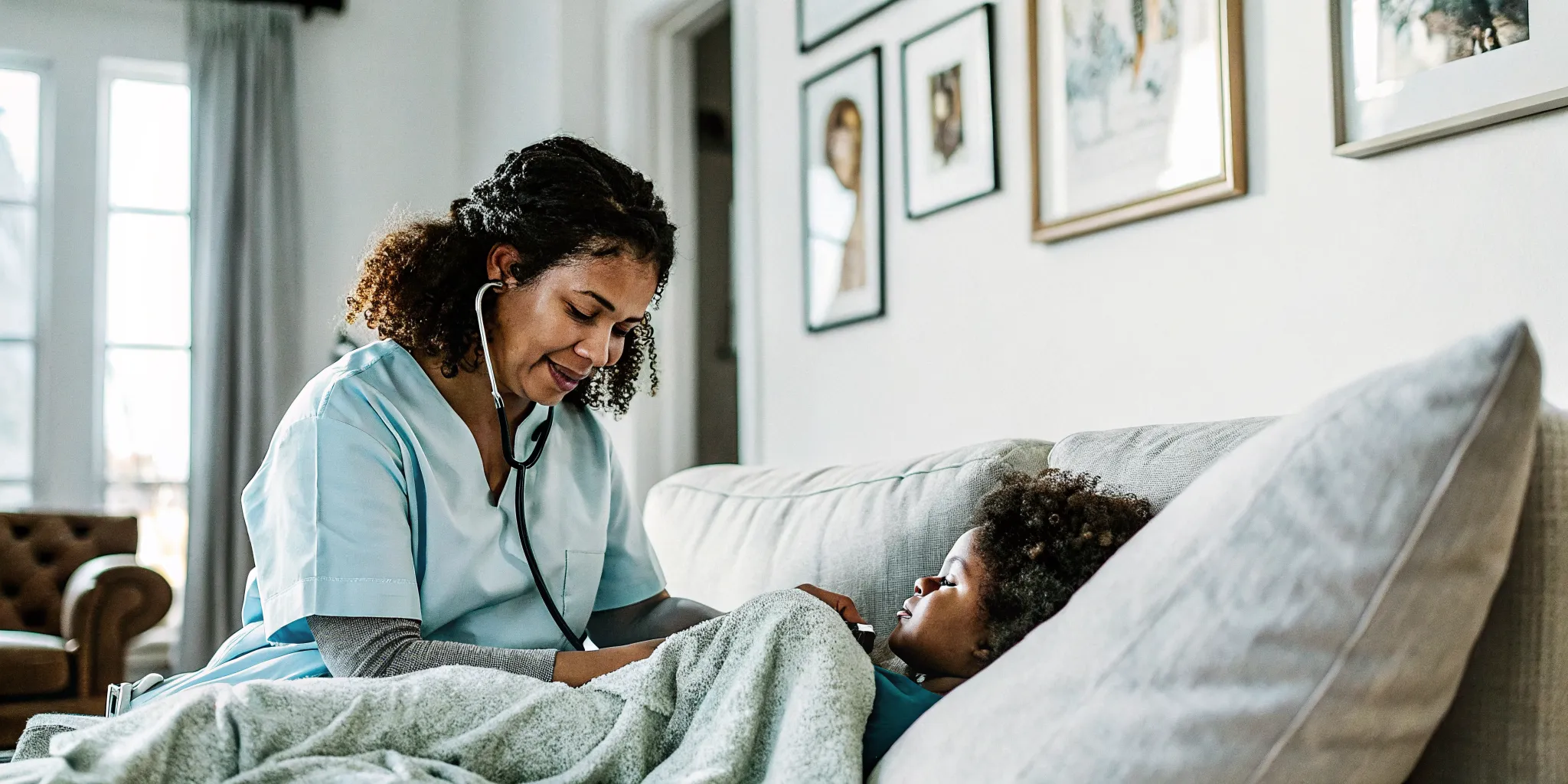
Post-spinal fusion care includes careful wound monitoring. An RN can inspect the surgical incision as directed, note redness, drainage, swelling, separation, or changes in temperature, and report findings to the appropriate clinician. The nurse also watches for respiratory complications, especially when pain, limited mobility, or the child’s underlying condition affects deep breathing. Greater Living’s pediatric nurses can monitor breathing and assist with prescribed respiratory equipment when those services are part of the child’s plan of care.
Greater Living’s RNs coordinate care through an individualized Model of Care plan. They communicate with parents, physicians, and the surgical team so changes are addressed early and discharge instructions remain consistent. For children who meet program and clinical requirements, skilled support at home may help make an earlier hospital discharge safer. While giving families professional guidance during a demanding recovery period.
If your child is recovering from spinal surgery or experiencing breathing difficulties related to scoliosis, skilled nursing support may help your family manage daily care with greater confidence. Call (912) 446-5838 to speak with Greater Living Home Care about your child’s individual needs and whether GAPP services may be a good fit for your family’s situation.
Respiratory Complications of Severe Scoliosis and Nursing Needs
As a spinal curve becomes more severe, especially in the thoracic spine, it can reduce the space available for the lungs. Children’s Healthcare of Atlanta reports that a thoracic curve greater than 60 degrees at skeletal maturity is 100% likely to progress. Progression does not determine a child’s exact respiratory needs, but it highlights why families and clinicians should monitor breathing closely as the chest and spine develop.
Children with severe scoliosis may experience restricted breathing, reduced oxygen levels, fatigue, ineffective cough, or difficulty clearing secretions. After spinal fusion or during a chronic respiratory illness, these concerns may require close observation at home. Nurses can monitor respiratory status, identify changes that require medical attention, and assist with prescribed respiratory equipment. This support helps families follow the child’s clinical plan while keeping care coordinated with the treating providers.
What respiratory support may involve
Depending on the child’s diagnosis and physician orders, skilled in-home nursing may include observing breathing patterns. Checking prescribed oxygen or other respiratory treatments, supporting airway-clearance routines, and documenting changes in symptoms. Some children with complex medical conditions also need ventilator management or feeding-tube care. These tasks require trained pediatric nurses who understand the child’s baseline status and can respond when that status changes.
Why individualized nursing oversight matters
Greater Living Home Care’s RNs develop an individualized Model of Care for each child, including children whose scoliosis creates high-acuity respiratory needs. The plan can address respiratory monitoring, equipment procedures, feeding support, communication with the family, and escalation instructions from the medical team. This is clinical oversight and care coordination, not simply matching a family with a caregiver. Families exploring nursing care for children with respiratory needs can speak with the agency about their child’s condition, current orders, and Georgia Medicaid or GAPP circumstances.
Does Scoliosis Qualify for GAPP Home Nursing in Georgia?
Yes, a diagnosis of scoliosis may support a GAPP evaluation, but scoliosis alone does not automatically establish eligibility. The Georgia Pediatric Program (GAPP), administered through Georgia Medicaid, considers whether a child has medically fragile or complex needs that require skilled nursing care. The focus is medical necessity, not whether a condition appears on a fixed diagnosis list.
For example, a child may need skilled support after spinal fusion surgery, including wound observation, pain-management support, or monitoring for respiratory complications. Another child may have severe curvature that affects breathing or requires help with daily medical tasks and respiratory equipment. These needs can provide important clinical context for an evaluation. The child’s physician and care team must document the level of care required, and an RN typically assesses medical and financial eligibility.
Families can review additional qualifying conditions for Georgia Pediatric Program to understand how medical necessity is considered across different diagnoses. That guidance can help parents prepare questions for the child’s provider, but it does not replace an individualized assessment.
| Clinical Scenario | Potential Skilled Nursing Needs | GAPP Evaluation Relevance |
|---|---|---|
| After spinal fusion surgery | Wound observation, pain management, respiratory monitoring, medication administration | High — post-surgical skilled needs are a standard medical necessity consideration |
| Severe thoracic curve with breathing difficulty | Respiratory monitoring, oxygen therapy support, airway clearance, ventilator management | High — respiratory equipment dependence qualifies under medical fragility criteria |
| Mild curve, no complications or recent surgery | Routine observation only | Low — does not establish skilled nursing need without additional medical complexity |
What an RN evaluates
Greater Living Home Care is a state-licensed Georgia agency serving children under 21. Its RNs review the child’s clinical needs and create an individualized Model of Care plan for high-acuity support. The assessment may consider the child’s diagnoses, treatments, functional needs, monitoring requirements, and the skilled tasks caregivers must manage at home. This clinical review helps determine whether GAPP services fit the child’s care plan.
What families may pay
For children who enroll and qualify, GAPP nursing services are provided through Georgia Medicaid with no out-of-pocket cost to the family. Eligibility and enrollment still require program review, so parents should not assume approval based on scoliosis alone. A focused evaluation can clarify whether the child’s post-surgical, respiratory, or daily medical needs meet GAPP criteria.
How to Request a GAPP Evaluation for Your Child with Scoliosis
Requesting an evaluation can give your family a clearer path toward skilled support at home. Greater Living Home Care is a state-licensed Georgia pediatric home healthcare agency serving children under 21. But GAPP eligibility must be confirmed through the required medical and financial review.
- Call Greater Living for an initial phone assessment. Begin with a free initial assessment. Share your child’s scoliosis diagnosis, current symptoms, treatment history, daily care needs, and any concerns after surgery or during recovery. The team can explain the next steps and the information needed for review.
- Schedule an in-home visit and needs evaluation. A clinical team member can learn how scoliosis affects your child’s mobility, comfort, breathing, positioning, personal care, and daily routines. Bring recent medical records, specialist recommendations, discharge instructions, and medication information to help describe the full level of need.
- Have an RN develop a custom Model of Care plan. Greater Living’s RNs assess medical and financial eligibility for GAPP and organize the clinical details into an individualized Model of Care plan. The plan should reflect your child’s actual needs rather than assume that every scoliosis case requires the same services.
- Submit the GAPP application with medical documentation. The agency helps move the application forward with supporting records from your child’s physicians and other providers. GAPP approval generally takes about 30 days, and no waiver is required, although the timeline can depend on complete documentation and program review.
- Begin caregiver matching after approval. Once approval is granted, Greater Living can begin coordinating appropriate in-home nursing support through in-home nursing support through GAPP. Care planning and coordination continue as your child’s needs change.
Frequently Asked Questions
Does Georgia Medicaid cover in-home nursing for children with scoliosis?
Some children may qualify for in-home skilled nursing through the Georgia Pediatric Program (GAPP), which is administered through Georgia Medicaid for medically fragile children under 21. Eligibility depends on both medical and financial criteria, so a diagnosis alone does not guarantee enrollment. GAPP services may be provided at no out-of-pocket cost to enrolled families. An RN can help assess whether your child’s needs fit the program.
What nursing care is needed after spinal fusion surgery for children?
After spinal fusion, a child may need skilled monitoring of the surgical wound, pain, mobility, medication response, and breathing. Nurses watch for changes that need prompt communication with the child’s medical team and follow the surgeon’s discharge instructions. The care plan should reflect the child’s procedure, respiratory status, equipment, and home routine rather than use a one-size-fits-all checklist.
Can home nursing help with respiratory issues related to severe scoliosis?
Yes. Depending on the child’s ordered plan of care, a nurse may monitor breathing, recognize changes, and assist with prescribed respiratory equipment. Pediatric home nursing can also support complex needs such as ventilator management or feeding tubes when those services are clinically ordered and within the nurse’s scope. New or worsening breathing difficulty requires prompt medical attention.
How do I qualify for GAPP services for my child with complex medical needs?
Start with an eligibility assessment that considers your child’s medical complexity and your family’s financial criteria. An RN typically helps evaluate those requirements and identify the documentation needed for the application. Ask the child’s physicians and care team to provide current records describing diagnoses, skilled tasks, equipment, and supervision needs. The final decision comes through the Georgia Medicaid and GAPP process.
Ready to discuss in-home nursing support?
A conversation with a qualified care team can help your family understand whether skilled support may fit your child’s recovery, respiratory needs, and daily care plan. To schedule a free in-home assessment, call (912) 446-5838. Greater Living Home Care can listen to your concerns and help you identify appropriate next steps for your child.
