How to find qualified pediatric home health nurse Georgia
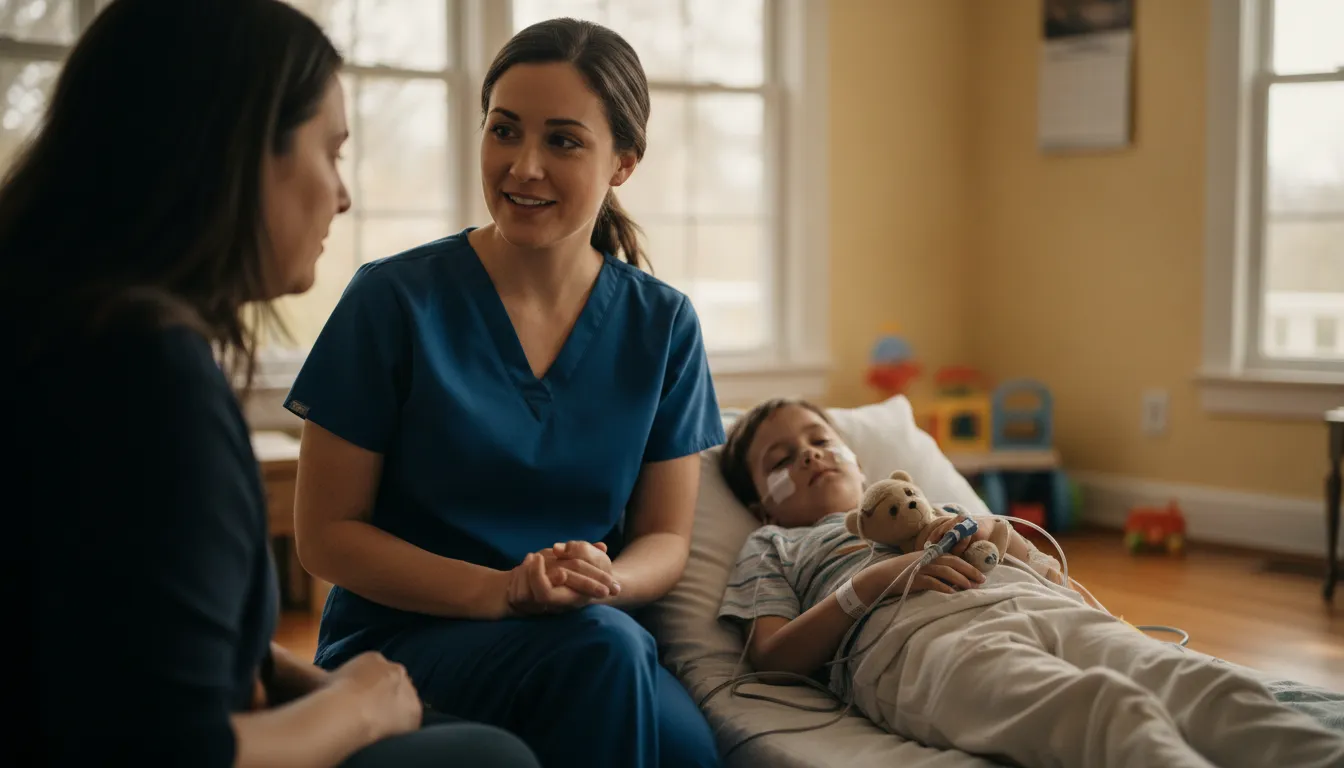
Choosing in-home nursing for a medically fragile child involves more than finding someone with a nursing license. Families need to verify pediatric experience, condition-specific skills, agency oversight, and the nurse’s ability to communicate clearly with caregivers and the child’s clinical team.
To find qualified pediatric home health nurse georgia, families should confirm an active Georgia RN or LPN license. Ask about hands-on experience with the child’s diagnoses and equipment. Also evaluate how the agency handles care plans, supervision, documentation, and coverage. Credentials matter, but they do not establish competence for every child’s needs. Georgia families should also confirm whether Georgia Medicaid and GAPP authorization requirements apply to their situation.
Contact Greater Living Home Care at (912) 446-5838 to discuss pediatric nursing support.
A thoughtful review can make the search more focused and help families ask practical questions before care begins. Start by examining the nurse’s qualifications, license status, and preparation for the specific level of pediatric care your child requires.
How Can You Find a Qualified Pediatric Home Health Nurse in Georgia?
Start by confirming that the nurse holds an active Georgia RN or LPN license. A license is a baseline requirement for professional nursing practice. And families should verify it through a primary source rather than relying only on a resume or verbal assurance. The review should also account for renewal status, continuing education, and any professional misconduct statements, as part of an ongoing credential-monitoring process. Greater Living Home Care identifies active Georgia RN or LPN licensure as a requirement for its nursing staff. Read the agency’s qualification guidance when comparing what to verify.
Verify credentials through the appropriate source
Ask the agency how it confirms a nurse’s license and how often it reviews staff credentials. A responsible process does not end when a nurse is hired. It includes tracking renewals and continuing education so the agency can identify when a credential needs attention. You can also ask which clinician supervises the nurse, how care-plan changes are communicated, and how documentation is reviewed. These questions help distinguish a documented clinical process from a simple referral or placement arrangement.
Look beyond the license to pediatric experience
RN or LPN status does not, by itself, show that a nurse is prepared for every child’s diagnoses, equipment, or care plan. Ask about hands-on pediatric experience that matches the care required at home. Depending on the child’s plan, relevant experience might include tracheostomy care, suctioning, ventilator or oxygen support, G-tube feeding, seizure monitoring, medication administration, or wound care. A G-tube is a feeding tube that delivers nutrition directly to the stomach, while a tracheostomy is an opening in the neck that supports breathing. The agency should be able to explain how the nurse’s experience aligns with the child’s actual needs without claiming that one nurse meets every possible need.
Families may also want to understand how the nurse works within the child’s individualized plan, communicates with caregivers and clinicians, and stays within the assigned scope of care. Home healthcare involves skilled clinical care delivered in the home, whether a worker is assigned through an agency or hired directly, as described by the CDC. For broader context on evaluating pediatric home health care in Georgia, consider the agency’s overview of services and care needs. The goal is not to find the most impressive list of credentials. It is to confirm active licensure, relevant preparation, clear supervision, and a practical fit for the child’s documented care plan.
Why Does Pediatric-Specific Training Matter for High-Acuity Care?
A pediatric nurse needs more than a general nursing license when a child has complex medical needs. Pediatric-specific competence includes understanding how a child’s diagnosis, equipment, developmental stage, communication style, and individualized care plan affect daily nursing decisions. Families looking for a qualified pediatric home health nurse in Georgia should ask about hands-on experience with the child’s actual needs. Rather than treating credentials alone as proof of fit.
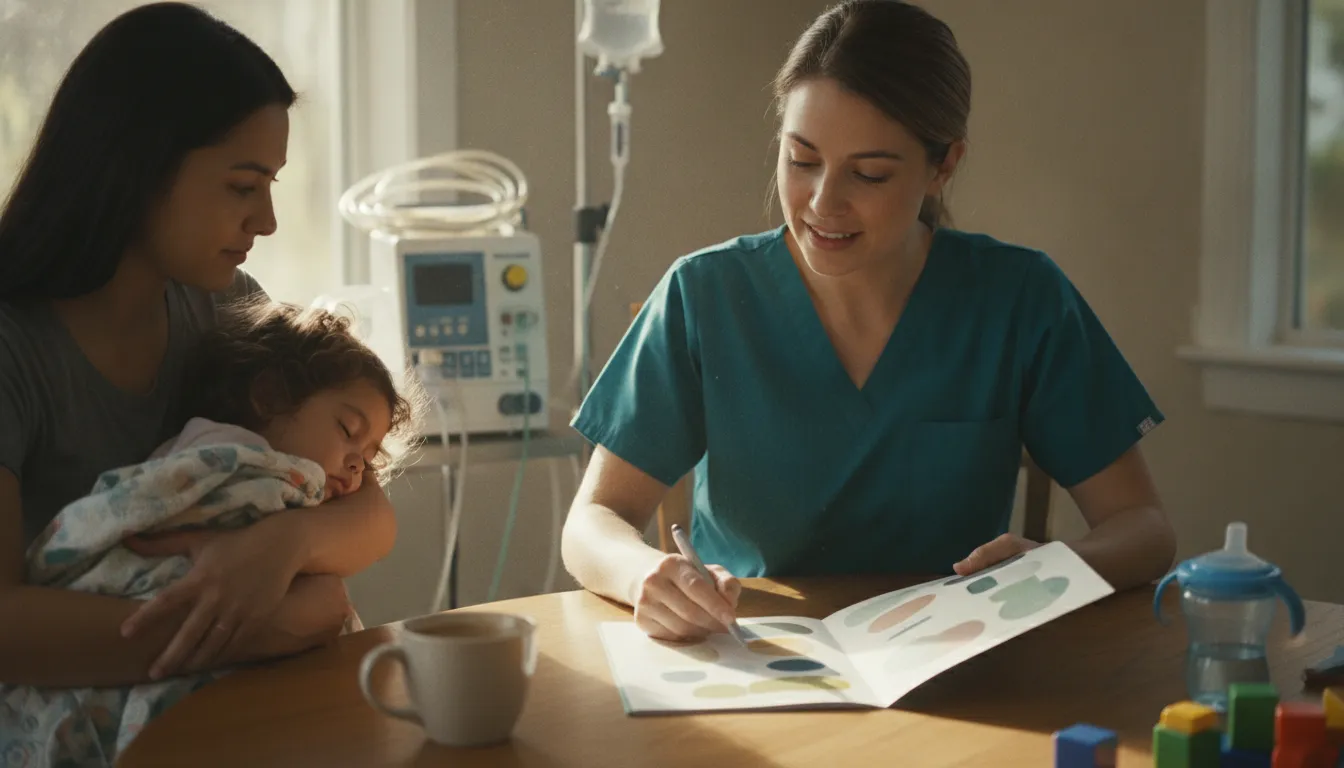
High-acuity care can involve a tracheostomy, an opening in the neck that supports a child’s airway; suctioning. Which removes secretions when the child cannot clear them effectively; oxygen therapy; or ventilator support, in which a machine assists breathing. It may also include aspiration risk, meaning food or liquid could enter the airway, along with frequent monitoring and careful communication with the child’s clinical team. These needs require training that is relevant to the specific equipment and care plan. The CDC describes home healthcare workers as providing skilled medical and clinical care in the home. Which underscores why families should verify the nurse’s practical preparation for home-based care (CDC home healthcare guidance).
Look for experience with the child’s full care picture
Respiratory needs are only one part of pediatric skilled nursing. A G-tube, or gastrostomy tube, delivers nutrition or medication directly to the stomach. A child may also need seizure monitoring, medication administration, or wound care. Ask whether the nurse has performed or supported these services in a pediatric setting and whether the experience matches the child’s diagnosis, equipment, and written instructions. The goal is not to test a nurse with a hypothetical emergency. It is to confirm that the agency can evaluate the child’s needs and assign staff whose training fits the authorized plan.
Families also carry substantial responsibility for healthcare and service coordination at home. Research describes care for children with serious illness as a complex system involving families, providers, insurers, and policymakers, while noting the extensive coordination families provide themselves (pediatric home-care research). A well-prepared nurse should communicate clearly, document care accurately, recognize when an observation belongs in the care team’s discussion. And respect the family’s role without stepping outside the plan or professional scope.
Training should connect to supervision and documentation
Ask how the agency confirms competency, updates training, reviews documentation, and supports nurses when a child’s needs change. Greater Living Home Care develops individualized care plans through medical staff and provides ongoing nursing supervision. Its model includes supervisory nurse home visits and nursing documentation, giving families specific areas to ask about when they compare agencies (Georgia Pediatric Program services). These safeguards do not guarantee a particular outcome, but they help connect pediatric training with accountable, coordinated care.
How Should Families Vet a Home Health Agency?
A qualified nurse matters, but the agency supporting that nurse also shapes the safety and consistency of care. Start by confirming that the organization is a licensed pediatric home healthcare agency in Georgia, not simply a placement service that introduces a family to independent clinicians. Ask who employs or contracts with the nurse, who is responsible for clinical decisions, and who you contact when your child’s condition or care needs change.
Confirm clinical oversight and an individualized plan
A responsible agency should explain how it develops a care plan around your child’s diagnoses, equipment, daily routines, and physician-directed needs. Ask whether medical staff participate in creating and updating the plan, how your family contributes, and how the agency coordinates with physicians and other clinicians. A plan should guide real care, not sit unchanged in a file.
Ask how supervision works after services begin. Useful questions include:
- Who reviews nursing notes and communicates changes to the family?
- How often does a supervisory nurse assess care in the home?
- What happens if a nurse has a question during a shift or cannot work?
- How are concerns, incidents, and changes in condition documented and escalated?
Greater Living Home Care describes individualized plans, ongoing nursing supervision, unannounced supervisory home visits, and extensive nursing documentation. Families should also ask how they can access care records and how private information is protected during communication. These details help distinguish direct clinical oversight from a referral-only model. Learn more about Georgia GAPP in-home nursing and the agency’s care approach.
| What to verify | Question to ask |
|---|---|
| Licensure. | How does the agency verify an active Georgia RN or LPN license? |
| Clinical oversight. | Who updates the care plan and reviews nursing documentation? |
| Family communication. | Who should the family contact when needs or schedules change? |
| Program fit. | Which services depend on Georgia Medicaid, GAPP, medical need, and authorization? |
Ask how the agency verifies staff
Do not treat a job title or brief introduction as proof that a nurse is prepared for every child’s needs. Ask the agency to confirm active Georgia RN or LPN licensure and explain how it verifies licenses through primary sources. Ask how it tracks renewals, continuing education, and professional conduct concerns. Then ask about hands-on pediatric experience with the specific care involved, such as tracheostomy care. Suctioning, ventilator or oxygen support, G-tube feeding, seizure monitoring, medication administration, or wound care.
Background checks should be part of the conversation, too. Ask what screening the agency completes before assigning staff, whether required credentials are current, and how screening is repeated or monitored. The goal is not to assume a particular process, but to receive a clear answer that you can evaluate.
Clarify Georgia Medicaid and GAPP authorization
If your family is exploring GAPP, ask the agency to separate enrollment and authorization from its own services. GAPP eligibility and authorization depend on Georgia Medicaid, medical need, and program review. Provider enrollment, certification, quality assurance, and program integrity fall under the Georgia Department of Community Health, while prior authorization and medical-necessity review are handled by Alliant Health Solutions. No agency should imply that an initial conversation guarantees approval, hours, or staffing. Confirm what documentation is needed, what has been authorized, and which questions must go to the program or reviewing entity.
What Questions Should You Ask Before Choosing a Nurse?
An interview should help your family understand whether a nurse’s experience fits your child’s diagnoses, equipment, routines, and care plan. Credentials matter, but they do not establish competence for every pediatric situation. Use the conversation to clarify clinical experience, communication, supervision, and how the agency will involve you.
- What experience do you have with my child’s diagnoses and daily care? Ask for specific, hands-on examples rather than a general statement about pediatric nursing. Depending on your child’s needs, discuss tracheostomy care, suctioning, ventilator or oxygen support, G-tube feeding, seizure monitoring, medication administration, wound care, aspiration risk, or complex medication regimens. Ask what training or competency review applies to each task.
- Which equipment and emergency situations are familiar to you? Confirm that the nurse understands your child’s equipment and knows how your family should communicate concerns. Ask who you contact during an urgent change, which situations require calling the physician or emergency services, and how the nurse documents and reports an incident. The agency should explain its communication process clearly without promising that every situation can be handled at home.
- How will my child’s care plan be created and updated? Ask who participates in developing the individualized plan, how physician instructions are incorporated, and when the plan is reviewed. Families should be able to describe their child’s routines, preferences, and goals. Family participation and coordination with physicians and other clinicians are important parts of home-based pediatric care. You can also review the agency’s pediatric home health FAQs for related questions.
- How are supervision and documentation handled? Ask whether a supervisory nurse reviews care in the home, how often oversight occurs, and what records the family can access. Greater Living’s model includes supervisory nurses conducting unannounced home visits and maintaining extensive nursing documentation. Families also have access to care documentation, with privacy and secure communication practices in place. Ask how updates are shared with you and the child’s clinical team.
- How do scheduling, family participation, and staffing changes work? Clarify expected hours, minimum shifts, arrival procedures, and how the agency communicates schedule changes. Ask what happens if the assigned nurse is unavailable, changes roles, or no longer fits the family’s needs. A responsible answer should describe the agency’s process without guaranteeing uninterrupted coverage or a particular replacement. Also ask how the family can provide feedback and request a care-plan review.
- How are qualifications verified? Ask whether the nurse holds an active Georgia RN or LPN license and whether the agency verifies credentials through primary sources. You may also ask how license renewals, continuing education, professional conduct information, background checks, and competency requirements are monitored. These questions help you understand the agency’s oversight instead of placing the entire burden on a single interview.
Write down the answers and compare them with your child’s actual needs. A qualified agency should welcome informed questions and explain what depends on medical necessity, Georgia Medicaid, GAPP authorization, and provider availability.
How Does Greater Living Home Care Support Nurse Matching?
Greater Living Home Care approaches nurse matching as part of clinical care, not as a simple referral or placement service. It is a state-licensed pediatric home healthcare agency serving families throughout Georgia. Its medical staff first develops an individualized care plan based on the child’s diagnoses, required services, equipment, and daily needs. That plan helps guide which nursing skills and level of support are appropriate.
The agency’s team includes registered nurses (RNs), licensed practical nurses (LPNs), certified nursing assistants (CNAs), and personal care assistants (PCAs). Nurses are expected to hold an active Georgia RN or LPN license, while CNAs and PCAs must meet applicable certification or training requirements. Credentials matter, but they do not establish competence for every child’s situation. Families should also ask about hands-on pediatric experience with the specific care involved. Such as tracheostomy care, suctioning, oxygen or ventilator support, G-tube feeding, seizure monitoring, medication administration, or wound care.
Matching clinical needs with family fit
Once the care requirements are understood, Greater Living matches qualified nursing staff according to the services needed, the child’s interests, and personality compatibility. This recognizes that in-home care takes place in a family’s daily environment. Communication style, comfort with the child’s routines, and the ability to work respectfully with caregivers can all affect whether a proposed match is practical for the household.
Families can review the agency’s Georgia GAPP in-home nursing information to understand how individualized planning and caregiver matching fit within its pediatric service model. GAPP and Georgia Medicaid eligibility or authorization are conditional. They depend on factors such as program requirements, medical need, and review, so families should not assume that a particular service, schedule, or nurse will be approved.
Ongoing oversight after a match
Matching is not the end of the process. Greater Living’s supervisory nurses conduct unannounced home visits, and the agency maintains nursing documentation related to care. Families have access to care documentation, while privacy protections and secure communication practices remain part of the agency’s model. This creates opportunities to identify questions, document changes, and keep care aligned with the individualized plan.
For families seeking pediatric nursing support anywhere in Georgia, this agency-based structure offers a way to evaluate more than a resume alone. Ask how the care plan is developed, who provides clinical oversight. How the nurse’s experience fits the child’s needs, and how communication will work with the family and medical team. Availability and services still require individual confirmation.
Frequently Asked Questions
What credentials should a pediatric home health nurse have?
Start by confirming an active Georgia RN or LPN license through a primary source. Then ask about continuing education, current clinical competencies, and hands-on experience with your child’s diagnoses, equipment, and care plan. A license is essential, but it does not by itself establish competence for every pediatric case.
How can I tell whether a nurse has the right pediatric experience?
Describe your child’s actual needs and ask for specific experience, not general assurances. Depending on the care plan, relevant examples may include tracheostomy care, suctioning, ventilator or oxygen support, G-tube feeding, seizure monitoring, medication administration, or wound care. Ask how the nurse would communicate changes to the family and supervising clinicians.
What should I ask a home health agency before starting care?
Ask who develops and updates the individualized care plan, how nurses are supervised, how documentation is maintained, and how the agency handles schedule changes or concerns. Also clarify whether the agency provides clinical oversight or simply refers families to independent nurses. Confirm that proposed services fit the child’s authorization and medical needs.
Can Georgia Medicaid or GAPP cover pediatric in-home nursing?
Some children may qualify for Georgia Pediatric Program services when they have Georgia Medicaid, a qualifying physical disability or medically fragile condition, and documented medical need. Eligibility and authorization require program review, so families should confirm the child’s specific coverage and approved services before assuming care will be funded.
Ready to Discuss Pediatric Nursing Support?
Choosing in-home skilled nursing is an important decision for your family. A conversation with Greater Living Home Care can help you review your child’s needs, discuss pediatric nursing support, and understand the next steps based on your family’s situation.
Contact Greater Living Home Care to get started, or call (912) 446-5838 to talk with our team.
