Pediatric Home Health vs Outpatient Therapy Georgia Guide
Pediatric home health vs outpatient therapy Georgia families may consider differ in purpose. Skilled nursing supports ongoing medical needs at home, while outpatient therapy targets specific functional goals. A child may need one or both, based on physician orders, medical necessity, and authorization. Review our guide to pediatric home health costs, insurance, and agency trust signals in Georgia, and call us today at (912) 446-5838 with questions about your child’s next step.
Call Greater Living Home Care at (912) 446-5838 to discuss your child’s in-home nursing needs with a care coordinator.
What Is Pediatric Home Health Care in Georgia?
Pediatric home health care is a group of medical and support services delivered where a child lives. In Georgia, the Georgia Pediatric Program (GAPP) can provide medically necessary skilled nursing and personal care support for eligible children under 21 who are medically fragile.
Nursing is ordered and authorized based on the child’s documented needs. It is not authorized simply because a family prefers care at home. Families can review the Georgia pediatric home health guide for broader context. They should then discuss the child’s specific needs with the ordering provider.
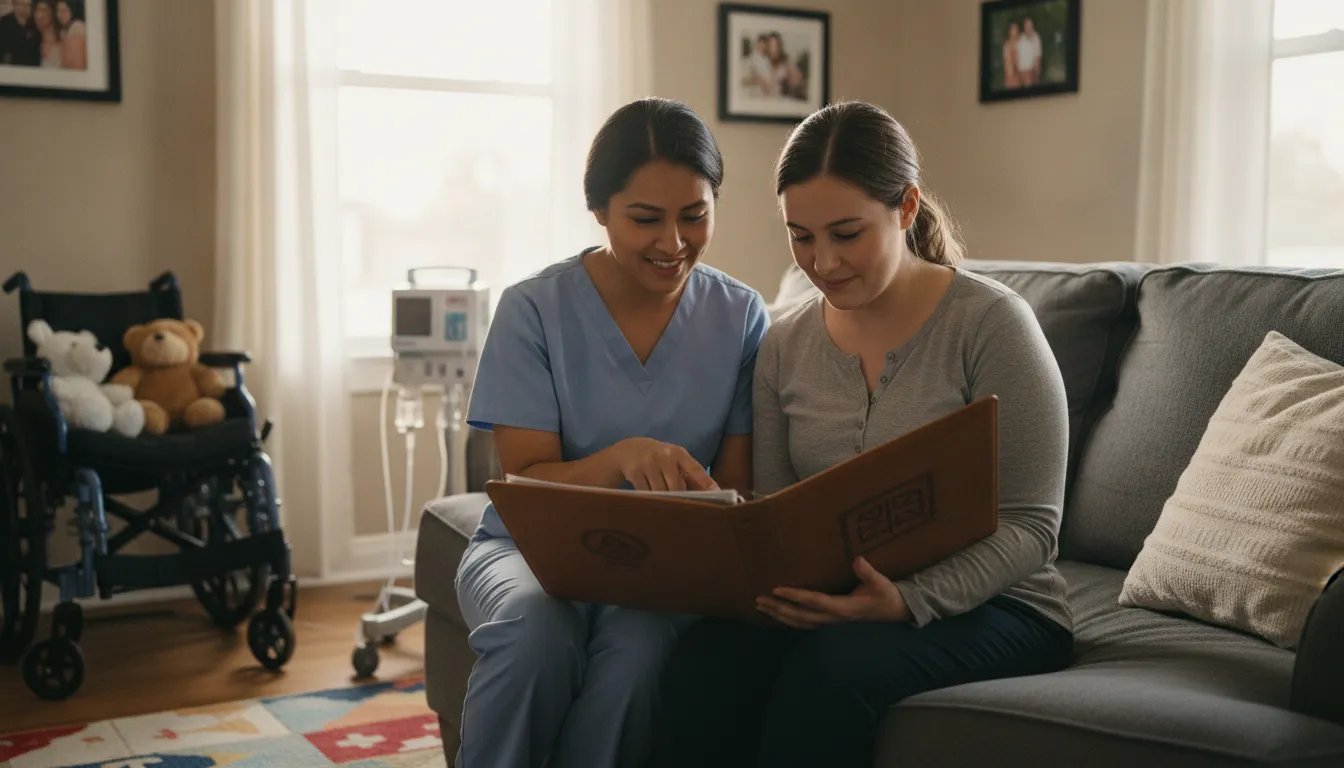
Greater Living Home Care provides private duty pediatric nursing through a coordinated agency model. Registered Nurses and Licensed Practical Nurses can provide clinical care under an individualized plan. They can communicate changes to the child’s care team and help families manage complex routines at home.
The Georgia Department of Community Health’s GAPP program overview explains that GAPP services require physician-ordered care, prior authorization, and submission through a Medicaid-approved GAPP nursing agency.
What can skilled pediatric nursing include?
The exact service plan depends on medical necessity and authorization. For a medically fragile child, skilled nursing may support needs such as:
- Tracheostomy care, suctioning, oxygen monitoring, or ventilator-related support.
- G-tube care, tube feeding, and observation for changes that require escalation.
- Medication administration and monitoring of complex care routines.
- Vital-sign checks, seizure observation, positioning, and documentation.
- Communication with parents, physicians, therapists, and other members of the care team.
These activities are not the same as a therapy session. A nurse’s role is to help maintain safety, manage medical needs, and carry out the authorized nursing plan.
The nurse does not replace a physical therapist, occupational therapist, speech-language pathologist, or feeding therapist.
What Is Pediatric Outpatient Therapy?
Pediatric outpatient therapy is skilled treatment provided by a licensed therapist to address a defined functional goal. Physical therapy may address movement and mobility. Occupational therapy may address fine-motor skills, self-care, or participation in daily routines.
Speech or feeding therapy may address communication, oral-motor function, or safe eating. Services can occur in a clinic. When a benefit and provider support it, they may sometimes be delivered in the home as outpatient care.
Therapy is organized around evaluations, measurable goals, treatment sessions, and progress reviews. A prescribing practitioner and the child’s therapy team determine whether the service is medically necessary and what plan of care applies.
Peach State Health Plan’s physical, occupational, speech, and feeding therapy policy describes the need for a prescription and signed plan of care. It also addresses qualified personnel and services that do not duplicate another therapy or care setting.
How Does Pediatric Home Health vs Outpatient Therapy Georgia Differ?
The simplest distinction is this: pediatric home health nursing addresses ongoing medical care and safety needs. Outpatient therapy addresses a specific functional or developmental goal.
The services may overlap in setting, but they do not have the same purpose, provider, authorization pathway, or daily responsibilities. A family should not choose based only on whether care happens at home.
| Question | Pediatric home health nursing | Outpatient therapy |
|---|---|---|
| Primary purpose | Provide skilled medical care, monitoring, and support with an authorized plan. | Improve, maintain, or assess a defined physical, occupational, speech, or feeding function. |
| Typical professional | Registered Nurse or Licensed Practical Nurse, with other authorized caregivers as applicable. | Licensed physical, occupational, speech-language, or feeding therapist. |
| Common setting | The child’s home, where the nurse can support the care routine and medical equipment. | Often a clinic, school, or therapy practice; home-based outpatient delivery depends on the benefit and provider. |
| Plan focus | Medical stability, daily skilled tasks, observation, and communication with the care team. | Functional goals, treatment activities, caregiver education, and progress toward therapy outcomes. |
| Authorization | GAPP or another applicable payer pathway, with physician documentation and medical-necessity review. | The child’s therapy benefit and payer rules, which may require a prescription, plan of care, and authorization. |
Terminology can be confusing because some therapy may occur in a child’s home. Home-based outpatient therapy is still therapy, not private duty nursing. Likewise, a nurse who supports a child during a therapy routine is not providing the therapist’s treatment.
Keeping these roles clear helps families ask the right questions. It also prevents families from expecting one service to perform the work of another.

When Does a Child Need Home Health vs. Outpatient Services?
A child may need home health nursing when medical tasks require licensed clinical judgment, repeated observation, or hands-on support during the day. A child may need outpatient therapy when a therapist must evaluate and treat a specific functional need.
The right combination depends on the child’s condition, orders, authorized benefits, current goals, and the care team’s assessment.
Signs a family may need skilled nursing support
- The child uses a tracheostomy, ventilator, oxygen, feeding tube, or other medical equipment.
- The child needs suctioning, medication administration, respiratory support, or frequent clinical observation.
- A physician has ordered skilled care because the child’s needs exceed routine supervision or basic personal care.
- The family needs an RN-led care plan and regular communication about changes in the child’s medical status.
- Daily care involves high-acuity routines that a nonprofessional caregiver cannot safely perform without training and oversight.
Signs a family may need outpatient therapy
- The child needs an evaluation or treatment plan for mobility, strength, balance, fine-motor skills, or positioning.
- The child needs help with communication, speech, feeding, swallowing, or participation in daily activities.
- The primary goal is measurable progress in a defined skill rather than continuous medical monitoring.
- A physician or other qualified practitioner recommends therapy and the therapist identifies goals that require skilled treatment.
- The child’s plan needs periodic reassessment to determine whether therapy should continue, change, or end.
These examples are not a diagnosis or a guarantee of coverage. A child’s physician and qualified care professionals should evaluate the actual need.
Families should also ask whether school-based services, hospital-based programs, a therapy clinic, Georgia Medicaid, or another payer already addresses the same goal.
Can a Child Receive Both Home Health and Outpatient Therapy Under GAPP?
Possibly. A child may receive skilled nursing through GAPP and therapy through a separate Medicaid or managed-care therapy benefit. Each service must be medically necessary, properly ordered, authorized, and directed toward a distinct need.
GAPP is designed around medically necessary skilled nursing and personal care support. It does not automatically replace outpatient physical, occupational, speech, or feeding therapy.
The important question is not whether a child receives two services. It is whether the services have clear, nonduplicative purposes. For example, a nurse may monitor a child’s medical status, carry out prescribed care, and share observations with the team, while a physical therapist works on transfers or mobility goals during a scheduled treatment session. The family, physician, nurse, and therapist should document how the services complement one another.
Authorization is never automatic. Benefit rules can differ by plan. Georgia Medicaid or a managed-care organization may review medical necessity, frequency, setting, and duplication.
Before starting or changing services, ask the ordering practitioner and each payer how the plans should be coordinated. Greater Living’s Georgia Pediatric Program in-home nursing page provides additional information about GAPP nursing and personal care. For cost and coverage questions, review our Georgia pediatric home health cost and insurance guide.
What Should Families Ask Before Starting Services?
Families can make the first conversation more productive by gathering the child’s current care information. Bring the physician’s contact information, recent hospital or specialist notes, medication details, equipment list, and any current therapy plans. These records help the care team understand the child’s daily needs without asking a parent to repeat every detail from memory.
Ask each provider what service it delivers, who orders it, which goals it addresses, and how progress or changes are documented. Ask whether the provider communicates with other members of the team when the child’s condition or schedule changes. Clear answers can reveal where responsibilities overlap and where a new referral may be needed.
Families should also ask the payer which benefit applies and whether prior authorization is required. A provider may explain its process, but Georgia Medicaid or the applicable managed-care plan determines covered services and authorization. Keep copies of referrals, plans of care, authorization notices, and contact names so the family can track the process.
These questions do not replace a clinical evaluation. They give parents a practical way to organize the next conversation and make sure nursing and therapy each serve a clear purpose.
How Can Families Coordinate Nursing and Therapy Services?
Good coordination gives each professional the information needed to support the same child without blending separate roles. Families can use this five-step approach:
- Start with the child’s physician. Ask which needs require skilled nursing, which needs call for therapy, and what documentation each referral should contain.
- Define the purpose of each service. Write down the nursing responsibilities, therapy goals, setting, frequency, and the professional responsible for each part.
- Share relevant information. With appropriate permission, provide current medication, equipment, safety, positioning, feeding, and communication information to the professionals who need it.
- Identify duplication risks. Ask whether a school, clinic, hospital, or home provider is already treating the same goal. A difference in location does not automatically make two services nonduplicative.
- Review changes promptly. Notify the physician, nurse, and therapist when the child’s condition, equipment, schedule, or goals change. The plan may need new orders or authorization.
Greater Living Home Care’s nurses coordinate directly with families and the broader care team around an individualized Model of Care. That agency-level oversight is different from simply matching a family with an independent nurse.
This structure can help families keep medical care, documentation, and communication organized. Therapy providers can then focus on their own clinical goals.
Talk with Greater Living Home Care at (912) 446-5838 about your child’s in-home nursing needs.
Frequently Asked Questions
Is pediatric home health the same as outpatient therapy?
No. Pediatric home health nursing provides ongoing skilled medical support, monitoring, and authorized care in the home. Outpatient therapy provides scheduled treatment for defined physical, occupational, speech, or feeding goals. A child can need one service or both.
Can pediatric physical or occupational therapy happen at home?
Sometimes. A therapy provider may offer home-based outpatient visits when the child’s benefit, authorization, and clinical plan allow them. Home-based outpatient therapy remains a therapy service and should not be confused with private duty nursing or GAPP personal care.
Does GAPP automatically pay for outpatient therapy?
Not automatically. GAPP focuses on medically necessary skilled nursing and personal care support for eligible children. Outpatient therapy may be handled through a separate benefit and requires its own clinical documentation and authorization. Ask the child’s physician and payer how the benefits coordinate.
What conditions may lead to a need for pediatric home nursing?
Children with complex respiratory needs, feeding tubes, tracheostomies, ventilators, oxygen needs, seizure-monitoring needs, or other medically fragile conditions may need skilled nursing. Eligibility and authorized hours depend on medical necessity and Georgia Medicaid review, not on a diagnosis name alone.
How can a Georgia family get started?
Begin by speaking with the child’s physician or hospital care team about the medical and therapy needs. Families seeking GAPP nursing can also contact a Medicaid-approved GAPP agency to discuss documentation and the application process. Greater Living Home Care can explain its in-home nursing services at (912) 446-5838, but final program approval and authorized services are determined through the applicable review process.
Understanding the difference between pediatric home health and outpatient therapy helps families ask more precise questions and build a coordinated plan. When nursing and therapy are each assigned clear goals, the care team can support the child’s safety, daily function, and family routine without treating one service as a substitute for the other.
