
Pediatric Home Care: A Georgia Family Guide

When a child needs more than routine supervision, pediatric home care can bring trained support and a coordinated plan into the home. For Georgia parents caring for a medically fragile or physically disabled child, understanding the difference between daily assistance and skilled nursing can make the next conversation with a care team more productive.
Talk with Greater Living Home Care about your child’s needs, or call (912) 446-5838.
Pediatric home care brings health and daily support into a child’s home. It may include skilled nursing, personal care, or other authorized services. Through Georgia Medicaid and GAPP, some children under 21 may qualify for in-home support, but eligibility and authorization must be confirmed.
Home care is a broad term, so the actual service depends on the child’s condition, orders, assessed needs, and authorized plan. The sections below explain how pediatric home care and pediatric home health relate, what skilled nursing may involve, and what families can ask before choosing an agency. For broader program context, review the pediatric home health care Georgia guide.
What Does Pediatric Home Care Include?
Pediatric home care is an umbrella term for health and supportive services delivered in a child’s home. Depending on the child’s needs and authorized plan, it may include skilled nursing, personal care, family education, or other supports. The provider’s role should be clear, and the plan should reflect both clinical needs and family routines.
Some children need short-term support after a hospital stay. Others live with chronic respiratory, developmental, genetic, neurologic, or medically complex conditions that require ongoing monitoring. A child who uses oxygen, a ventilator, a feeding tube, or a tracheostomy may need a more clinically intensive plan than a child who needs help with daily routines.
Skilled care for medical needs
Skilled nursing addresses clinical tasks that require nursing training, a defined care plan, and appropriate oversight. Depending on the child’s orders and assessed needs, private duty nursing may include medication administration, tube feeding, respiratory care, suctioning, vital-sign monitoring, ostomy care, catheter care, wound care, or seizure monitoring.
Intermittent skilled visits may also support a change in condition or a review of the care plan. The nurse may assess the child, communicate relevant observations, reinforce instructions, and help the family understand which changes should be shared with the child’s physician or other providers.
Support with daily routines
Personal care is different from skilled nursing. It may assist with bathing, dressing, mobility, meals, or other daily activities within the worker’s training and the authorized plan. Respite support may help a family manage caregiver responsibilities, but it does not replace clinical care when a child requires nursing judgment or skilled intervention.
How Is Pediatric Home Care Different From Pediatric Home Health?
Pediatric home care is the broader category, while pediatric home health generally refers to health services delivered at home. Skilled pediatric home health may involve nursing care based on medical orders and a plan of care. The terms overlap in everyday conversation, so families should ask what services a provider actually delivers.
| Term | What it may describe | What families should confirm |
|---|---|---|
| Pediatric home care | A broad range of medical and supportive services in the home | Which services, staff roles, and hours are authorized for the child |
| Pediatric home health | Health-focused care at home, which may include skilled nursing or intermittent visits | Whether the provider offers the clinical service the child needs |
| Private duty nursing | Ongoing skilled nursing for children who need regular clinical support | Orders, medical necessity, authorization, scheduling, and clinical oversight |
| Personal care | Help with daily activities and routines within the approved plan | Worker qualifications, task limits, supervision, and backup coverage |
Greater Living Home Care is a private duty skilled nursing agency, not a placement or staffing agency. Its clinical team directly coordinates care, develops individualized Model of Care plans, and provides oversight through RNs and other qualified staff. That distinction matters when a child has high-acuity needs that require more than a referral to an independent caregiver.
What Can Pediatric Skilled Nursing Look Like at Home?
Pediatric skilled nursing is organized around the child’s medical needs, clinical orders, and authorized plan of care. Care may involve scheduled private duty nursing shifts, intermittent skilled visits, or a combination of services. The nurse follows the established plan, documents care, watches for changes, and communicates concerns through the appropriate clinical channels.
For a child with complex respiratory needs, nursing tasks may include tracheostomy care, suctioning, ventilator support, oxygen monitoring, or nebulizer administration when ordered. The nurse observes breathing, follows the child’s instructions, and reports changes that may require medical attention. Families should receive clear guidance about emergency situations and when to contact the child’s physician or emergency services.
Nutrition and medication needs can also require skilled attention. When ordered for the child, care may include G-tube feeding, G-tube site care, medication administration, wound care, or seizure monitoring. The exact tasks depend on the child’s care plan and the nurse’s scope of practice. A provider should never promise a task or schedule before the clinical review is complete.
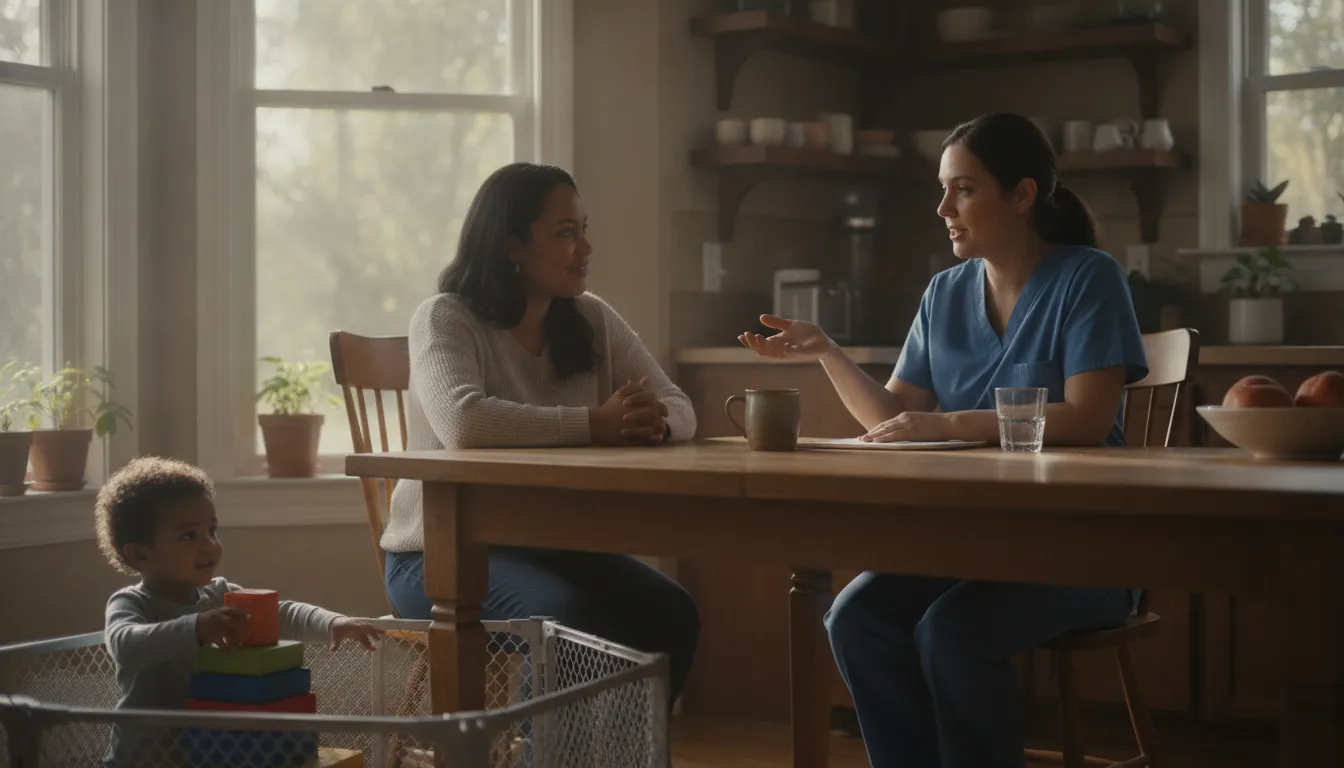
At Greater Living Home Care, RNs help coordinate care and develop an individualized Model of Care plan with the family. The agency’s positioning is hands-on clinical oversight rather than simple nurse matching. Parents and guardians can ask who reviews nursing notes, who responds to a clinical concern, and how the plan changes when the child’s needs change.
Who May Qualify for Pediatric Home Care Through Georgia Medicaid?
Some Georgia children under age 21 may receive in-home services through Georgia Medicaid programs when they meet the applicable medical, program, and authorization requirements. A child may need documentation of a qualifying condition, medical necessity, physician involvement, and a plan that supports safe care at home. Eligibility is never guaranteed by an agency or by a general description of symptoms.
Medical need helps determine the level of support
A child’s diagnosis alone does not determine the service or number of hours. Reviewers may consider the child’s functional limitations, skilled tasks, equipment, supervision needs, physician orders, and current plan of care. Children with conditions such as cerebral palsy, neuromuscular disorders, hypoxic-ischemic encephalopathy, spinal muscular atrophy, chronic respiratory failure, or complex feeding needs may require individualized review.
Families can read the Georgia Pediatric Program information and the Georgia Department of Community Health’s GAPP Fact Sheet for authoritative program context. Program rules and authorization decisions come from the appropriate Georgia Medicaid authorities, not from a home care agency.
What families can do next
- Confirm that the child has active Georgia Medicaid coverage.
- Gather current diagnoses, medical orders, discharge information, and relevant care records.
- Ask the child’s pediatrician or specialist to describe the care needs clearly.
- Ask a qualified agency how it assesses needs and develops the Model of Care plan.
- Confirm which services require authorization and which decisions must come from program authorities.
A needs assessment starts a conversation; it does not guarantee eligibility, services, or hours. If the child’s condition changes, the family should ask how the care plan and authorization process can be reviewed.
How Do Families Start Pediatric Home Care in Georgia?
Families typically begin by gathering medical information and discussing the child’s needs with a pediatrician, specialist, hospital team, or qualified agency. The next steps may include a referral, needs assessment, plan development, authorization review, and caregiver scheduling. The sequence can vary, so families should ask who owns each step and what documentation is needed.
- Describe the child’s daily and clinical needs. Include equipment, medications, feeding, respiratory support, mobility, seizures, and the level of supervision required.
- Ask for a clinical review. A qualified team should determine which requested services fit the child’s condition and plan.
- Discuss the Model of Care plan. Parents and guardians should understand the tasks, schedule, communication process, and escalation steps.
- Confirm authorization and scheduling. Services and hours depend on the applicable program, medical review, orders, and authorization.
- Plan for communication. Ask who to contact about a clinical concern, staffing question, missed shift, or change in the child’s condition.
Greater Living Home Care’s RNs directly coordinate care and maintain clinical oversight. The team can discuss the child’s needs and explain possible next steps without assuming that the family qualifies before the required review.
What Should Families Ask a Pediatric Home Care Agency?
A thoughtful agency conversation should clarify clinical responsibility, staff qualifications, documentation, authorization, and communication. These questions help families distinguish a direct skilled nursing provider from a referral or staffing service. They also give the family a clearer picture of how care would fit the child’s routines and safety needs.
Who provides clinical oversight?
Ask whether an RN assesses the child’s needs, coordinates the care plan, supervises services, and responds to clinical concerns. Ask whether the agency directly manages care or refers families to independent caregivers. The answer should identify a clear clinical contact and a process for updating the plan.
How will the Model of Care plan be developed?
Ask how the plan will address diagnoses, daily routines, clinical tasks, equipment, safety needs, and family priorities. Parents and guardians should know how they participate, how changes are documented, and who communicates updates to the child’s physician or other providers.
What qualifications and training do caregivers have?
Ask which credentials apply to each service and how the agency verifies them. For skilled tasks, ask whether the assigned nurse has experience with the child’s needs, such as tracheostomy care, suctioning, ventilator support, oxygen monitoring, feeding tubes, medication administration, wound care, or seizure monitoring.
How are care and documentation handled?
Ask what caregivers document during each shift or visit, who reviews those notes, and how the family can access relevant information. Families should also ask how the agency communicates with the child’s medical team and what happens when a concern is identified.
What happens if authorization or coverage changes?
Ask which services and hours depend on medical need, physician orders, and program authorization. For Georgia Medicaid or GAPP services, ask how the agency supports the review process and which decisions must come from program authorities. Authorization is not automatic, and an agency cannot guarantee a particular number of hours.
Frequently Asked Questions
What does pediatric home care include?
Pediatric home care can include skilled nursing, personal care, family education, and other authorized supports delivered in a child’s home. Skilled services may address medication administration, tube feeding, respiratory support, seizure monitoring, wound care, or other needs identified in the child’s care plan.
How is pediatric home care different from pediatric home health?
Pediatric home care is a broad term for health and supportive services at home. Pediatric home health usually emphasizes health-focused services, which may include skilled nursing or intermittent visits. Families should ask a provider to define the services, staff roles, and authorization that apply to their child.
Can a pediatrician refer my child for home care?
Yes, a pediatrician, specialist, or hospital care team may begin a referral or discuss the child’s need for services. A referral starts the review process, but it does not by itself guarantee eligibility, authorization, services, or hours.
Who may qualify for pediatric home care through Georgia Medicaid?
Some children under 21 who live in Georgia, have Georgia Medicaid, and need medically appropriate in-home support may qualify for a program such as GAPP. Eligibility and authorization depend on program rules, medical necessity, orders, and review by the appropriate authorities.
How do families start services?
Families generally gather medical information, discuss needs with the child’s care team, complete a needs assessment, and work through plan development and authorization. Contact Greater Living Home Care to discuss the child’s situation and possible next steps without assuming eligibility before review.
Talk With Greater Living Home Care
Every child’s care needs are different. Greater Living Home Care provides direct pediatric skilled nursing and coordinated in-home support for medically fragile and physically disabled children in Georgia. The team can listen to your concerns, discuss the Model of Care process, and explain what information is needed to explore services. Eligibility and authorization must be confirmed through the applicable review process.
