Pediatric Home Care Nursing: RN and LPN Roles
When a child has complex medical needs, care at home involves more than completing individual nursing tasks. Families often need clear communication, reliable clinical support, and a plan that fits the child’s daily routines and changing needs.
Pediatric home care nursing provides skilled, individualized support for children who may need services such as medication administration, respiratory care, feeding support, or clinical monitoring at home. RNs and LPNs may contribute different types of assessment, coordination, supervision, and hands-on care, depending on the child’s orders, needs, care plan, and applicable Georgia requirements. For families using Georgia Medicaid, services and eligibility depend on medical necessity, assessment, and program authorization.
Understanding what this service includes can make conversations with a child’s medical team and care agency more productive. Start with the purpose of in-home skilled nursing and how it supports a family-centered plan.
What Is Pediatric Home Care Nursing?
Pediatric home care nursing is skilled nursing delivered in a child’s home, where care can be coordinated around the child’s medical needs and daily routines. It may support children whose conditions require ongoing assessment, treatments, medication administration, clinical monitoring, or caregiver education. Pediatric nurses can evaluate a child, give medications, and teach families how to participate safely in care. Research on pediatric home health care describes this work as part of a broader process that includes identifying needs, developing a plan, starting services, and adapting care as needs evolve.
Children with medical complexity often need intensive care each day. Home-based nursing can help some children receive that care outside the hospital when their clinical needs can be managed safely in the home. The goal is not simply to move hospital tasks into another setting. It is to apply an individualized care plan in a familiar environment while communicating with parents, guardians, providers, and other members of the care team.
That setting can make care more practical for families. A nurse may observe how a child responds during ordinary routines. Explain a treatment in the context of the family’s day, and identify questions to share with the child’s medical team. This family relationship matters. Effective pediatric home health care depends on communication, care coordination, skilled providers, and a strong parent-provider relationship.
How Skilled Nursing Differs From Personal Care
Skilled nursing and personal care can both contribute to a child’s support at home, but they are not interchangeable. Skilled nursing involves clinical responsibilities that require nursing knowledge, training, and judgment. Examples include assessing a child, administering ordered medications, monitoring a complex condition, and teaching caregivers about specific care tasks. Personal care generally focuses on assistance with daily activities and routines. The appropriate combination depends on the child’s needs, care plan, orders, and applicable program requirements.
A family may therefore need help understanding which type of support fits a child’s situation rather than choosing based on a job title alone. Greater Living Home Care emphasizes coordinated clinical oversight and an individualized Model of Care plan. The agency provides in-home skilled nursing for medically fragile and physically disabled children under age 21 in Georgia through the Georgia Pediatric Program when program requirements and authorization apply. This approach is different from a placement marketplace that simply matches a family with an independent nurse.
Families seeking a closer explanation of the nursing model can review pediatric private duty nursing. The central question is always how to organize safe, clinically appropriate support around the child and family, with the plan revisited when treatment needs change.
How Do RNs and LPNs Support Children at Home?
Children receiving pediatric nursing at home may work with more than one type of licensed nurse. The team’s responsibilities are shaped by the child’s condition, current orders, individualized Model of Care plan, and applicable Georgia requirements. That means the RN and LPN roles should be understood as coordinated parts of a plan, not as a fixed formula that applies to every family.
At Greater Living Home Care, RNs and LPNs work within coordinated, individualized care plans. RNs may help connect the child’s clinical needs with the family, providers, and agency team. LPNs may provide hands-on skilled nursing tasks that are included in the orders and plan. Both roles support continuity, communication, and careful documentation within the scope of the assigned care.
| Role | Focus | Family contribution |
|---|---|---|
| RN | Assessment, coordination, education, oversight | Explains the plan and reports changes. |
| LPN | Ordered hands-on skilled nursing | Provides care, observes, documents, and reports. |
What an RN may contribute
An RN may evaluate the child’s needs, help organize the care plan, and provide clinical education for parents or guardians. Pediatric nurses may also administer medications and teach families about care. These activities are connected to the child’s orders and situation, rather than delivered as a generic package. RN involvement can also help the team anticipate needs and keep communication clear when the child’s condition or routine changes.
What an LPN may contribute
An LPN may carry out hands-on skilled nursing included in the child’s orders and agency plan. Depending on the child’s needs and assigned responsibilities, that work can include the ordered treatments, monitoring, medication-related care, or other skilled activities identified for the child. The LPN documents what was provided and shares pertinent observations with the appropriate clinical team. The specific duties are not identical for every child.
Families should ask how the agency coordinates RN oversight, LPN care, documentation, education, and communication. Greater Living emphasizes clinical oversight and an individualized Model of Care plan rather than matching a family with an independent nurse. RNs and LPNs serving Georgia families must hold active Georgia licenses, with license verification and ongoing monitoring described in the agency’s compliance framework. The child’s orders, care plan, and applicable rules remain the basis for deciding which professional provides each part of care.
What Services Can Pediatric Home Care Nursing Include?
Pediatric home care nursing can support children whose medical needs require skilled attention in the home. The specific services depend on the child’s medical condition, provider orders, individualized Model of Care plan, and applicable authorization. Not every child needs every service, and the care plan should reflect the child’s current needs rather than a standard package.
Respiratory support
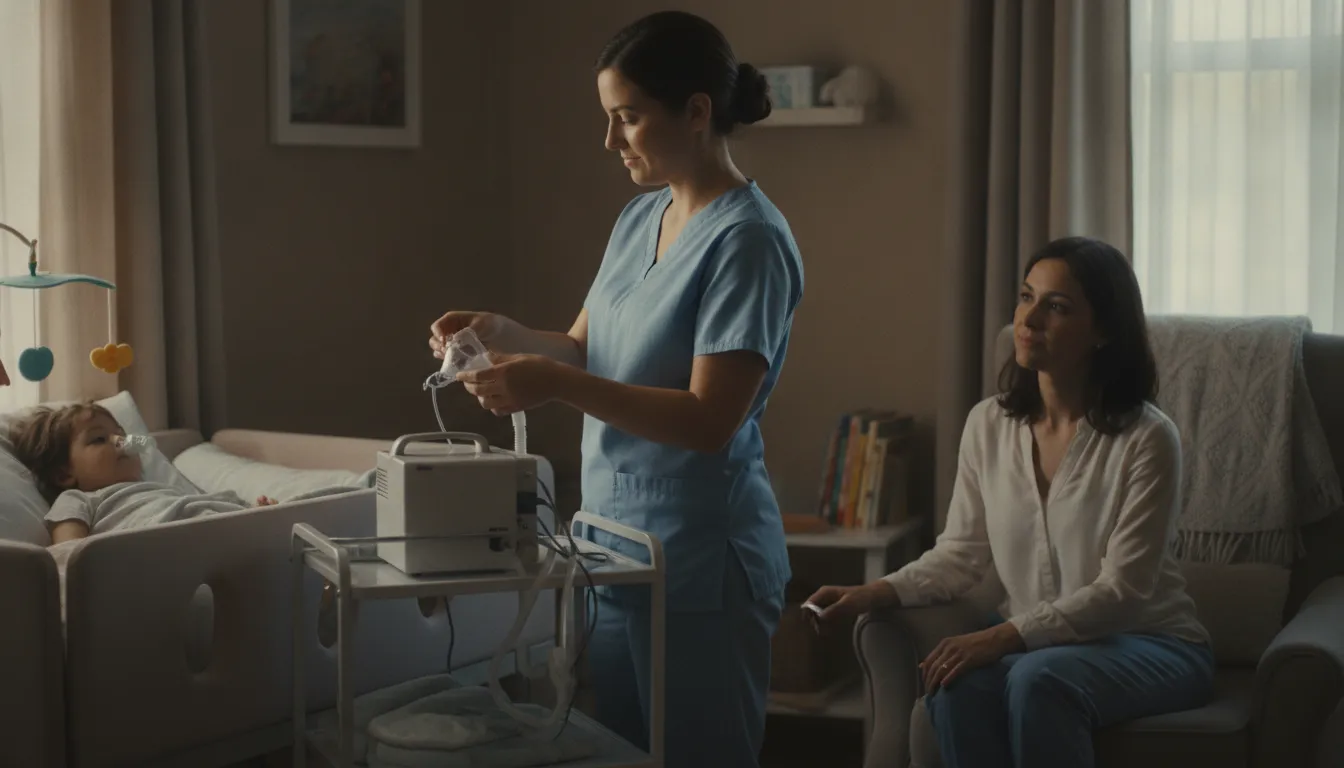
Respiratory care may include tracheostomy care, suctioning, ventilator support, oxygen therapy, nebulizer administration, vest therapy, and chest physiotherapy. These services can help a trained nurse follow the ordered treatment routine, observe the child’s response, and document relevant changes for the clinical team. A family may also need support with aspiration risk or other high-acuity concerns that affect breathing and airway safety.
Nutrition and feeding support
Some children receive nutrition through a gastrostomy tube, commonly called a G-tube. Skilled nursing may include G-tube feeding and site care, along with observation for concerns that should be reported according to the child’s orders and care plan. Feeding tubes, catheter care, and ostomy care may also appear in a pediatric nursing plan when those needs are clinically ordered for the child.
Medications and monitoring
Nurses may administer medications as ordered and monitor the child for relevant changes. Depending on the care plan, monitoring can include seizure activity, wound status, oxygen needs. Feeding tolerance, or other signs that require timely communication with the family and clinical team. The nurse follows the authorized plan and does not independently change treatment.
Other skilled needs
Other services may include wound care, seizure monitoring, catheter care, ostomy care, neonatal nursing, or care for premature infants. Greater Living’s clinical team coordinates services around the child’s individualized needs. Discuss the child’s diagnoses, daily routines, equipment, and current orders during the assessment so the agency can determine which pediatric home care nursing services are appropriate and authorized.
Who May Qualify for Georgia Medicaid GAPP Nursing?
Families often begin by asking whether their child may fit the basic profile for Georgia Pediatric Program (GAPP) support. In general, GAPP is intended for children under age 21 who live in Georgia. Are eligible for and enrolled in Georgia Medicaid, and have a condition that requires skilled nursing and/or personal care support. These factors provide a starting point for discussion, not a guarantee that a child qualifies or that a particular service will be approved.
Greater Living provides Georgia GAPP in-home nursing for physically disabled and medically fragile children. A child’s clinical needs may include complex support such as tracheostomy care, ventilator or oxygen support, frequent suctioning, aspiration risk, or G-tube care. The specific services considered must connect to the child’s assessed needs, clinical orders, and an individualized care plan.
Georgia Medicaid enrollment is an important first guardrail
GAPP is a Georgia Medicaid-funded program, so Medicaid eligibility and enrollment are part of the initial review. Families may need to confirm the child’s current Medicaid status and complete the appropriate eligibility verification process. The Georgia Department of Community Health provides official program information in its Georgia Pediatric Program (GAPP) publication. That source can help families distinguish general program information from a determination about an individual child’s eligibility.
Residence also matters. The child must live in Georgia for the general GAPP profile described by the program. If a family has recently moved, is planning a move, or has questions about an address or Medicaid case. It is important to resolve those details through the appropriate Georgia Medicaid channels rather than assume that services will transfer automatically.
Medical need and approval determine the services considered
Age, residence, and Medicaid enrollment do not independently establish eligibility for pediatric home care nursing. GAPP support is based on medical necessity and program approval. The child’s condition, documented care needs, assessment findings, clinical orders, and requested services all inform the review. A family should not assume that a diagnosis alone determines the type, frequency, or duration of care.
In the described GAPP process, the Georgia Department of Community Health provides program oversight. Alliant Health Solutions handles prior authorization and medical necessity review, while DFCS handles Medicaid eligibility verification. Nursing documentation supports care provided, and families may receive access to documentation and support for prior authorization and medical review. These steps help reviewers evaluate the child’s needs, but they do not replace the formal determination.
A qualified agency can help a family organize questions, understand the assessment process, and discuss what documentation may be relevant. Greater Living’s clinical team can also explain how an individualized Model of Care plan relates to the child’s needs. Families should treat any conversation with an agency as guidance for next steps, not as a promise of eligibility, coverage, approval, or service hours.
How Does Pediatric Home Care Nursing Start?
Starting care is a clinical and administrative process, not simply a matter of matching a family with a nurse. The sequence helps the agency understand the child’s needs, establish an individualized plan, and coordinate the requirements that must be addressed before services begin.
- Identify the child’s needs. The process begins with a needs assessment. The family and clinical team discuss the child’s diagnoses, daily routines, skilled tasks, safety concerns, caregiver questions, and the type of support being considered. This conversation helps distinguish skilled nursing versus personal care and identifies what requires clinical oversight.
- Gather a referral and clinical orders. A referral from the child’s physician or another appropriate clinical source may be needed before home care starts. Referrals can arise during outpatient treatment, before hospital discharge, or through a pediatrician. Clinical orders help define the treatment and nursing services that may be appropriate. Visit frequency, duration, and treatment should reflect the child’s needs and medical orders, rather than a standard package.
- Complete an in-home visit. A qualified clinician evaluates the child in the home environment. Seeing the child’s routines, equipment, medications, and support needs in context allows the team to ask more useful questions and plan care around the family’s actual circumstances.
- Develop the individualized Model of Care. The agency then develops a Model of Care that describes how the child’s needs will be addressed. It may identify clinical tasks, caregiver communication, assigned responsibilities, and the coordination needed among the family and care team. Greater Living emphasizes direct clinical coordination and oversight, rather than functioning as a nurse-placement marketplace.
- Address authorization and documentation. For families using Georgia Medicaid and GAPP, medical necessity, eligibility, and program approval remain separate determinations. The agency can organize nursing documentation and support prior authorization or medical review. But no agency can promise approval or a specific service amount before the required review is complete.
- Coordinate caregivers and begin supervised care. Once the applicable requirements are addressed, the agency coordinates caregivers whose qualifications and assignments fit the child’s plan. Ongoing supervisory visits help the clinical team review implementation, communicate with caregivers, and identify questions or changes that need attention.
- Document care and reassess changing needs. Nursing documentation records the care provided and can be made available to the family for appropriate review. The plan should be revisited as the child’s treatment needs change. Families should share new symptoms, treatments, equipment, or physician instructions promptly so the care team can determine whether the Model of Care needs revision.
Frequently Asked Questions
What does pediatric home care nursing include?
It is skilled nursing delivered in a child’s home according to the child’s clinical needs, orders, and individualized care plan. Depending on the plan, services may include medication administration, tracheostomy care, suctioning, respiratory support, G-tube feeding and site care, wound care, or seizure monitoring. A child may need some of these services, not all of them.
What is the difference between an RN and an LPN in home care?
Both nurses can provide skilled care within their licensure, clinical orders, and agency plan. RNs commonly support assessment, coordination, education, and clinical oversight, while LPNs may provide hands-on nursing interventions assigned within the plan. The child’s needs and Model of Care determine the appropriate roles, rather than a universal rule that one license fits every situation.
Does a child automatically qualify for Georgia Medicaid GAPP nursing?
No. GAPP eligibility generally involves being under 21, living in Georgia, having Georgia Medicaid, and needing skilled nursing or personal care support. Eligibility also depends on medical necessity and program approval, so these guidelines do not guarantee services for an individual child. See the GAPP service guide for more context.
How does a family begin pediatric home care nursing?
The process typically starts with a needs assessment and referral or clinical orders, followed by an in-home visit and individualized care-plan development. The agency then works through applicable authorization steps, caregiver coordination, and ongoing supervision. Visit frequency, duration, and treatment are personalized to the child’s needs and physician orders, and the plan can be adjusted as needs change. Families can review next steps with a qualified agency team.
Talk With Greater Living Home Care
Every child’s needs and every family’s routine are different. A conversation can help you organize questions about pediatric home care nursing and identify practical next steps to discuss with a qualified care team. Contact us to discuss your child’s care needs, or call (912) 446-5838.
