Pediatric Home Health Quality Assurance Georgia RN Supervision
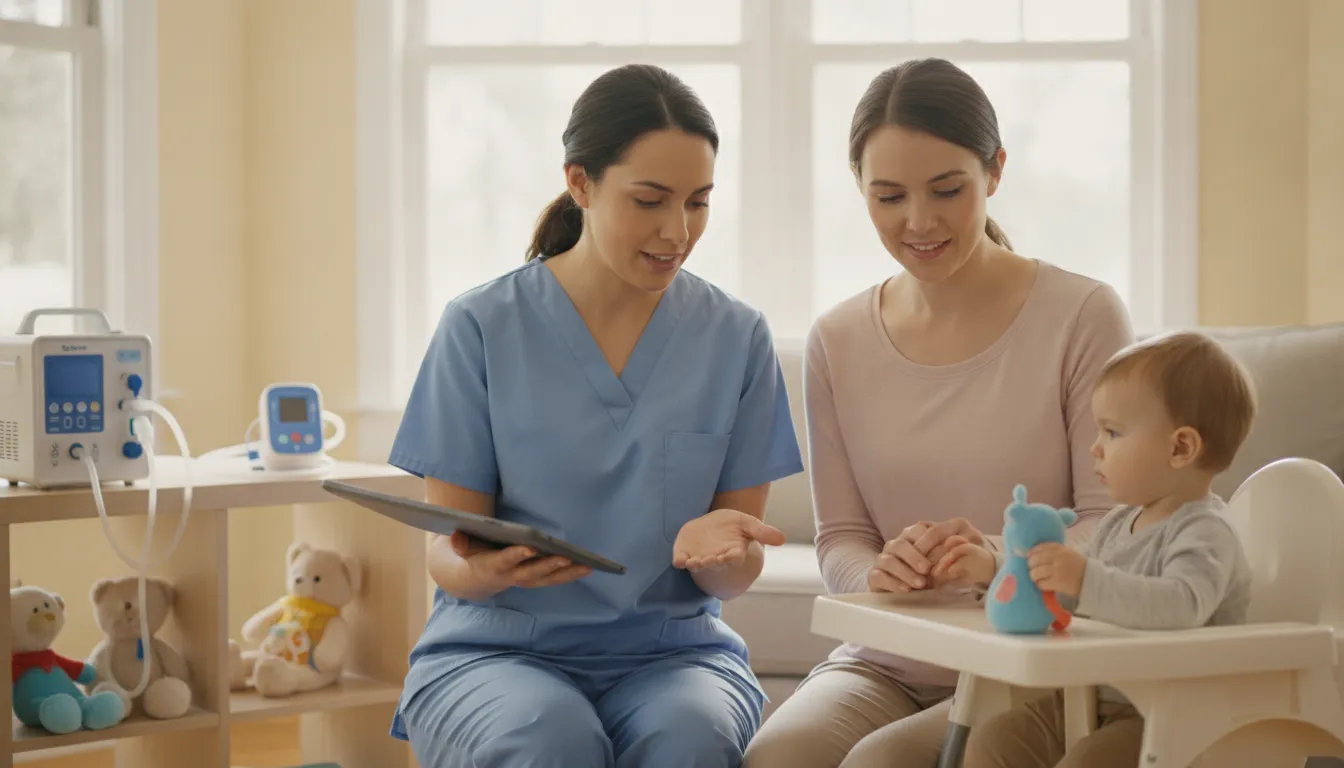
When a medically fragile child receives skilled nursing at home, families need more than a list of services. They need to understand who coordinates care, how concerns are documented, and what keeps the plan connected to the child’s changing needs. Pediatric home health quality assurance Georgia RN supervision describes that accountability structure.
Greater Living Home Care uses individualized care plans, RN-led coordination, supervisory review, detailed nursing notes, and family communication to support pediatric care in Georgia. This article focuses on the agency’s quality-assurance program, not a promised visit interval or a guarantee of Georgia Medicaid eligibility or authorization.
Connect with Greater Living Home Care to discuss your child’s care needs.
For the broader financial and agency-evaluation questions families ask, read Pediatric Home Health Costs, Insurance, and Agency Trust Signals in Georgia. The sections below focus on how a private-duty skilled nursing agency turns clinical oversight into an understandable process.
How Pediatric Home Health Quality Assurance Georgia RN Supervision Supports Care
RN supervision connects an individualized care plan with the services delivered in the home. A supervisory RN considers whether assigned care remains aligned with documented needs, helps coordinate the care team, reviews questions, and supports follow-up. The purpose is not to promise a particular clinical result. It is to create a clear nursing process for reviewing care and responding when information changes.
Greater Living Home Care is a private-duty pediatric skilled nursing provider, not a placement or staffing agency that simply matches a family with an independent caregiver. RNs directly handle care coordination and clinical oversight within a coordinated team that can include RNs, LPNs, CNAs, and PCAs. The child’s physician, family, Georgia Medicaid, and medical review entities retain their own responsibilities.
What does the RN role add?
The RN role adds a clinical point of coordination around the child’s plan. The nurse can help clarify instructions, identify questions for the care team, and keep relevant observations connected to the record. Parents and guardians also contribute important information because they see the child’s routines, responses, and changes between visits.
Families researching the mechanics of a GAPP supervisory visit should use the existing GAPP supervisory visits pediatric home health Georgia guide. That article is the canonical resource for visit timing and what a supervisor may review during a visit. This article intentionally stays focused on the agency-level quality system around those mechanics, including care-plan accountability, documentation, staff readiness, and communication.
How Does Pediatric Home Health Quality Assurance Georgia RN Supervision Create Accountability?
Accountability becomes useful when families can see how responsibilities connect. At Greater Living, an RN-led process helps organize four questions: What does the child’s plan require? Who is responsible for each part of care? What documentation shows what occurred? How does the team communicate a concern or change?
- Plan: Medical staff develop an individualized plan around the child’s needs, with family participation.
- Coordinate: Clinical leaders align staff responsibilities with the plan and clarify questions that arise during care.
- Document: Nursing notes record relevant care information and help the team work from current details.
- Communicate: Families can raise concerns, review information, and ask how follow-up will occur.
This structure matters in pediatric home care because more than one caregiver may support a child’s routine. A coordinated plan reduces the risk that an important instruction remains only in one person’s memory. It also gives the family a practical way to ask who can explain a decision, review a concern, or discuss a possible plan update.
Quality assurance does not replace medical diagnosis, emergency care, or the child’s physician. It also does not determine Georgia Medicaid eligibility or guarantee a specific number of authorized hours. Those boundaries make the agency’s role clearer and help families direct each question to the appropriate source.
Ask Greater Living Home Care how RN supervision fits your child’s individualized care plan.
What Is the Difference Between Agency QA and Visit Mechanics?
Families may see several quality terms when they research pediatric home nursing. Separating them helps prevent one article or one conversation from carrying too many expectations. Agency quality assurance is the larger operating system. It includes the people, records, communication practices, and review habits that support care over time. A supervisory visit is one activity within that system. Georgia Medicaid authorization is a separate program decision.
| Topic | What it addresses | What families can ask |
|---|---|---|
| Agency quality assurance | How the provider coordinates care, monitors staff readiness, documents services, and responds to concerns. | Who reviews the plan, who receives concerns, and how does follow-up get documented? |
| Supervisory visit | A nurse’s review of care in the home as part of the provider’s oversight process. | What is the visit intended to review, and how will the family learn about follow-up? |
| Care documentation | Notes and records that describe relevant services and support communication across the team. | How can our family access the notes, and whom should we contact about a question? |
| Georgia Medicaid review | Program eligibility, medical necessity, prior authorization, and authorized services. | Which question belongs with Georgia Medicaid or the applicable medical review entity? |
This distinction also clarifies what a provider can and cannot promise. Greater Living can describe its RN-led model, its care-plan process, documentation access, and staff requirements. It cannot promise that a child qualifies for GAPP, that a specific number of hours will be authorized, or that every family will experience the same service arrangement. Those decisions depend on the child’s circumstances and the applicable review process.
When a family compares agencies, the strongest questions are specific. Ask how the agency turns a physician’s instructions and the child’s needs into a working plan. Ask how a caregiver’s qualifications are matched to the assignment. Ask how a parent can report a concern and how the agency records the response. These answers reveal more about operational accountability than a general statement that an agency values quality. They also help families compare providers without assuming that every agency organizes care in the same way. A strong answer should identify a responsible clinical contact, explain how information moves through the team, and describe how the family participates. If an answer is unclear, ask for an example of the communication path without requesting another child’s private health information.
Families can keep their own question list during an agency conversation. Note the name and role of the clinical contact, what records the family may review, and which changes should prompt a call. This simple record can make future conversations more focused. It also respects the boundary between helpful care coordination and medical advice that must come from the child’s physician or emergency professionals.
How Care Plans and Documentation Make Oversight Visible
A care plan should guide daily services, not sit apart from them. Greater Living develops a personalized plan based on the child’s needs and includes parents in service-plan development. RN oversight helps the team compare the plan with the information gathered during care and identify when clarification may be appropriate.
What families can look for in documentation
Families can ask how nursing notes are completed, who reviews them, and how they can access relevant documentation. Greater Living maintains extensive nursing notes and provides families with real-time access to documentation. This visibility can help caregivers understand what care was provided and raise a question while the details are current.
Documentation is not just a compliance exercise. It supports continuity when caregivers change, gives clinical leaders information for coordination, and creates a shared reference for conversations with the family. Notes should not be treated as a substitute for a physician’s assessment. They are one part of the information used to coordinate in-home nursing.
When a plan may need discussion
A change in routine, new clinical information, a caregiver concern, or a question about assigned services may justify a conversation with the agency’s clinical team. Families do not need to diagnose the issue themselves. They can describe what they observed and ask which next step belongs with the agency, the child’s physician, or the Georgia Medicaid review process.
For a broader view of how to evaluate trust signals, families can also revisit the pediatric home health costs and agency trust guide. Quality assurance is one part of a complete evaluation that should also consider clinical scope, communication, staff qualifications, and the agency’s fit for the child’s needs.
What Staff Readiness and State Licensing Tell Families
Families can evaluate an agency’s quality system by asking how it confirms that caregivers are prepared for their roles. Greater Living identifies an active Georgia nursing license, current CPR and First Aid certification, TB-test documentation, and professional misconduct verification among its RN requirements. The agency also describes license verification, renewal monitoring, background checks, reference verification, drug-free workplace screening, automobile insurance verification, workers’ compensation coverage, and identity or employment verification.
These checks do not guarantee a particular experience or outcome. They show the types of readiness and accountability questions a family can ask before services begin. Families may also ask how a provider matches staff skills to a child’s needs and how clinical concerns move to an RN or other appropriate leader.
How does state oversight fit into agency QA?
Greater Living operates as a state-licensed home healthcare agency in Georgia and provides GAPP-related in-home services for eligible children. The Georgia Department of Community Health oversees GAPP operations, provider enrollment, quality assurance, and program integrity monitoring. Alliant Health Solutions handles GAPP prior authorization, medical necessity determinations, and ongoing service authorization reviews.
State and program oversight are different from an agency’s daily clinical coordination. The agency can explain its process and help a family prepare questions, but it cannot promise approval, authorization, or a fixed service schedule. Families can review the Georgia Pediatric Program guidance for program information and confirm case-specific questions through the appropriate Georgia Medicaid channels.
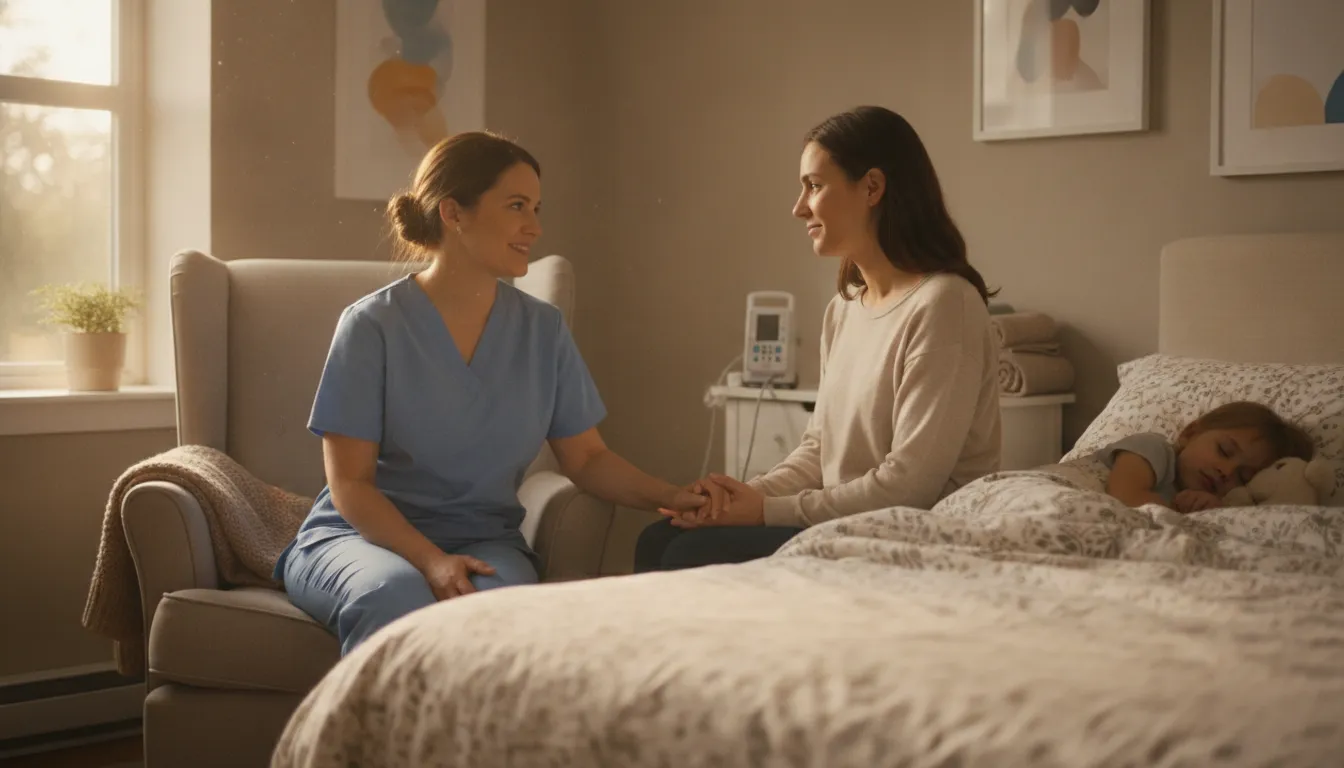
What Should Families Ask About an Agency’s Quality-Assurance Program?
A useful conversation with a pediatric home nursing agency should produce clear answers without promising more than the agency controls. Families can ask:
- Who develops and reviews my child’s individualized plan of care?
- Which RN or clinical leader can answer questions about the plan?
- How can our family access nursing documentation?
- How do caregivers communicate a concern or possible change in needs?
- Which questions involve the agency, the child’s physician, Georgia Medicaid, DCH, or Alliant?
- How does the agency match staff qualifications to the child’s care needs?
Families should also ask how supervisory contact is communicated and what information is available after a review. The agency’s published information describes unannounced supervisory home visits, but it does not establish one fixed interval for every family. For the visit-specific mechanics, use the dedicated supervisory-visits guide linked above. Here, the key issue is whether the agency can explain how observations, documentation, and follow-up fit into its broader RN-led process.
Frequently Asked Questions
What is RN supervision in pediatric home health?
RN supervision is clinical coordination around a child’s individualized care plan. It can include reviewing the plan, clarifying instructions, coordinating caregivers, reviewing documentation, and communicating with the family. It does not replace the child’s physician or guarantee a clinical outcome.
Does RN supervision guarantee Georgia Medicaid authorization?
No. Agency oversight and Georgia Medicaid authorization are separate. GAPP eligibility and service authorization depend on program requirements, medical necessity, and the applicable review process. Greater Living can explain its agency process, but it cannot guarantee approval or a particular number of hours.
Can families access pediatric nursing documentation?
Greater Living maintains extensive nursing notes and provides families with real-time access to documentation. Families can use those records to understand the care provided and raise questions with the clinical team. Documentation does not replace a physician’s assessment or emergency medical guidance.
Why should families compare an agency’s quality-assurance process?
Quality-assurance details help families understand who coordinates care, how staff readiness is checked, how information is recorded, and how concerns are addressed. These questions are especially important when several caregivers share responsibility for a medically fragile child’s daily routine.
Talk With Greater Living Home Care
Every child and family has different care needs and questions. Greater Living Home Care provides in-home pediatric services through a private-duty skilled nursing model, with RNs directly involved in care coordination and clinical oversight. Eligibility and service authorization remain subject to Georgia Medicaid and the applicable clinical review process.
Call Greater Living Home Care at (912) 446-5838 or use the contact form to begin a conversation about your child’s care needs.
