Respite Care Medically Fragile Children Georgia Guide
When a child needs frequent medical care, parents often become the primary nurse, coordinator, and advocate at home. Needing time to sleep, work, attend appointments, or care for other children does not mean you are stepping away from your child. It means your family may need a safer, more sustainable support plan.
Respite care medically fragile children Georgia families seek may come through authorized in-home skilled nursing or personal care. This can include GAPP support when a child meets program requirements and the services are medically necessary. GAPP does not automatically guarantee a separate respite benefit or additional hours. Requests generally require physician-ordered care, clinical documentation, and prior authorization through a Medicaid-approved GAPP nursing agency.
The right starting point is to understand what respite means in a medically complex home-care setting, then match your child’s needs to the appropriate care pathway. Learn more about pediatric home health care in Georgia and the clinical support available to eligible families.
What Is Respite Care for Families of Medically Fragile Children?
Respite care is planned, temporary relief for a parent or other primary caregiver who provides frequent care to a medically fragile child. The goal is to give the caregiver time to rest, attend an appointment. Manage household responsibilities, or support other children while the child remains safe and receives appropriate supervision. It is not a signal that a family is unwilling to provide care. It is one way to make demanding care arrangements more sustainable.
Caregiving can involve repeated clinical tasks, close monitoring, equipment needs, and coordination with providers. Over time, that constant responsibility may contribute to physical and emotional exhaustion, sometimes described as caregiver burnout. The Centers for Disease Control and Prevention recognizes that caring for a person with a disability while also caring for yourself can be challenging. Information, support, advocacy, care, and balance can help families continue supporting their loved one. Learn more about family caregiver support from the CDC.
What respite care can and cannot do
Respite is caregiver relief, not a promise of a particular number of hours or a universal benefit. Depending on the child’s needs and the program or service arrangement. Relief may come from an authorized in-home care professional, a trained relative or friend, or a community resource. Families should confirm who is qualified to perform each task and whether clinical oversight is required.
- It can provide a safe handoff: Another trained person may supervise the child or carry out approved care activities while the primary caregiver takes a break.
- It does not replace clinical planning: A child who needs skilled nursing still needs care directed by the applicable physician orders, individualized plan, and clinical review.
- It should protect continuity: Clear instructions, medication information, emergency contacts, and communication between caregivers help maintain consistent care.
Respite also does not necessarily mean leaving the child in a facility. For some families, in-home support allows a parent to remain nearby while another qualified caregiver handles agreed-upon responsibilities. Greater Living’s pediatric home health care in Georgia model includes individualized care planning and coordinated clinical oversight, when a child qualifies for the applicable services.
Recognizing caregiver strain early matters. Mayo Clinic lists frequent tiredness, disrupted sleep, headaches, and other health problems among possible signs of caregiver stress, and notes that prolonged stress can harm health. A 2021 study of families of children with special health care needs also identified service availability, transportation, limited information, and inconvenient schedules as barriers to respite. Read the study on respite-care barriers. Asking for support is a practical safety and family-care decision, not a failure.
How Does Respite Care for Medically Fragile Children in Georgia Work Through GAPP?
GAPP can provide meaningful caregiver relief when a child qualifies for medically necessary skilled nursing or personal care support. That relief comes from authorized care services delivered in the home. It should not be described as a separate, universal respite-hour benefit automatically included for every GAPP family.
GAPP serves eligible children under age 21 who are medically fragile and need medically necessary skilled nursing or personal care. Children considered for the program should be receiving physician-ordered services. Requests require prior authorization submitted through a Medicaid-approved GAPP nursing agency. Eligibility and authorized hours depend on program criteria, physician orders, medical necessity, and the applicable review process.
| Support type | Who it may serve | What families should know |
|---|---|---|
| GAPP-authorized in-home services | Eligible Georgia Medicaid members under 21 who meet program and medical-necessity requirements. | Skilled nursing or personal care can give parents scheduled relief while the authorized provider performs covered care. Hours are individualized and require physician orders and prior authorization. |
| Georgia DFCS adoptive-family respite | Certain medically fragile children placed on adoptive status through specified DFCS custody pathways and receiving ongoing adoption assistance | This is a limited program, not a general GAPP benefit. When approved, it provides up to five hours per month, with approval lasting one year from the approval date. See the Georgia DFCS respite program details. |
| Informal or community support | Families who identify relatives, community groups, or private organizations that offer assistance | Availability, qualifications, safety procedures, and costs vary. Georgia DFCS directs families seeking respite to the Georgia Center for Resources and Support and notes that private organizations may offer other options. |
The DFCS program has specific adoption-related requirements, so a family should not assume that DFCS respite applies because a child receives GAPP. Likewise, a GAPP authorization does not guarantee a particular number of hours or create a separate respite allotment. Families can review Georgia Pediatric Program (GAPP) services and discuss the child’s current needs with an approved agency.
Greater Living’s team can help families organize the clinical information needed for an initial needs assessment and care-plan discussion. A parent’s participation matters, but the final authorization depends on the program’s review of medical necessity and supporting documentation.
How In-Home Nursing Provides Respite Without Institutional Placement
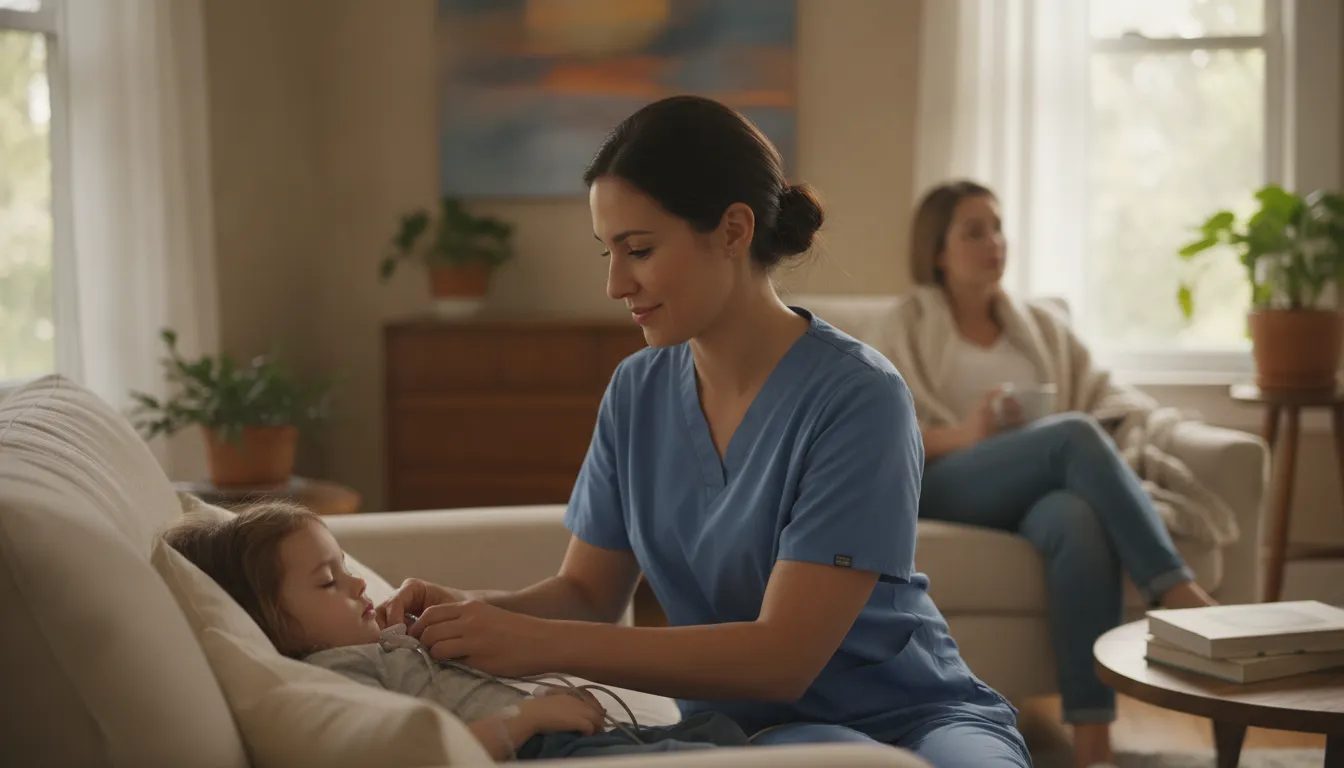
Caregiver relief does not have to mean moving a medically fragile child away from familiar surroundings. When skilled nursing or personal care is authorized and medically necessary. A trained professional can assume defined care responsibilities at home while a parent or guardian takes a safe break. That may mean sleeping, attending an appointment, caring for another child, or simply stepping out of the room without leaving essential care unattended.
For families exploring pediatric home health care in Georgia, the goal is continuity. The child remains in a known environment, and the family remains involved in decisions and daily routines.
Service hours are individualized. They depend on the child’s needs, physician orders, medical necessity, Medicaid requirements, and prior authorization. No agency can promise a specific schedule before the review process is complete.

Clinical tasks continue while the caregiver steps away
In-home support can address complex responsibilities that make unscheduled relief difficult. Depending on the child’s authorized plan and clinical needs, care may include tracheostomy care. Suctioning, oxygen or ventilator management, feeding tube care, medication administration, seizure monitoring, and wound care. These tasks require the right level of training and should follow the child’s established instructions. A family break is safer when the covering caregiver understands what to monitor, what to document, and when to escalate a concern.
Greater Living coordinates RNs, LPNs, CNAs, and PCAs under individualized care plans rather than simply matching a family with an available worker. An RN-led team can help coordinate care, while each professional performs duties appropriate to their training and assigned role. Families participate in developing the service plan, share the child’s routines and warning signs, and receive continuing communication about care.
Oversight makes relief more dependable
An initial needs assessment, custom care plan, caregiver matching, and ongoing supervision create a framework for safe service delivery. Nursing documentation records the care provided and can remain available to the family. That documentation also supports prior authorization and ongoing medical review when the child’s needs change. Learn more about Georgia Pediatric Program (GAPP) services or review options for 24-hour in-home nursing support. The correct plan is the one that protects the child’s clinical needs while giving family caregivers meaningful, authorized time to recover and remain engaged.
What Should Families Document Before Requesting More Hours?
A clear record helps the family, pediatrician, and nursing agency discuss whether the child’s current plan still reflects medical necessity. More documentation does not guarantee additional authorized support, but it can make the review more specific and easier to evaluate.
- Record what has changed. Note new diagnoses, hospital or emergency visits, medication changes, symptoms, functional changes, or increased supervision needs. Include dates and describe how the change affects care at home. A simple daily log can be useful when patterns are difficult to explain during a short appointment.
- List the care tasks and their frequency. Describe the skilled or personal care the child receives, how often each task occurs, and how long it generally takes. Be specific about tasks such as suctioning, feeding tube care, seizure monitoring, medication administration, oxygen management, or wound care when they apply. Distinguish routine tasks from unexpected episodes and explain which needs require a trained caregiver.
- Document safety concerns. Write down missed care, nighttime interruptions, equipment-related concerns, changes in mobility, or situations in which one adult cannot safely meet competing needs. Keep the focus on observable facts, not an estimate of the hours the family hopes to receive.
- Confirm the physician order. Ask the child’s pediatrician or treating specialist to review the current condition and care needs. Children considered for GAPP should currently be receiving physician-ordered services, so the order and supporting clinical information should accurately reflect the child’s present needs. Families seeking help with this step can review this pediatrician referral for home nursing.
- Request an agency review. Share the log, medical records, task list, and safety observations with the Medicaid-approved GAPP nursing agency. Parents participate in developing the service plan, while the agency’s clinical team can assess needs, update the care plan, maintain nursing documentation, and coordinate the medical review.
- Ask how prior authorization works. GAPP service requests require prior authorization through a Medicaid-approved GAPP nursing agency. Ask which records are needed, what the agency will submit, and whether additional information is requested during review. Authorization and service hours depend on program criteria, physician orders, medical necessity, and the applicable prior-authorization process. For background, read about Georgia Medicaid in-home nursing coverage.
- Follow up with written questions. Keep copies of submitted documents and note the date of each conversation. Ask whether the request was received, whether the reviewer needs clarification, and what families should do if the child’s condition changes again. The review determines what support, if any, is authorized, so avoid assuming approval, a specific number of hours, or a particular timeline.
Georgia Respite Care Resources for Medically Complex Families
Families searching for support should distinguish between general caregiver resources, program-specific respite, and medically necessary in-home services. The right starting point depends on the child’s coverage, care needs, family situation, and existing clinical team.
Georgia DFCS respite for eligible adoptive families
Georgia’s Division of Family and Children Services (DFCS) describes a respite program specifically for medically fragile adoptive children. The program is limited to children receiving ongoing adoption assistance who were placed on adoptive status through specified DFCS custody pathways. A licensed medical provider must deem the child medically fragile. One listed criterion is dependence on durable medical equipment. This is not a universal respite benefit for every Georgia family caring for a medically complex child. And it should not be assumed to apply to every GAPP family.
When approved, the DFCS program provides up to five hours per month, with approval lasting one year from the approval date. Families can review the eligibility details on the Georgia DFCS respite care page. DFCS also directs families seeking respite to the Georgia Center for Resources and Support for Adoptive and Foster Families at gacrs.org or 1-866-272-7368. Private organizations may offer additional options, but families should confirm eligibility, scope, and safety requirements directly with each organization.
GAPP agency and care-team support
For children under 21 who may qualify for Georgia Medicaid-funded GAPP services, a Medicaid-approved GAPP nursing agency can help the family understand the clinical documentation and authorization process. GAPP considers medically necessary skilled nursing or personal care support, and service requests require prior authorization. Eligibility and authorized hours depend on program criteria, physician orders, medical necessity, and the applicable review process. A GAPP agency and the child’s care team can clarify whether authorized in-home support may provide practical caregiver relief while the child remains safely at home. Coverage and eligibility must be confirmed before families assume services or costs.
Caregiver education and evidence about access barriers
The CDC caregiver resource recommends gathering information, discussing concerns with people involved in care, identifying ways family and friends can help, and considering support groups. These steps can make service planning more organized and reduce isolation.
Research also shows why finding respite can take persistence. Among families reporting unmet respite needs, service availability or transportation barriers were the most commonly reported obstacles. Followed by cost, limited knowledge about where to obtain services, and inconvenient service times. Public health coverage was associated with fewer reported cost and information barriers, but it does not eliminate access challenges. A PubMed-indexed study summarizes this evidence at Respite Care for Children With Special Health Care Needs. If options feel difficult to navigate, asking a physician, Medicaid-approved GAPP agency, and trusted support organization to coordinate information can help identify the next appropriate step.
How to Request Additional Respite Support Through Your GAPP Provider
If your child’s care needs have changed, begin with a clear conversation with the Medicaid-approved GAPP provider currently involved in care. GAPP service requests require prior authorization through an approved GAPP nursing agency, and any review considers medical necessity. A request is not a guarantee of additional hours or approval, but organized information helps the care team understand what has changed.
- Contact the provider’s care coordinator or clinical team. Ask for the appropriate RN or care coordinator to review your child’s current needs. Explain that you are requesting a reassessment of respite-related support through the existing GAPP service process. Greater Living’s model includes an initial needs assessment, individualized care planning, and ongoing supervision, so the conversation can begin with the team familiar with your child’s plan.
- Describe the change in practical, specific terms. Note new or more frequent skilled tasks, changes in symptoms, nighttime needs, safety concerns, missed care tasks, or the amount of direct assistance your child now requires. Include dates and examples when possible. Relevant services may include suctioning, tracheostomy care, oxygen or ventilator management, feeding tube care, medication administration, seizure monitoring, or wound care. Do not minimize caregiver fatigue, but connect the request to your child’s documented care and supervision needs.
- Gather current medical information. Ask the child’s physician or treating clinician whether updated orders or documentation are appropriate. Children considered for GAPP should be receiving physician-ordered services. The provider may need current clinical information to evaluate medical necessity and prepare a request. Ask what records, orders, assessments, or signatures are needed before submitting anything.
- Review the care plan with the family and agency. Parents participate in developing the service plan. Ask the care team to compare the present needs with the existing plan. Identify which tasks require skilled support, and document the safety or continuity concerns that support a review. You can also ask how nursing notes and other documentation will be included. Families should have access to relevant care documentation and understand what the provider is submitting.
- Ask how prior authorization works for this request. Confirm whether the agency will submit the request, which materials it will send, and whether additional information is needed from you or the physician. Prior authorization and medical necessity decisions move through the applicable review process under GAPP oversight by the Georgia Department of Community Health. Ask for the request status and the best contact for follow-up, without assuming a specific decision or timeline.
- Follow up and communicate further changes. Keep copies of your notes and submitted documents. If your child’s condition or daily care demands change while the request is under review, tell the provider promptly and ask whether updated documentation is needed. If the agency cannot answer a question, ask who can explain the review process or connect you with the appropriate Medicaid or GAPP contact. For additional background, review this pediatrician referral for home nursing.
Talk with Greater Living Home Care about your child’s care needs and call (912) 446-5838.
Frequently Asked Questions
Does GAPP provide respite care for medically fragile children in Georgia?
GAPP does not necessarily mean a separate, universal respite benefit. For eligible children under 21, authorized skilled nursing or personal care may give parents scheduled relief while meeting medically necessary care needs. Eligibility, services, and hours depend on Georgia Medicaid rules, physician orders, and prior authorization. A separate Georgia DFCS respite program is limited to certain medically fragile children receiving adoption assistance, so it does not apply to every GAPP family. Review DFCS eligibility details.
How can I request more in-home nursing hours?
Contact your Medicaid-approved GAPP nursing agency and describe what has changed, such as increased skilled tasks, nighttime safety concerns, or a change in supervision needs. Ask the agency to review current documentation, coordinate with the child’s physician for updated orders when appropriate, and submit a request for prior authorization. Approval is based on medical necessity and the applicable review process, not simply on a family’s request.
What information should I bring to a respite care assessment?
Track the child’s current diagnoses, physician-ordered services, medications, equipment, care tasks, frequency of interventions, overnight needs, and safety concerns. Note how often care interrupts sleep or requires another adult. Specific records help the clinical team understand the child’s needs and evaluate whether the current plan reflects them.
Who can help me find respite options in Georgia?
Your GAPP provider can explain authorized in-home nursing or personal care services and the documentation needed for review. Families who meet the separate DFCS adoptive-family criteria can contact the Georgia Center for Resources and Support at 1-866-272-7368. Private organizations may offer additional options, but confirm their eligibility rules, clinical capabilities, and costs before arranging care.
Contact Us to Discuss Your Child’s Care
Every family’s needs are different, especially when a child requires skilled support at home. Greater Living Home Care can help you discuss medically necessary in-home nursing, GAPP-related care, and questions about requesting additional hours. Contact us to discuss your child’s care needs, or call (912) 446-5838 to speak with our team.
