
A Practical Guide to Home Nursing For Oxygen Dependent Child Georgia
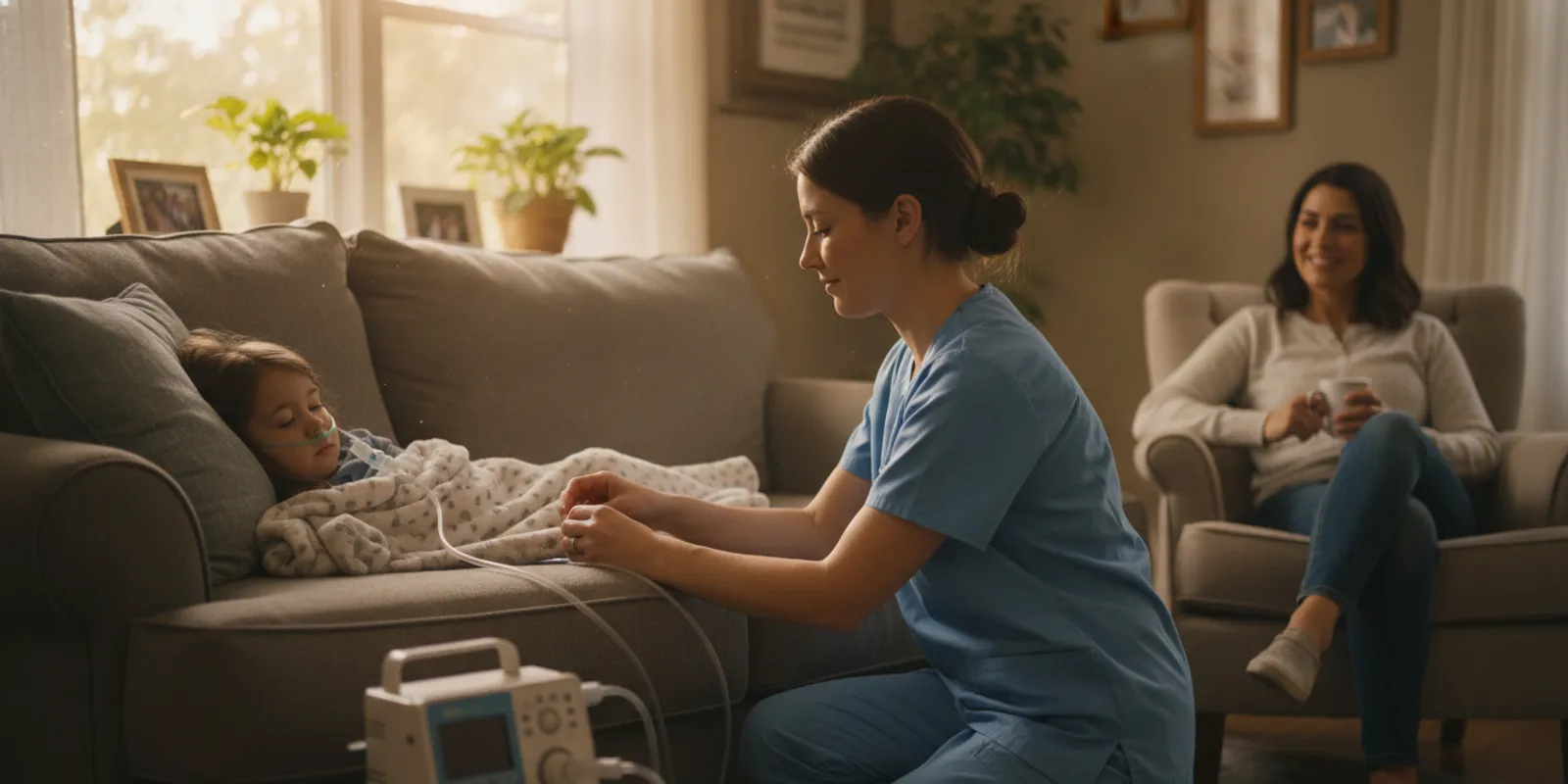
Home nursing for oxygen dependent child Georgia families explore can help clarify how skilled support may fit into a child’s established care plan at home. Nursing needs depend on the child’s condition and clinical orders; start with the treating team, then explore the Georgia Pediatric Program (GAPP) and nursing options.
Talk with Greater Living Home Care about your child’s home nursing needs
What Does Home Nursing for Oxygen Dependent Child Georgia Involve?
Home nursing is skilled clinical care provided in a child’s home according to an individualized plan. For a child who uses prescribed oxygen, the nurse’s role and schedule depend on the child’s assessed needs, clinician orders, authorization, and the services arranged with the family. Oxygen use alone does not determine whether a child qualifies for nursing or how many hours may be approved.
Families often need help coordinating everyday routines with medical instructions. A nurse may provide the skilled care included in the child’s plan, observe and document relevant changes, and communicate concerns through the agreed clinical channels. The exact responsibilities must come from the child’s plan and the provider’s scope; this article is not a substitute for the prescribing clinician’s instructions.
In Georgia, families may ask whether the Georgia Pediatric Program is relevant. GAPP is a Medicaid-funded program for eligible children who meet program requirements. Approval and covered services are determined through the program’s review, not by a home care agency’s article or an oxygen prescription by itself. Read the agency’s overview of what GAPP is and confirm current details with the appropriate program contacts.
Why Can Home Support Matter for a Child Who Uses Oxygen?
A child may use oxygen as part of a broader care plan, alongside other health needs. For some families, skilled nursing at home may help carry out authorized clinical care and make it easier to coordinate the child’s routine with the care team. The purpose is not to change the prescribed treatment. It is to follow the plan, watch for changes that the family has been told to monitor, and communicate with the responsible clinicians.
Parents and caregivers remain central members of the child’s care team. They know the child’s usual routines and can tell the nurse what the family has been taught to do. A clear handoff helps everyone understand who to contact, what information to share, and which situations require urgent action under the child’s medical instructions.
Home oxygen guidance is specific to the patient. The American Thoracic Society’s clinical practice guideline addresses home oxygen therapy for children, including implementation, monitoring, and discontinuation. Families can review the guideline on home oxygen therapy for children with their child’s clinician; it does not replace individualized medical advice or establish GAPP eligibility.
How Do You Explore Georgia Medicaid and GAPP Nursing?
Begin by separating three questions that can get mixed together: whether the child has Georgia Medicaid, whether the child meets GAPP requirements, and which specific services and hours are authorized. A child’s oxygen use may be important clinical context, but no single diagnosis or piece of equipment should be treated as an automatic approval.
- Confirm the child’s current coverage. Check the child’s Georgia Medicaid status and ask which agency or case contact can answer eligibility questions. If coverage is changing or unclear, resolve that question through the appropriate Medicaid channel.
- Ask the treating clinician about the care need. Discuss the child’s prescribed oxygen, other medical needs, daily routines, and whether skilled nursing at home should be considered. The clinical team can explain what documentation or referrals it can provide.
- Ask about the GAPP pathway. Find out which application and clinical records are needed, who submits them, and how the program reviews a request. Greater Living’s guide to the GAPP application process can help families frame those questions.
- Clarify authorization separately from planning. Ask what services and hours are approved, when the authorization begins or ends, and what steps apply if the child’s needs change. A nursing agency can explain its process, but the program determines authorization.
- Make a plan for next steps. Keep the names of contacts, submission dates, and requested records together. If something is missing or unclear, ask the contact responsible for that part of the process rather than assuming a request has been approved.
For a broader explanation of authorization, see this guide to GAPP prior authorization in Georgia. Authorization is not the same thing as a nursing agency’s internal care plan, and neither one should be confused with general Medicaid enrollment.
What Should Families Discuss Before Home Nursing Begins?
Before services start, ask the clinical and agency contacts to explain how the plan works in the home. The family should understand the nurse’s assigned responsibilities, what the caregiver continues to do, and how communication will work across shifts or visits. Do not assume a nurse will provide a task unless it appears in the agreed care plan and falls within the nurse’s role.
- Prescribed oxygen instructions: Ask the treating team to explain the current prescription and the child-specific instructions caregivers should follow. Clarify who can answer questions about a change; do not alter oxygen settings based on a general article or an informal suggestion.
- Observation and reporting: Confirm which signs or changes the clinician has asked the family to watch for, who should receive routine updates, and what to do when a concern arises. Emergency instructions should come from the child’s medical team.
- Equipment responsibilities: Discuss who supplies, maintains, and troubleshoots the child’s oxygen equipment, and whom to contact if equipment is not working as expected. The family should know the provider’s instructions for the specific equipment in use.
- Other skilled needs: If the child also has a tracheostomy, feeding tube, aspiration risk, or other complex needs, tell the care team. These needs may affect the plan and the skills required, but the clinical team must assess them individually.
- Family routines: Explain school, sleep, appointments, transportation, and the child’s usual schedule. A practical plan takes the home routine into account while preserving prescribed care and authorized service boundaries.
- Communication and coverage: Ask how to reach the appropriate supervisor, how handoffs are documented, and what the family should do if a scheduled nurse cannot attend. Get the process in writing when possible.
Greater Living provides pediatric in-home skilled nursing and develops an individualized Model of Care for each client. Families can review the agency’s Medicaid pediatric skilled nursing information and ask how care coordination, clinical oversight, and the child-specific plan are handled.
How Can Families Make Oxygen Care Instructions Clear at Home?
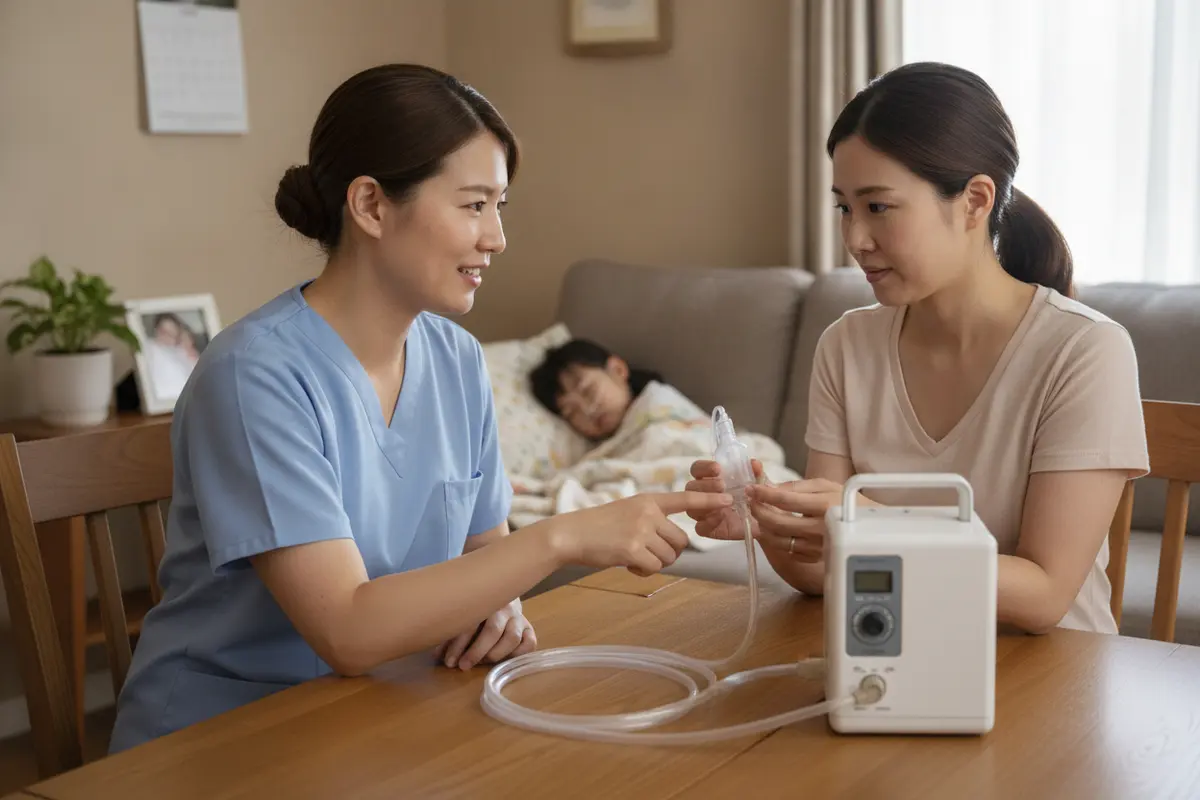
A written, child-specific set of instructions can make conversations between family members and care providers more consistent. Ask the prescribing clinician what information should be kept with the child’s care documents and who is responsible for updating it. Avoid relying on memory alone when multiple caregivers share routines, but do not create or change clinical instructions yourself.
During a planning conversation, consider clarifying the following points with the appropriate professional:
- Current plan version: Identify which written oxygen instructions are current and how the family will know when the clinician changes them.
- Roles by situation: Agree who handles routine care, who answers clinical questions, and which equipment supplier handles equipment-specific support.
- Handoff details: Decide what information the incoming caregiver or nurse needs, such as recent updates from the care team or a change in routine that the family has been asked to report.
- Contact sequence: Write down the regular clinical contact and the separate instructions for urgent concerns. Use the emergency plan supplied by the child’s care team.
- Document storage: Keep relevant instructions and contact information somewhere caregivers can access, while protecting the child’s private health information.
For example, if a child’s school-day schedule differs from the home routine, tell the care team and ask how the approved plan addresses that difference. The family should not assume a nurse, school staff member, or equipment supplier can change the prescription. A clear division of responsibilities can prevent conflicting assumptions and help the team identify unanswered questions before care begins.
What Information Can Help Build an Individualized Care Plan?
A helpful planning conversation brings together clinical instructions and the family’s day-to-day experience. Collect information the care team requests; families do not need to create a medical assessment themselves. Use the following checklist to prepare questions and organize records.
- The child’s current medication and treatment information, as directed by the clinician.
- Oxygen prescription details and the clinician’s written instructions for use, monitoring, and whom to call with concerns.
- Relevant discharge or specialist notes, referral information, and contact details for the child’s care team.
- A simple outline of the child’s routine, including sleep, school, therapies, appointments, and caregiver availability.
- A list of the equipment used at home, who maintains it, and contact information for equipment support.
- Questions about the requested nursing tasks, schedule, handoffs, documentation, and authorization status.
Families can also review Georgia pediatric home health care and GAPP guidance to understand the broader service context. Bring questions to the clinician or program contact who can answer them; a checklist is a preparation aid, not a substitute for required forms or an official decision.
How Do Families Compare Home Nursing Options?
When speaking with a provider, compare the practical details of the service rather than relying on general promises. The table below is a question guide, not a statement that every service is covered or appropriate for every child. Confirm the child’s authorization, provider capacity, and care plan directly.
| Topic | Questions to ask | What to clarify |
|---|---|---|
| Clinical fit | Does the provider assess the child’s current skilled needs and required nursing competencies? | How the child’s plan, prescribed oxygen care, and any other needs will be reviewed. |
| Care coordination | Who develops or oversees the child’s Model of Care and communicates with the family? | Named roles, routine updates, documentation, and escalation channels. |
| Authorization | Which services and hours are currently authorized, and who can explain the decision? | What is confirmed, what remains pending, and how changes are reviewed. |
| Staffing and schedule | How will the proposed schedule be discussed and matched to the authorized plan? | How the provider communicates schedule changes and handles a missed shift. |
| Equipment questions | Who should the family contact about oxygen equipment concerns? | The responsibilities of the clinical team, equipment supplier, and family. |
| Family communication | How can caregivers share observations or request a care-plan discussion? | The right contact, response process, and how important updates are recorded. |
Greater Living is a private duty skilled nursing agency, not a placement service that simply matches a family with an independent nurse. Its clinical staff coordinates care and provides clinical oversight. Ask any prospective provider to describe its own structure and explain how it will coordinate with the child’s clinicians and family.
How Do Different Nursing Service Patterns Affect the Discussion?
Families may hear terms such as private duty nursing, intermittent skilled visits, or GAPP-related services. These describe different service arrangements, but the label alone does not establish what a particular child qualifies for or what a provider can schedule. Ask the clinician and program contacts which service type is being considered and how the request should reflect the child’s assessed needs.
A practical way to compare arrangements is to focus on purpose and planning questions rather than assuming one pattern is the right fit:
- Private duty nursing: Ask what ongoing skilled nursing responsibilities may be included, which hours are authorized, and how the proposed schedule supports the child’s plan.
- Intermittent skilled visits: Ask what specific skilled need a visit would address, how often visits are considered, and who coordinates follow-up with the family and treating clinician.
- Care coordination: Ask who helps maintain the Model of Care, organizes communication, and explains the next steps when the child’s needs or authorization status changes.
These are discussion prompts, not a determination of coverage or a promise of service. A family can describe what the child’s day looks like and ask the care team to connect that routine with the clinical request. If a proposed schedule does not match the authorization or the family’s understanding, pause and ask the responsible contact to explain the difference before treating it as final.
What Can Families Do While a Request Is Under Review?
Waiting for a program or authorization decision can be stressful, especially when a child has complex needs. Keep following the child’s existing medical plan while the request is reviewed. If the child’s condition changes or the family has an immediate clinical concern, contact the child’s care team or follow the emergency instructions already provided; do not wait for an application update to seek appropriate medical help.
For administrative follow-up, write down when documents were sent, which contact received them, and any next step the contact gave you. If the request needs more information, ask exactly what is missing and who should provide it. Keep copies of submitted materials and avoid sending sensitive records through a channel that has not been approved for that purpose.
If services are authorized, confirm the start date and the approved scope before treating a proposed schedule as final. Ask how a reassessment or change in the child’s needs should be reported. Greater Living’s GAPP and home care FAQs may help with common process questions, but program-specific decisions should be confirmed with the appropriate program contact.
Contact Greater Living Home Care to discuss pediatric nursing support
Frequently Asked Questions
Does using oxygen automatically qualify a child for GAPP nursing?
No. Oxygen use by itself does not confirm GAPP eligibility or a particular amount of nursing. The child must meet program requirements, and the relevant reviewers determine what services may be authorized. Ask the child’s clinician and the appropriate program contact about the individual case.
Can a home nurse change my child’s oxygen settings?
Families should follow the child’s prescription and instructions from the treating clinical team. Do not change oxygen settings based on general information or an article. Ask the prescribing clinician how to handle questions or concerns about the child’s oxygen therapy.
Will a nurse handle all of my child’s oxygen equipment?
Responsibilities depend on the child’s plan, the nurse’s assigned role, and the equipment provider’s instructions. Ask who handles routine equipment support, maintenance, and urgent equipment problems, and keep those contact details easy to find.
What should I have ready for an initial conversation with a nursing agency?
Have the child’s general care needs, clinician contacts, current care instructions, Medicaid or GAPP questions, daily routine, and any known authorization information available. The agency can tell you what records it needs and explain the next step without assuming that a request is already approved.
How do home nursing and the child’s medical care team work together?
The child’s clinicians establish medical guidance, while the nursing provider works within the authorized services and the child’s individualized plan. Ask how updates are shared, who receives questions, and how the family should communicate a change in the child’s condition.
With a clear clinical plan, accurate program information, and defined communication roles, families can make a more informed decision about whether home nursing may fit their oxygen-dependent child’s needs in Georgia.
