
Marietta, Georgia In-Home Nursing Options: Pediatric Home Nursing Marietta Georgia GAPP Support
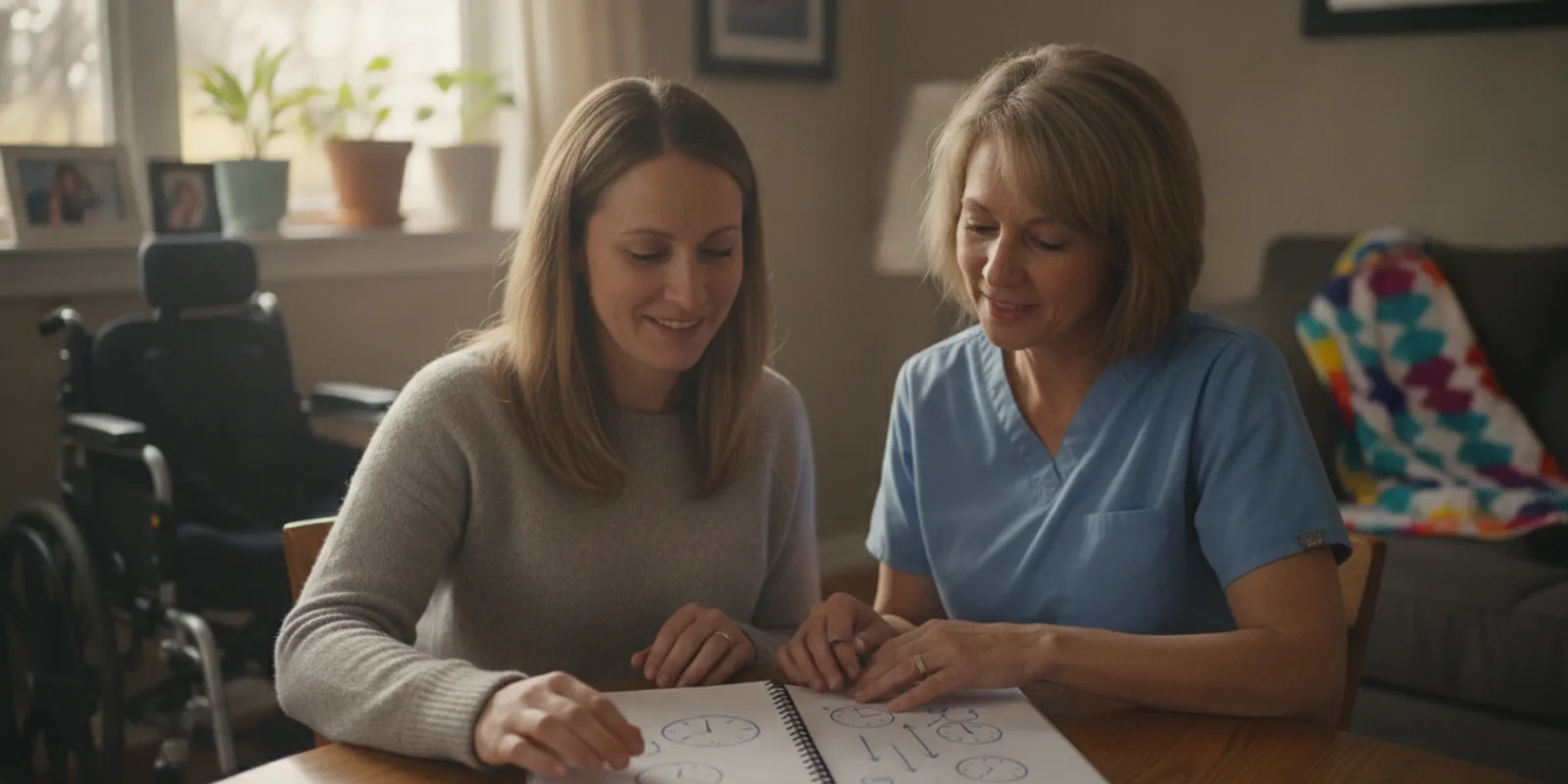
Families researching pediatric home nursing Marietta Georgia GAPP support often need more than a program description. They need a practical way to explain a child’s routines, prepare for care conversations, and understand what to ask next. This guide focuses on those local planning steps; it does not determine eligibility, authorization, or the nursing hours a child may receive.
Talk with the team about your child’s care needs
What Does Pediatric Home Nursing Support in Marietta Involve?
Pediatric home nursing brings care into a child’s home when medical needs and an approved plan call for support there. In Georgia, the Georgia Pediatric Program (GAPP) is a Medicaid-funded program for medically fragile children. The Georgia Department of Community Health’s GAPP presentation describes its purpose as providing skilled nursing care and/or personal care support based on medical necessity to qualifying children under age 20 years and 11 months.
For a family in Marietta, the useful first step is to describe what a typical day actually involves. A diagnosis alone may not explain the practical care needs. A clear picture might include when a child needs help with a routine, what trained support is involved, what changes during school or sleep, and what the family wants a care team to understand. Decisions about whether a service is appropriate belong to the relevant clinical and program review process.
Greater Living Home Care provides pediatric home healthcare in Georgia through GAPP. Its Marietta pediatric home health care page is a local starting point. Families can also review the agency’s Georgia Pediatric Program service information and statewide pediatric home health care guide for broader context.
How Can You Explain Your Child’s Day-to-Day Needs?
Before an introductory call or care-planning conversation, write down the parts of the day that require the most coordination. Keep the description concrete. Instead of noting only that a child “needs close support,” explain what support looks like, when it occurs, and which instructions or routines are already in place. Share clinical details only as advised by your child’s care team.
- Daily routines: Note relevant morning, mealtime, rest, school, and evening routines, including when support is needed.
- Care tasks: List the tasks your family understands to be part of the current care plan. Identify which instructions come from the child’s clinician.
- Changes in the day: Describe what differs on a school day, appointment day, or day when the usual caregiver is unavailable.
- Communication: Record how the child communicates preferences, discomfort, or a need for help.
- Family priorities: Identify what would make care coordination clearer for the child and household.
A short written overview can help keep conversations focused. It does not replace the child’s medical record, clinician’s instructions, or the program’s review. Avoid changing a treatment or equipment routine based on a general article; contact the child’s qualified care professional with clinical questions.
How can you turn a routine into useful details?
Try describing the day in sequence rather than relying on a broad label. For example, note that mornings include preparing for school, a particular care routine already directed by the clinician, and a handoff to the adult responsible for the next part of the day. Add approximate timing only when it is helpful, and distinguish what happens every day from what occurs occasionally. This level of detail can help the family identify where questions remain without suggesting that a particular service or schedule is assured.
It can also help to describe what a smooth day looks like and what tends to disrupt it. A change in caregiver, a school closure, a medical appointment, or an altered sleep routine may affect how the household coordinates responsibilities. Record the practical impact, not a guess about how a provider should solve it. The care team can explain which details matter to its review and planning.
Which Records and Details Are Useful to Gather?
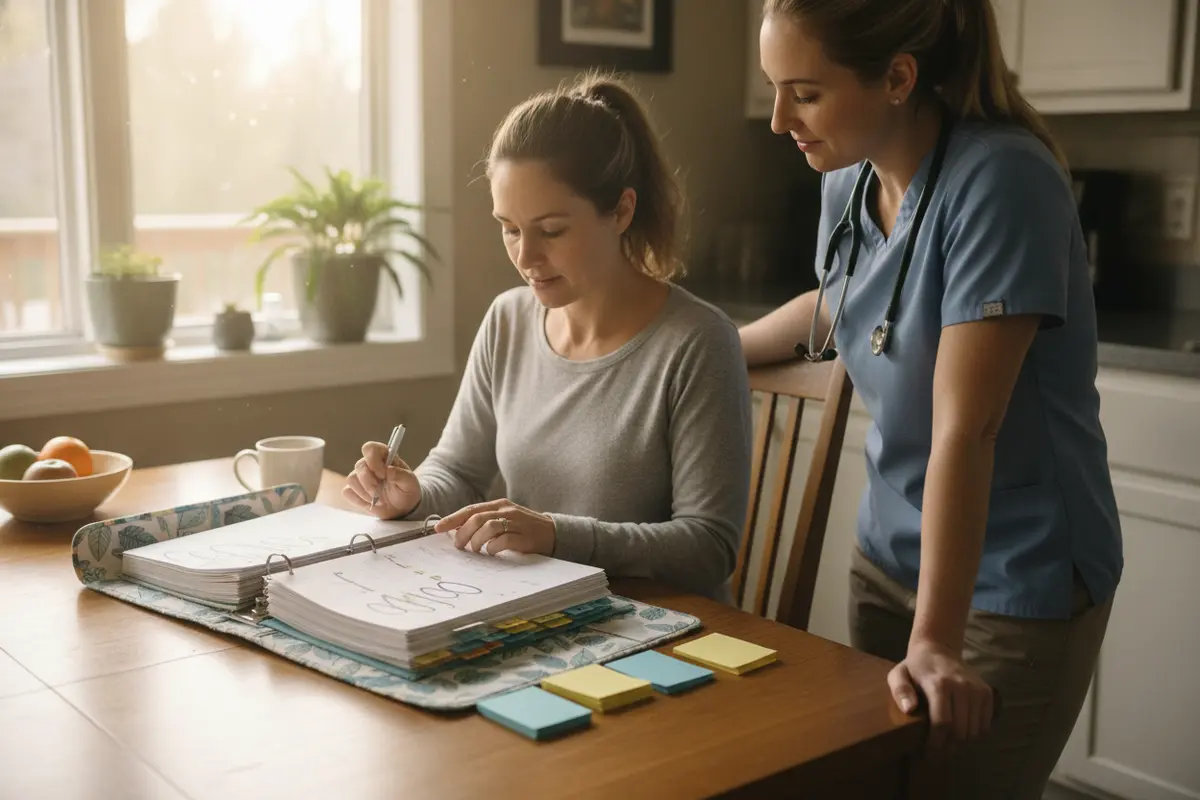
Families may find it helpful to collect current information in one place before discussing home nursing. Ask the child’s clinician or care coordinator which records are needed for the particular situation. Keep copies organized, and note when information was last updated so older instructions are not mistaken for current ones.
- Current contact information for the child’s clinicians and care coordinator, if applicable.
- Relevant medical summaries or orders that the family has been asked to provide.
- A current list of medications and equipment, with instructions provided by the responsible clinician.
- Existing care plans, discharge information, or written routines that apply at home.
- School schedules, appointment patterns, and other timing details that affect household routines.
- Questions or unresolved concerns that the family wants to raise during the conversation.
Do not send sensitive records through an unapproved channel. Ask the agency or provider how to share documents securely and which items are needed. If a document is missing, ask whether there is an acceptable next step rather than assuming that an application or review must stop.
How can you keep information current and easy to use?
Choose one place to track the current version of the information your family uses, such as a dated folder or a secure digital file. Keep a simple index with the document name, date, and person or office that supplied it. If a clinician provides a revised instruction, replace the outdated copy in the working set and make clear which version is current. Do not alter clinical documents yourself; ask the responsible professional for a corrected or updated copy when needed.
A brief handoff note can separate confirmed information from follow-up questions. For example, label a routine as “current per clinician’s written instructions” only if that is accurate, and put an uncertain detail under “ask care team.” This prevents a family’s working notes from being mistaken for formal orders. Before sharing documents, confirm the recipient and approved method, especially when records include private health information.
What Questions Should Marietta Families Ask a Home Nursing Provider?
Useful questions help families understand the process and the roles involved, without presuming that a particular service or schedule will be approved. Consider writing down answers and the name or role of the person who provided them.
- What information should we have ready for an initial conversation?
- Who can explain the next steps for discussing GAPP and any required review?
- How are the child’s current clinical instructions and routines considered in care planning?
- How will the family know which caregiver role is being discussed and what duties are included?
- How are schedules discussed, and what happens if the family’s needs or availability change?
- Who should we contact with a non-urgent question after care begins?
- How should we report a change in the child’s condition, routine, or instructions?
- Which questions should go to the child’s clinician rather than the home care agency?
Families can use the agency’s GAPP and home health care FAQs to prepare general questions, then confirm details that are specific to their child directly with the appropriate people. If you are comparing care options, review the services overview alongside any written plan or guidance you have received.
What should you clarify about communication and coverage?
Ask what information the family should share when a routine changes and which person should receive it. Confirm whether the question is clinical, scheduling-related, or about the program process; different questions may need different contacts. It is reasonable to ask how updates are documented, how a family can confirm that a message was received, and what to do if the usual contact is unavailable. These questions help establish a clear communication route without assuming a specific response time or outcome.
Families in Marietta may also want to discuss practical coordination around school hours, appointments, and household availability. Share the constraints plainly and ask how they are considered during planning. If a family expects a schedule to change during holidays or school breaks, mention that early and ask when the provider needs updated information. The final arrangement depends on the applicable plan, review, and provider discussion, so get confirmed details directly from the relevant people.
How Do Nursing and Personal Care Roles Differ?
Families may hear several caregiver titles during discussions. The role matters because training, responsibilities, and the tasks that can be performed are not interchangeable. The table below is a conversation aid, not a staffing promise or a substitute for the child’s care plan. The exact duties and availability should be confirmed with the provider and applicable program requirements.
| Role or support type | General focus | What to clarify |
|---|---|---|
| Registered Nurse (RN) | Nursing care within the applicable plan and professional scope | Which nursing needs require this role, and how are instructions communicated? |
| Licensed Practical Nurse (LPN) | Nursing support within the applicable plan and professional scope | Which planned tasks may this role perform for the child? |
| Certified Nursing Assistant (CNA) | Care support as permitted by training, direction, and the plan | Which personal care duties are included, and who provides direction? |
| Personal Care Assistant (PCA) | Personal care support within the program and care plan | What support is included, and how does it relate to skilled nursing? |
Greater Living’s team structure includes RNs, LPNs, CNAs, and PCAs. That does not mean every role is suitable for every child or available for every schedule. Ask the provider to explain the proposed role in plain language and how the plan reflects the child’s assessed needs. For a broader discussion of role distinctions, see RN, LPN, and CNA roles in pediatric home health.
How Can You Keep Care Planning Organized?
One simple tracking sheet can reduce repeated explanations when several people are involved. It can also help a parent spot gaps in the information they want to confirm. Keep the sheet factual, dated, and easy to update.
- Write a brief child-and-family overview. Include preferred names, communication preferences, household routines, and the best way to contact the parent or guardian.
- Separate confirmed details from open questions. Mark instructions as current only when verified with the responsible professional. Put unresolved items on a separate question list.
- Record who owns each next step. Note whether the family, clinician, care coordinator, or provider is expected to follow up, and when to check back.
- Track changes. Add the date when an instruction, schedule, or contact changes. Remove outdated copies from the place where caregivers look for current information.
- Review the plan together. Ask the relevant team to confirm that the information is understood and that responsibilities are clear.
If a discussion pauses while records or decisions are pending, ask what is outstanding and how the family will receive an update. Keep a copy of submitted documents and a note of the date they were sent, using the provider’s recommended process. For more planning ideas, Greater Living’s guide to building a special needs care plan may help organize topics to discuss.
How can you track several open questions?
Use a short log with four columns: question, person or office to ask, date asked, and next follow-up. Keep the wording neutral and specific. Instead of writing “authorization is delayed,” record “asked who can confirm the review status on [date].” This helps the family distinguish what is known from what still needs an answer. Add a note when a response changes the next step, and keep related paperwork together so details are easy to find during a later conversation.
When different people give information, note their roles and the date rather than trying to resolve conflicting instructions on your own. If the issue concerns a clinical instruction, ask the child’s clinician to clarify it. If the question is about program process or scheduling, direct it to the relevant program contact or provider. A clear record of the question and its owner can make follow-up more focused and reduce repeated explanations.
What Should You Clarify Before Home Nursing Starts?
Before care begins, families should understand the current plan, who to contact, and what the agreed schedule and assigned duties are. Ask for explanations in writing when possible. A few practical areas to confirm include:
- Care plan: Which version is current, who maintains it, and how are updates shared?
- Schedule: What times are planned, and whom should the family contact if an unexpected change occurs?
- Caregiver orientation: How will a caregiver learn the child’s routines and the relevant written instructions?
- Communication: How are routine updates documented, and which contact is appropriate for different questions?
- Privacy and records: How are family information and care documents handled?
- Urgent situations: Follow the child’s established emergency plan and instructions from the care team. For an emergency, use local emergency services rather than relying on an article or routine agency contact.
Do not assume a start date, specific staffing level, or number of hours until those details are confirmed through the appropriate process. If a care plan does not match the family’s understanding, ask for clarification before relying on it.
What can you do when routines change after care begins?
Tell the appropriate contact when a schedule, instruction, equipment detail, or household routine changes, and ask how that change should be documented. For a planned change, such as a school break or recurring appointment, share the dates and timing as soon as practical. For an unexpected change, follow the child’s established clinical guidance and ask the care team which communication steps apply. Do not use an old note or a general online guide as a substitute for current instructions.
It is also useful to agree on what happens when a caregiver cannot attend or a planned shift needs adjustment. Ask whom to contact, what information to provide, and how the family will know whether a change is confirmed. This is a planning conversation, not a guarantee that a replacement or a particular schedule will be available. Keep the final agreed information with the current care documents so everyone is working from the same understanding.
How Can Marietta Families Find the Right Next Step?
Start with the question that is most pressing: understanding the program, organizing care information, or speaking with a provider about the child’s needs. The GAPP overview can help with basic program context, while the Georgia GAPP application checklist offers a way to think through documents and preparation. These resources do not decide eligibility or replace official review.
Families who want to discuss services can use the contact for services page or contact Greater Living directly. Ask what information to have ready and which steps are appropriate for your child’s circumstances. If you are still exploring options, the pediatric home nursing guide for Atlanta-area families provides another Georgia example of how local information can be organized; it should not be read as a statement about coverage in every location.
Contact Greater Living to discuss a next step
Frequently Asked Questions
Does this guide confirm that my child qualifies for GAPP?
No. It provides general planning information, not an eligibility or authorization decision. Program review and the child’s circumstances determine what may be appropriate. Ask the relevant program contact, clinician, or provider about the process for your situation.
Can I request a particular schedule or caregiver role?
You can explain your family’s needs and ask how the schedule and caregiver role are determined. The plan, review, staffing, and applicable program requirements affect the final arrangement. Confirm all details with the provider rather than assuming that a preferred schedule is guaranteed.
What if our records or care instructions have changed?
Tell the provider or care coordinator that the information has changed and ask how to share the current version. Follow the child’s clinician for clinical instructions, and make sure outdated documents are not used as the current plan.
Where can Marietta families begin?
Families can review Greater Living’s Marietta page and GAPP information, then contact the agency with questions about the next appropriate step. For child-specific medical questions, contact the child’s clinician or care team.
A clear summary of your child’s routines, current instructions, and questions can make the next conversation more focused, while the appropriate team determines what support may fit.
