Spinal Muscular Atrophy Home Nursing in Georgia

Handling a child’s spinal muscular atrophy needs expert medical support right in your own home. Trained nurses make sure that high-acuity needs are met while letting your family stay together in a familiar place.
Contact Greater Living Home Care today to learn how GAPP-covered nursing can support your child with SMA.
Spinal muscular atrophy home nursing in Georgia provides skilled in-home care for children under 21 with this motor neuron disorder. Families can access these services through the Georgia Pediatric Program (GAPP) at no cost if the child has Medicaid and a medical need for skilled nursing. Licensed agencies like Greater Living Home Care focus on this high-acuity pediatric nursing to help families manage daily medical needs safely at home.
Knowing the medical facts of this illness is the first step toward getting the right help for your child. To understand these needs, you should first ask: What Is Spinal Muscular Atrophy and How Does It Progress?
What Is Spinal Muscular Atrophy and How Does It Progress?
Spinal muscular atrophy, or SMA, is a rare genetic disease that affects the nervous system. It targets the motor neurons in the spinal cord. These nerve cells control how we move our muscles. Without them, the brain cannot send signals to the muscles. This leads to muscle weakness and wasting over time. According to the National Institutes of Health, SMA affects about one in 10,000 live births. It is a progressive condition, which means it gets worse if it is not treated.
The genetic cause of SMA
Most children with SMA have a change in a gene called SMN1. This gene makes a protein that keeps motor neurons healthy. Parents can be carriers of the SMA gene without knowing it. About one in 50 people carry the gene change that causes SMA. If both parents are carriers, there is a 25% chance their child will have the disease. This is why many families learn about the diagnosis early in their child’s life.
The five main types of SMA
Doctors group SMA into five types based on when symptoms begin. Type 0 is the most severe and starts before birth. Type 1 is the most common form. It often shows up within the first six months of life. Children with Type 1 SMA face significant challenges with breathing and swallowing. In the past, many infants with this type did not live past the age of two. Type 2 usually starts between six and 18 months. Children with Type 2 may sit up but often cannot stand or walk without help. Type 3 and Type 4 are less severe and start later in childhood or adulthood.
New treatments and outlook
Medical progress has changed how we treat this condition. New drugs like Zolgensma and Spinraza help the body make the proteins that motor neurons need. These treatments can slow the disease and help children gain new skills. But even with these drugs, many families still need no-cost in-home nursing through GAPP to keep their child safe. Skilled nurses help with breathing support and daily care needs in Georgia.
It is important to know that SMA does not affect how a child thinks or learns. Children with SMA have the same cognitive abilities as their peers. They can play, go to school, and reach many goals. The goal of home care is to help them stay healthy so they can focus on being kids. Skilled nursing helps families manage the physical needs of SMA while staying together at home in Georgia.
What Home Nursing Services Do Children with SMA Need?
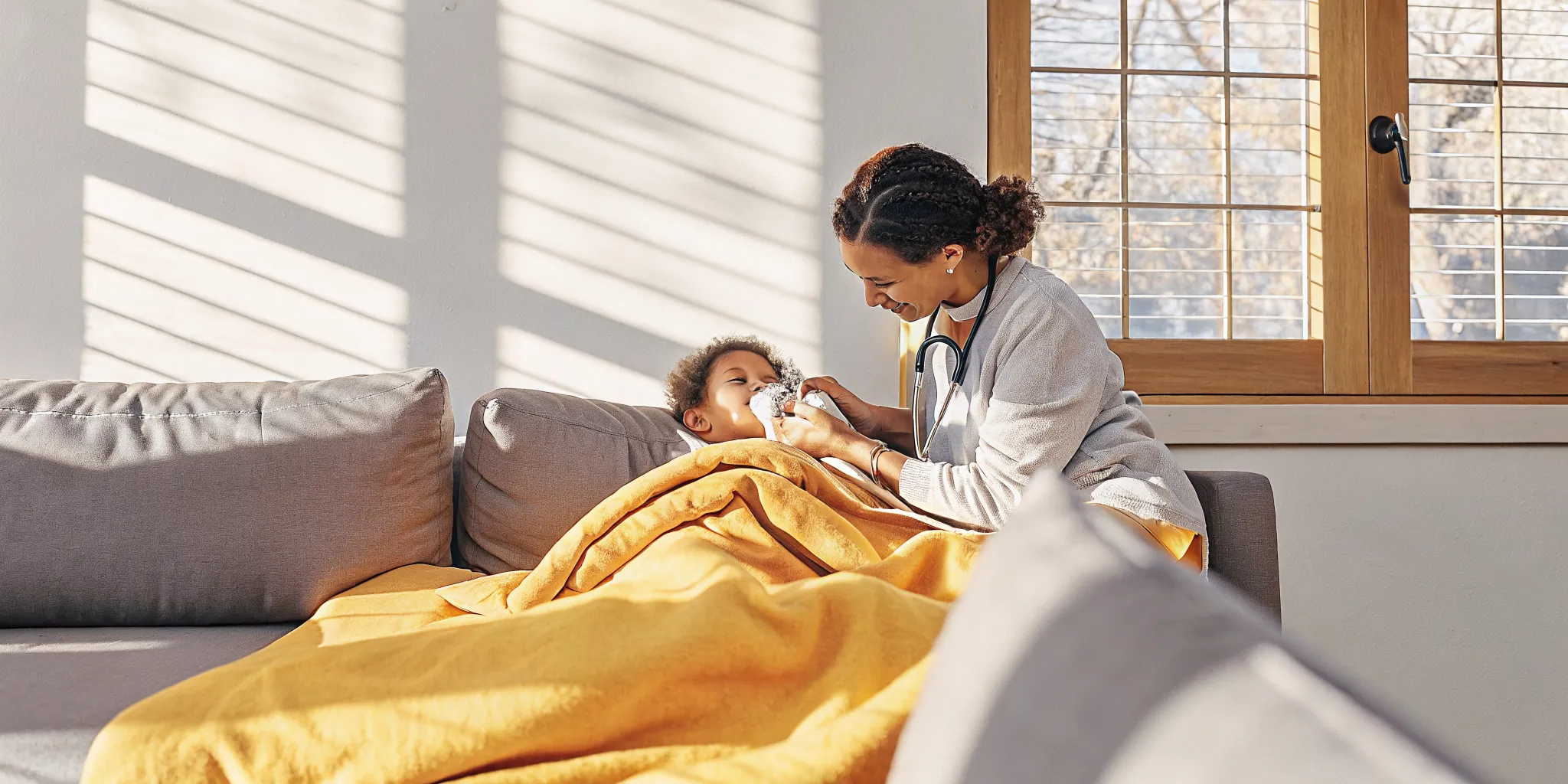
Spinal muscular atrophy affects the motor neurons that control muscle movement. As the condition progresses, children often lose the strength to breathe, eat, or move on their own. In Georgia, families of children with severe SMA types often need skilled help to manage daily life. High-acuity SMA patients often need 24/7 skilled nursing to stay safe and stable at home. This care is medical, compassionate, and focused on the child’s exact health needs.
Contact Us to learn how Greater Living Home Care can match a skilled nurse to your child’s SMA care needs.
Breathing care and airway support
Breathing care is the most needed support for a child with SMA. Weak chest muscles make it hard for the child to clear their airway or take deep breaths. Skilled nurses in Georgia provide ventilator care and tracheostomy help to ensure the child gets enough oxygen. They also use manual or machine suctioning to clear mucus from the lungs and throat. These breathing steps are needed to prevent lung infections like pneumonia.
Nurses also help with daily lung care. This may include tasks such as:
- Using a cough assist machine or vest therapy to shake loose mucus.
- Providing chest physiotherapy (CPT) and nebulizer treatments.
- Watching vital signs to find breathing issues early.
- Using bagging and emergency airway steps if the child has a crisis.
Having an RN or LPN in the home provides a safety net for families. This level of monitoring keeps the child comfortable and out of the hospital.
Nutritional support and G-tube feeding
Many children with SMA have difficulty swallowing safely. This condition is called dysphagia. It can lead to choking or the child breathing food into their lungs. To prevent this, many children receive enteral nutrition through a gastrostomy tube, or G-tube. Nurses manage these feeding pumps and ensure the child receives the right amount of food and water each day. They also monitor the G-tube site for signs of infection or skin breakdown.
A home nurse also manages complex medication schedules. While new treatments like Spinraza and Zolgensma have changed how SMA progresses, children still need daily care. Nurses ensure that oral or tube-fed medications are given on time and in the correct doses. They also monitor for side effects and report changes to the child’s medical team. This consistent care helps children maintain their weight and strength as they grow.
Complex monitoring and mobility tasks
SMA care goes beyond breathing and eating. High-acuity patients often need constant monitoring for seizures and other neurological changes. Nurses track vital signs like heart rate and oxygen levels to detect problems early. They also help the child with mobility and range-of-motion exercises. These exercises keep joints flexible and may slow down the loss of muscle function. Consistent movement is key for the child’s comfort and long-term health.
For families in Georgia, managing this level of care alone can be overwhelming. Skilled nursing allows parents to focus on being a parent while the nurse handles the medical work. Greater Living Home Care specializes in high-acuity pediatric nursing care for children with SMA. By providing expert support, we help families stay together in the comfort of their own homes.
SMA and GAPP: Does My Child Qualify for In-Home Nursing?
Who Qualifies for SMA Home Nursing?
Caring for a child with SMA requires expert skills and around-the-clock care. The Georgia Pediatric Program (GAPP) helps families by providing in-home skilled nursing at no cost. To get these services, your child must be a Georgia resident under the age of 21. They must also have active Georgia Medicaid.
Since this is a state program, there are no out-of-pocket costs through GAPP for families. This ensures every child can get help regardless of their family’s financial situation. The program is 100% state-funded, so you do not have to pay for the nursing care your child receives at home.
The GAPP Approval Process in Georgia
The main requirement for GAPP is showing that your child has a medical need for a nurse. Spinal muscular atrophy is a genetic disorder that causes the nerves in the spine to deteriorate. This leads to muscle loss and weakness throughout the body. Children with SMA often struggle with breathing, swallowing, and moving.
Once an expert high-acuity pediatric nursing agency helps you apply, the state usually gives an answer within 30 days. For families who are prepared in advance, the approval rate is about 95%. This fast process helps you get the spinal muscular atrophy home nursing in Georgia that families can trust. You do not have to wait for months for a spot to open.
Getting Expert Care at Home
Nurses provide essential support for these needs. They can manage breathing tubes, feeding tubes, and daily medications. They also help with suctioning and bagging when a child cannot breathe well. Whether your child needs help for a few hours or all day and night, GAPP covers the tasks that keep them safe at home.
GAPP services are very flexible. There are no long-term contracts to sign. You can change or stop your nursing hours as your child’s health changes. All care comes from Registered Nurses (RNs) or Licensed Practical Nurses (LPNs) who are trained to help children. Our team has deep experience with SMA cases and high-acuity needs.
After a state pay raise in July 2024, Georgia has made it easier for us to recruit and retain top nurses. This means your child receives consistent care from qualified professionals. By working with a top agency, you can keep your family together while your child gets the best medical care at home.
Respiratory Support for Children with SMA at Home
For children with Spinal Muscular Atrophy, breathing is often the biggest health challenge. SMA causes ongoing muscle weakness that affects the chest and throat. This makes it hard for a child to take deep breaths or clear their lungs. In most cases, respiratory failure is the main concern for children with SMA Types 0, 1, and 2. High-acuity pediatric home nursing helps these children stay safe in their own homes. They do not have to stay in the hospital as often.
Managing Airway and Ventilation
Many children with SMA need machines to help them breathe. A ventilator may be used to provide extra air pressure or to breathe for the child. Some children use a mask, while others have a tracheostomy. This is a small tube placed in the neck. Skilled nurses handle all aspects of trach care. This includes cleaning the skin around the tube and changing the ties to keep it secure. They also clean the inner part of the tube to prevent germs from growing.
Suctioning is another essential task. Because SMA weakens the cough reflex, a child cannot always clear saliva or mucus on their own. Nurses use a thin tube to gently remove these fluids from the mouth or the trach. This keeps the airway clear so the child can breathe without difficulty. Regular suctioning is a key part of the spinal muscular atrophy home nursing in Georgia that families use to prevent blockages and lung infections.
Daily Chest Care and Therapy
Keeping the lungs clear requires a daily routine of care. Chest physiotherapy (CPT) involves gentle clapping on the chest and back to loosen mucus. Many families also use vest therapy. This is a special vest that shakes the chest to move fluid into the larger airways. Once the fluid moves, it can be suctioned away. Nebulizer treatments are also common. These machines turn liquid medication into a mist that the child inhales. This mist helps to open the lungs and thin out thick mucus.
Nurses are also trained in manual breathing steps like bagging. They use a hand-held bag to give the child extra breaths if their oxygen levels drop. This quick action can be lifesaving during a power outage or a crisis. By performing these tasks every day, nurses help reduce the risk of pneumonia. This level of care keeps children out of the hospital and lets them enjoy time with their families at home.
Skilled Nursing and Expert Care
In Georgia, skilled Registered Nurses (RNs) and Licensed Practical Nurses (LPNs) provide this complex care. These professionals have the training to manage equipment and monitor for subtle changes in a child’s health. They track oxygen levels with a pulse oximeter and monitor heart rates. If a child’s breathing changes, the nurse knows exactly what to do. They work closely with the child’s pulmonologist to ensure the care plan is appropriate and up to date.
Greater Living Home Care specializes in matching these skilled nurses with families across the state. We understand that caring for a child with SMA requires both skill and compassion. Our nurses become a part of your team. They provide the expert care your child needs to thrive. This focus on high-quality nursing helps families feel more at ease and ensures every child gets the best respiratory support every single day.
How to Find a Georgia Pediatric Home Health Agency with SMA Experience
Finding the right care for a child with SMA can feel like a big task. You need an agency that knows how to handle spinal muscular atrophy and the equipment that comes with it. Many home care agencies focus on older adults or basic assistance. For SMA, your child needs nurses who can work with ventilators and tracheostomy tubes every single day. This type of high-acuity pediatric nursing care is a specialized skill that only a few teams in the state have. You should always ask an agency about their experience with respiratory and neuromuscular care before you sign up.
Look for Deep High-Acuity Medical Skills
The best agency for your family will have strong clinical leadership. At Greater Living Home Care, Dr. Tiffany Murphy leads our clinical team and sets high standards. We ensure our nurses are ready to handle the most complex SMA cases. This includes support with breathing machines, feeding tubes, and round-the-clock care. You should ask any agency how they train their staff for SMA needs. A good team will be transparent and happy to share their training protocols. We also match nurses to your child based on their skills and your child’s preferences. This helps create a bond that makes daily care much easier for everyone.
Prioritize GAPP Program Knowledge and Success
Most families in Georgia use the Georgia Pediatric Program (GAPP) to cover the cost of care. You should look for an agency that understands the GAPP rules completely. We help families navigate the paperwork so there are no out-of-pocket costs. Our team has a 95% approval rate for families who meet the basic requirements. This success comes from our deep focus on the Georgia Medicaid system. We can help you start the 30-day approval process with one phone call. This means you do not have to wait months to get the help you need. If you have more questions about how this works, you can review our frequently asked questions on our site.
Choose a Local Specialist Over a Large National Chain
Big national companies like Aveanna offer many kinds of care for many patient groups. But a local Georgia specialist can often give your family more time and attention. We work statewide across Georgia to find the right nurse for your home. We do not just send the first person who is available. We evaluate nurse skills and personality to find the best fit for your child. We also do not use long-term contracts. This keeps you in control of your child’s care plan. Our simple process has four steps. It starts with a phone call to discuss your needs. Next, we create a care plan and match a nurse to your family. Then, we provide ongoing care checks to make sure your child stays safe.
Frequently Asked Questions
How does Georgia Medicaid cover in-home nursing for SMA?
Georgia Medicaid pays for in-home nursing through the Georgia Pediatric Program (GAPP). This program helps children under age 21 who need skilled care. Families do not pay any costs for this care because Medicaid covers it completely. According to Greater Living Home Care, the enrollment process takes about 30 days. You will work with a team to document your child’s medical need for these services.
Does the GAPP program cover 24/7 nursing care for SMA patients?
Yes, the GAPP program in Georgia can provide up to 24/7 skilled nursing care for children with SMA. The hours your child receives depend on their medical needs. This care often includes support with breathing machines and feeding tubes. There are no long-term contracts or wait lists for this program. Families can receive nursing care at no cost to them. This support makes it easier for your child to stay safe at home.
What equipment do children with SMA need at home?
Children with SMA often need medical equipment to help them breathe and eat. This may include ventilators, suction machines, and feeding tubes. Skilled nurses manage this equipment every day. Having these devices at home allows your child to stay with the family instead of being in the hospital. Professional nursing care is essential for using this medical equipment safely in a home setting.
How do I find a pediatric home health agency in Georgia for SMA care?
You should look for an agency that knows how to work with the GAPP program. It is best to choose an agency that serves all of Georgia and has experience with SMA. A good agency will guide you through the 30-day enrollment process. They will also find a nurse who is a good match for your child. You can call Greater Living Home Care at (912) 446-5838 to start getting help for your family today.
Ready to Get Home Nursing Care for Your Child?
Caring for a child with Spinal Muscular Atrophy requires significant time and energy every single day. If you wait to get help, you may feel exhausted and overwhelmed very quickly. Starting the Georgia Pediatric Program process now helps you get a skilled nurse in your home much faster. This nurse can help with breathing equipment, feeding, and medications while you get some rest. Every day you wait is another day of doing it all by yourself. You can provide your child with expert care while you stay by their side as a parent. Taking this step now means your child gets the support they need right away.
Ready to get help? Call (912) 446-5838 to schedule a free consultation and begin the GAPP enrollment process for your child with SMA.
