Medically Fragile Definition for Georgia Families

When a child needs more than routine appointments, everyday family life can include careful monitoring, specialized equipment, and skilled clinical support. Understanding the language used by care teams can help parents ask clearer questions and plan for safer support at home.
The medically fragile definition generally describes a child whose chronic or severe health needs require ongoing medications, treatments, specialized care, equipment, or close supervision. The term is descriptive rather than a universal legal diagnosis. A child may need support for breathing, feeding, seizures, mobility, medication management, or several needs at once. Medical fragility does not automatically determine eligibility for Georgia Medicaid or GAPP; program and medical-necessity review are still required.
The practical details behind the term matter most. Looking at a child’s health needs, daily function, equipment, and level of supervision provides a clearer foundation for understanding what medically fragile may mean for that child.
What Is the Medically Fragile Definition for a Child?
The medically fragile definition describes a child who needs ongoing, skilled, or closely supervised support because of serious or complex health needs. It is a descriptive care term, not a universal legal diagnosis. A child may be medically fragile when a chronic or severe condition affects daily function and requires treatment, monitoring, specialized equipment, or help with essential activities.
Medical fragility can result from a congenital condition, an acquired illness, a brain injury, or a serious neurologic or respiratory disorder. Some children have one primary condition, while others have several conditions affecting different body systems. A research framework for children with medical complexity considers the child’s conditions, functional limitations, health care needs, and the services the family identifies as necessary. These factors help explain why a child may need more support than routine pediatric appointments provide.
Examples may include cerebral palsy, epilepsy, muscular dystrophy, cystic fibrosis, prematurity-related complications, or traumatic brain injury. The diagnosis alone does not determine whether a child is medically fragile or what care is appropriate. Families and clinicians also consider how the condition affects breathing, nutrition, movement, communication, safety, and the child’s ability to participate in everyday activities.
Practical signs of medical fragility can include these supports:
- Airway management, suctioning, oxygen therapy, or ventilator support.
- Feeding through a G-tube or another feeding tube, including use of a feeding pump.
- Cardiorespiratory or seizure monitoring.
- Complex medication schedules, wound care, or other skilled treatments.
- Specialized equipment and close assistance with daily activities.
These needs can change over time.
A child may need intensive support after hospitalization, during a period of instability, or as part of long-term care at home.
Greater Living Home Care describes medically fragile care in terms of the child’s actual clinical needs and individualized plan, rather than relying on a label alone. For families in Georgia, the term also does not guarantee Georgia Medicaid or GAPP eligibility. Program requirements, medical necessity, and authorization must be reviewed for each child.
How Is Medically Fragile Different From Medically Complex?
The terms medically fragile and medically complex describe overlapping needs, but they are not interchangeable labels or universal legal diagnoses. A child may be medically fragile because a serious condition creates a need for close observation, skilled treatment, specialized equipment, or support with daily activities. A child may be medically complex because care involves several conditions, body systems, specialists, functional limitations, or substantial family-identified service needs.
| Term | What it commonly emphasizes | Possible care examples |
|---|---|---|
| Medically fragile | Vulnerability to changes in health and the need for skilled or closely supervised support. | Oxygen or ventilator support, feeding-tube care, seizure response, medication management, or cardiorespiratory monitoring. |
| Medically complex | Multiple interacting diagnoses, functional limitations, specialists, high-intensity care, or ongoing service needs. | Coordinated care across specialties, durable medical equipment, extensive home care, and an individualized plan for daily activities. |
One child can fit both descriptions. For example, a child with a neurological condition, respiratory support needs, feeding equipment. And seizure monitoring may be medically fragile because of the risk and intensity of daily care.
The same child may be medically complex because several conditions and specialists must be coordinated over time. Conversely, a child can have one serious condition that creates fragile care needs without having multiple diagnoses.
Researchers describe medical complexity through several domains, including diagnostic conditions, functional limitations, health care use, and family-identified needs. However, published frameworks continue to develop, and clinical terminology can vary between providers. The medical complexity framework and later consensus work illustrate why the full care picture matters more than a single label.
Families should also avoid using either term to predict program approval. Calling a child medically fragile or medically complex does not, by itself, establish Georgia Medicaid or GAPP eligibility. Program decisions depend on the child’s circumstances, medical necessity, required support, and formal review. A qualified clinical team can help document the actual care needs so the appropriate program pathway can be considered.
What Care Needs May Signal Medical Fragility?
Care needs can offer a clearer picture than a diagnosis name alone. A child may need close, skilled supervision because everyday activities involve airway management, medical equipment, feeding support, medication administration, or monitoring for sudden changes. These needs are practical signals that a family may benefit from discussing pediatric skilled nursing with the child’s healthcare team.
Respiratory and Airway Support
Some children need support to breathe safely throughout the day or night. Examples include tracheostomy care, ventilator or breathing-machine support, supplemental oxygen, and frequent suctioning. A child may also face aspiration risk, meaning food, liquid, saliva, or stomach contents could enter the airway instead of moving safely into the digestive system. These situations require procedures and observation that are specific to the child’s medical orders and care plan.
Feeding, Medication, and Seizure Support
Feeding needs may involve a G-tube, feeding pump, or other enteral nutrition support. Caregivers may need training and assistance with equipment, feeding schedules, site care, and signs that require clinical attention. Medication support can include following a complex regimen accurately and watching for changes after administration. For children with seizure disorders, care may include monitoring patterns, recognizing a seizure response plan, and documenting events for the clinical team.
Other needs may involve wound care, neurological or neuromuscular conditions, chronic respiratory problems, or several ongoing conditions at once. The relevant question is not whether a child has one particular diagnosis. It is how the child’s condition affects daily functioning, safety, monitoring, and the level of skilled support required at home.
Greater Living describes these needs as part of individualized pediatric care planning. Examples include airway management, oxygen or ventilator support, suctioning, G-tube care, medication administration, seizure monitoring, and care coordination. Families can learn more about pediatric private duty nursing as they discuss options with their providers.
These examples do not determine eligibility by themselves. The phrase medically fragile is descriptive rather than a universal legal diagnosis, and it does not guarantee Georgia Medicaid or GAPP approval. Eligibility and authorized services depend on the child’s circumstances, medical necessity, program requirements, and formal review. An individualized plan should reflect the child’s actual orders, risks, routines, and family needs.
How Can In-Home Skilled Nursing Help a Medically Fragile Child?
For a child with significant medical needs, skilled nursing can bring clinically supervised care into the home while helping the family follow an individualized plan. The goal is not simply to have another adult present. It is to provide trained support for treatments, monitoring, medication routines, and changes in condition that require nursing judgment.
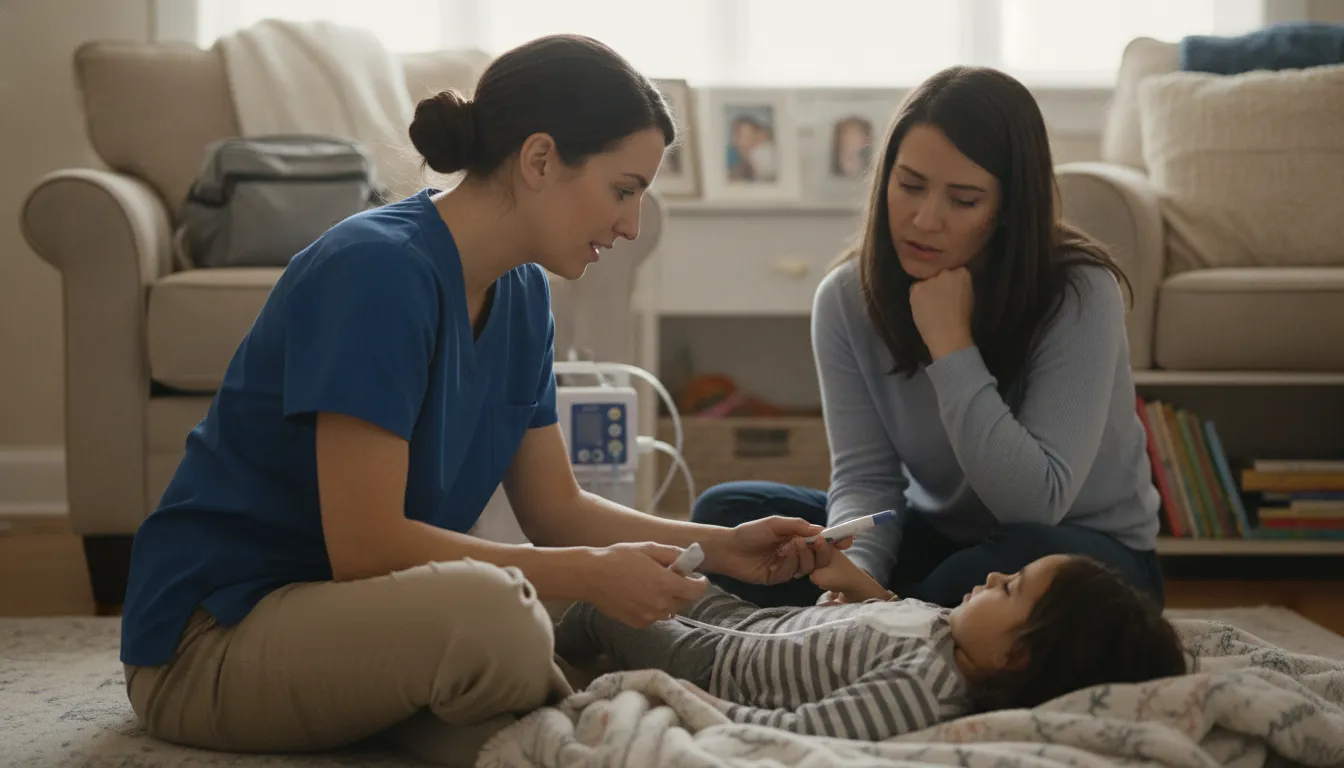
In-home care may support a child who needs airway management, oxygen or ventilator support, suctioning, G-tube care, medication administration, seizure monitoring, or other high-acuity services. These needs can change throughout the day. A nurse can carry out the ordered plan, observe how the child responds, document care, and communicate concerns to the appropriate clinical team. Families can learn more about pediatric private duty nursing and the types of care that may be provided at home.
Care Built Around the Child
Greater Living develops individualized care plans for each child and coordinates RNs, LPNs, CNAs, and PCAs under clinical supervision. The plan may address respiratory support, feeding, medication schedules, seizure response, skin or wound care, positioning, and other needs identified through the child’s assessment and orders. Services are delivered in the child’s home, with the amount of support determined by medical necessity and program authorization. A medically fragile child may need short periods of skilled support, extended coverage, or more continuous care; the appropriate level cannot be assumed from a diagnosis alone.
This model differs from routine household help. Personal care and daily support can be important, but skilled nursing involves clinical tasks and observation that require appropriate training and oversight. It also differs from simply matching a family with an independent nurse. An agency nursing team can organize the care plan, maintain documentation, support staff readiness, and provide clinical coordination when needs or circumstances change.
Why Clinical Oversight Matters
RN supervision helps connect the child’s daily care to a consistent plan. It can support communication among caregivers and providers, reinforce safe procedures, and identify when a concern should be escalated. Families can review how RN-supervised pediatric home care uses care plans, documentation, and staff readiness to support coordinated services.
Greater Living serves physically disabled and medically fragile children under age 21 in Georgia through GAPP. The description of a child as medically fragile does not, by itself, guarantee GAPP eligibility, approval, hours, or a specific level of care. Georgia Medicaid and program reviewers determine whether the child’s documented condition and medical needs meet current requirements.
What Should Georgia Families Know About Medicaid and GAPP?
For families caring for a medically fragile child, the phrase “medically fragile” can help describe the level of support a child may need. But it does not function as a universal legal diagnosis.
Georgia Medicaid and the Georgia Pediatric Program (GAPP) consider the child’s circumstances, medical needs, and program requirements through a review process. Greater Living serves physically disabled and medically fragile children under age 21 in Georgia through GAPP. GAPP is a Medicaid-funded program designed for eligible children who need medically necessary nursing or personal care support.
GAPP eligibility guidance can help families understand the basic factors that may be reviewed. But a diagnosis alone does not guarantee approval, a particular number of hours, or a specific level of care. A practical starting sequence is:
- Confirm the family’s Georgia connection. The child must live in Georgia, and the family should confirm whether the child is enrolled in or eligible for Georgia Medicaid. Medicaid status is one part of the review, not a substitute for medical-necessity documentation.
- Confirm the child’s age and care needs. GAPP is focused on children under age 21. Gather information describing the child’s condition and the skilled nursing or personal care support required at home. Needs may include respiratory support, feeding-tube care, seizure monitoring, medication management, or close supervision for other high-acuity conditions.
- Ask how medical necessity will be evaluated. The review may consider whether the child’s condition requires skilled nursing and/or personal care support. Families should avoid assuming that the label medically fragile, or any single diagnosis, automatically establishes eligibility. The program review determines whether the child meets applicable requirements and what care may be authorized.
- Use an eligibility resource and discuss next steps. Review GAPP pediatric nursing eligibility for an overview of what Georgia Medicaid may review. Families can also learn more about pediatric home care in Georgia, including how in-home skilled nursing and coordinated clinical care may support a child.
- Prepare for individualized planning. If the family proceeds, clinical information and care needs help inform an individualized plan. Greater Living’s nursing team coordinates care under clinical oversight rather than simply matching a family with an independent nurse. Final approval, authorized hours, and level of care remain subject to program and medical-necessity review.
These steps can make an unfamiliar process easier to navigate while keeping expectations realistic. Georgia families should ask questions, keep relevant clinical records organized, and confirm each requirement with the appropriate Medicaid or GAPP resource before making care decisions.
Talk with Greater Living Home Care at (912) 446-5838 about possible next steps for your child.
Frequently Asked Questions
Is medically fragile the same as medically complex?
Not always. Medically fragile usually describes a child whose condition creates a significant risk or requires specialized treatment, monitoring, equipment, or support. Medically complex often describes broader, overlapping needs involving multiple conditions, specialists, functional limitations, or substantial family-identified services. A child may fit both descriptions, but neither term alone determines a diagnosis, care plan, or program eligibility.
What care needs may indicate that a child is medically fragile?
Examples include respiratory support, oxygen or ventilator care, feeding-tube management, seizure monitoring, complex medication routines, or assistance with other skilled treatments. The relevant question is how the child’s condition affects safety and daily care, not whether the child has one specific diagnosis. The child’s physician and care team should determine which services are clinically appropriate.
Can a medically fragile child receive skilled nursing at home in Georgia?
Possibly. Greater Living provides in-home skilled nursing and personal care support for physically disabled and medically fragile children under age 21 through Georgia’s Pediatric Program, a Medicaid-funded program. A child’s needs, physician orders, Medicaid status, and program review help determine whether a particular service is appropriate. Families can learn more through the pediatric home care in Georgia service information.
Does the term medically fragile automatically qualify a child for GAPP?
No. The term is descriptive and does not guarantee GAPP eligibility, approval, or a specific number of authorized hours. Georgia Medicaid and program reviewers consider the child’s documented condition, functional needs, medical orders, and other requirements. A qualified care team can help a family understand the information needed for an individualized review.
Contact Us About Next Steps
Understanding your child’s care needs can help your family ask more focused questions about support at home. Greater Living Home Care can discuss pediatric in-home skilled nursing and explain what information may help guide a conversation about possible next steps. This discussion does not guarantee eligibility or approval. Contact Greater Living Home Care or call (912) 446-5838 to begin the conversation.
