
Pediatric Home Nursing Alpharetta Georgia GAPP Support: Referral Steps
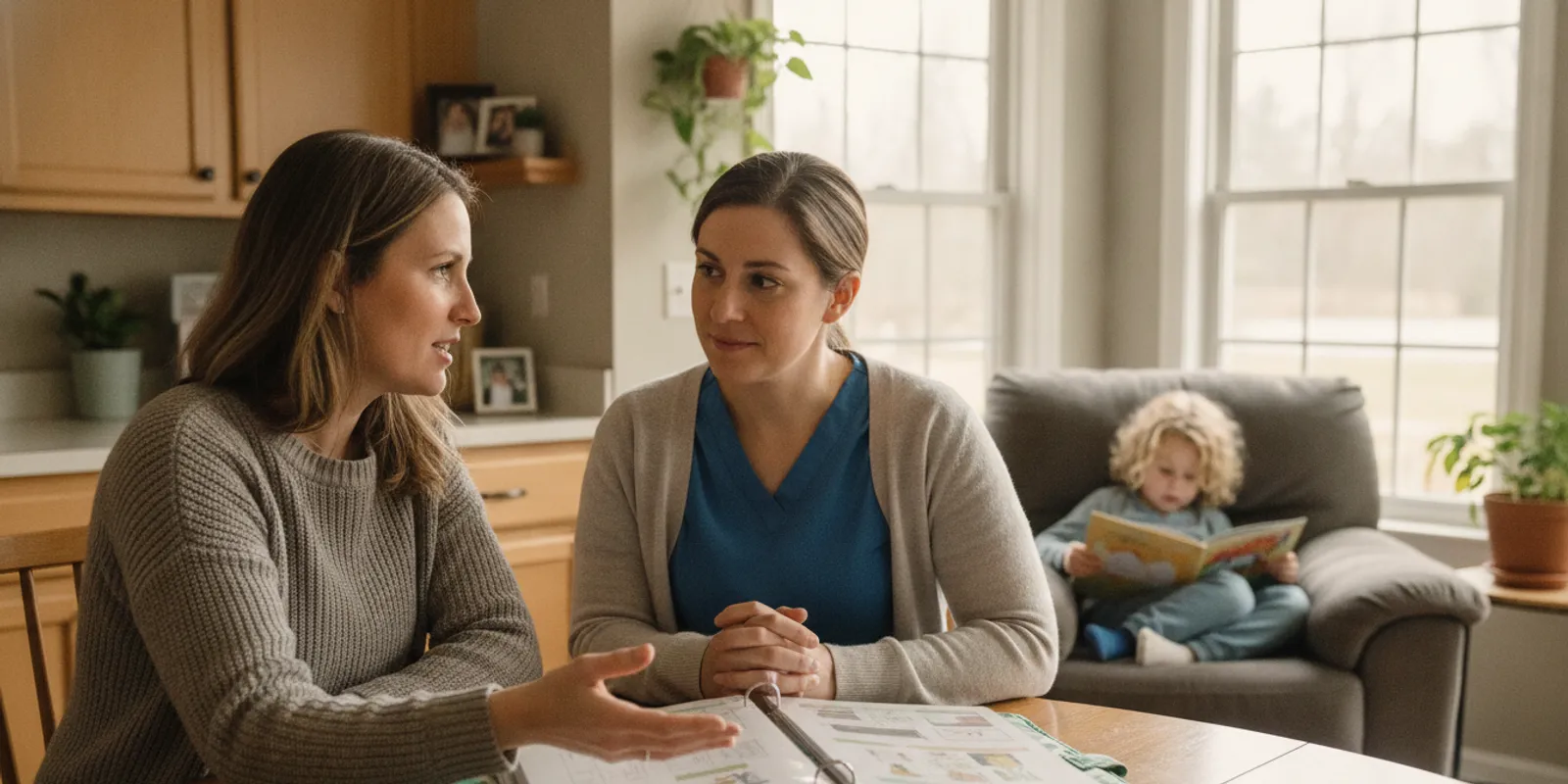
For families exploring pediatric home nursing Alpharetta Georgia GAPP support, the first step is a clear conversation about your child’s care needs and Georgia Medicaid coverage. A referral starts a review; it does not guarantee eligibility, authorization, or a particular schedule. Our Georgia pediatric home health care guide explains the broader service context.
Talk with our team about your child’s home nursing needs
What should families know about pediatric home nursing Alpharetta Georgia GAPP support?
A referral is the beginning of a clinical and program review, not a promise that nursing will start. Families can use the first discussion to describe what their child needs at home, ask which records could help, and understand how Georgia Medicaid and the Georgia Pediatric Program (GAPP) may apply. GAPP is a Medicaid-funded program for eligible children with significant medical needs; the child’s individual circumstances and program decisions determine what services may be authorized.
Greater Living Home Care provides pediatric in-home skilled nursing across Georgia through GAPP. Care may involve private duty nursing or intermittent skilled visits, depending on the child’s needs, clinical review, and authorization. Separately authorized support services are not automatically skilled nursing. A family can ask the care team to explain which service category is being discussed and who is responsible for each next step.
For a useful overview of the program, consult the Georgia Medicaid program resources. Families should confirm current program details with the appropriate Medicaid or GAPP contact because eligibility and authorization are determined through the applicable review process.
How can you prepare for a pediatric home nursing referral in Alpharetta?
You do not need to create a perfect packet before asking for guidance. A concise picture of your child’s day, medical concerns, and existing care team can help a provider understand what questions to ask. Gather what is readily available and note what you still need to request.
- Basic contact and coverage information: Your child’s name and date of birth, parent or guardian contact details, Georgia Medicaid information, and the best way to reach you.
- Current clinical information: Recent care summaries, diagnoses documented by clinicians, discharge paperwork if relevant, and contact details for the child’s medical providers.
- Care routines and safety needs: A plain-language description of daily routines, skilled tasks, equipment, monitoring needs, and situations that require help from a trained clinician.
- Current service information: Any existing nursing or support services, authorizations, schedules, and the names of organizations involved, if applicable.
- Family priorities: What is most difficult to manage, what questions are urgent, and what kind of coordination would make home care easier to understand.
Do not send sensitive documents through an unapproved channel. Ask how the agency accepts records and which documents are needed at each stage. If you do not have a particular record, say so; the team can explain whether it is essential and how to request it from the clinician or facility that holds it.
Which details help describe your child’s needs accurately?
Specific examples are often more useful than a broad description such as “needs a lot of help.” Explain what happens, how often it occurs, what skilled care is involved, and what makes the task challenging. Keep the description factual. A referral discussion is not a substitute for clinical assessment, and families should not try to determine on their own which nursing hours or services qualify.
For example, if your child has a tracheostomy, feeding tube, oxygen needs, or frequent suctioning, describe the care your child’s clinicians have prescribed and the support your family currently provides. Share what changes during the day or night, what equipment is used, and what questions you want the clinical team to answer. This helps a provider understand the context without assuming a particular level of care.
It can help to keep a short, factual care log for a few days, if doing so is manageable. Note the time of key care tasks, changes in routine, and concerns you want to raise. Do not delay a needed referral just to create a log. Your child’s clinician can advise which medical details should be included in a referral or care summary.
How does GAPP fit into a nursing referral and review?
GAPP is the Georgia Medicaid program through which eligible children may receive certain home-based services when program and clinical requirements are met. A referral discussion helps identify the right review path, but the provider cannot promise that a child will qualify or that a requested service or number of hours will be approved. Program decisions depend on the required documentation and review.
Families may find it useful to separate three questions:
- Program eligibility: Does the child meet applicable Georgia Medicaid and GAPP requirements? The appropriate program decision-makers determine this.
- Clinical need: What skilled nursing or other support is indicated based on the child’s documented circumstances? The clinical team considers records and the care plan.
- Authorization and service delivery: What service, if any, is authorized, and can an agency arrange care that fits the authorization and current staffing capacity?
These are related, but they are not interchangeable. A provider may help families understand what records or steps are involved, while final eligibility and authorization remain subject to program review. For an overview of how GAPP differs from other Medicaid home health concepts, see the agency’s GAPP and Medicaid home health comparison. Families can also review what the Georgia Pediatric Program is and the GAPP service information.
What happens after you contact a pediatric home nursing provider?
The exact sequence can vary with the child’s situation and the information already available. A first conversation commonly focuses on the family’s concerns, coverage context, and whether the service being explored matches the child’s needs. The provider can explain its intake steps and what it needs to assess the request. Use the conversation to confirm who will follow up and which actions belong to the family, the provider, the clinician, or the program.
| Stage | What the family can do | What to clarify |
|---|---|---|
| Initial inquiry | Describe the child’s needs, location, coverage, and main concern. | Is the service under discussion skilled nursing, another support service, or both? |
| Information gathering | Share or request relevant clinical records through approved channels. | Which specific documents are needed, and who will request anything missing? |
| Clinical and program review | Respond to questions and keep contact details current. | Who makes the eligibility or authorization decision, and how will the family hear about it? |
| Planning, if authorized | Discuss routines, caregiver communication, and practical scheduling needs. | What services and schedule are authorized, and can the agency currently arrange them? |
| Ongoing coordination | Share relevant changes and keep copies of notices and care information. | Who should the family contact if needs, schedules, or authorization details change? |
Use the table as a question guide, not as a promise that every case follows the same timeline or sequence. If a family is waiting for a decision, ask for the current status and the next expected action rather than assuming that silence means approval or denial. Keep a note of dates, names, and requests so you can follow up clearly.
How can families compare nursing roles and service types?
Ask who will provide the service and what responsibilities that role can perform. Registered Nurses (RNs) and Licensed Practical Nurses (LPNs) provide nursing care within their scope and the child’s plan. Certified Nursing Assistants (CNAs) and Personal Care Assistants (PCAs) may provide support services where those services are separately authorized and appropriate. Those support roles are not a substitute for skilled nursing, and a family should not assume that all roles are included in one authorization.
Greater Living’s model includes RNs who handle care coordination, Case Model of Care plans, and clinical oversight. A written plan can help connect clinical direction with the child’s home routines. Ask who develops the plan, how the family can raise a concern, and how changes are communicated to the child’s clinicians and caregivers. The related family guide to the GAPP Model of Care plan offers more background.
Families comparing options can also read about pediatric private duty nursing, how RN, LPN, and CNA roles differ, and Medicaid pediatric skilled nursing at home. These pages can help you prepare better questions, but they cannot determine what a specific child is eligible to receive.
What questions should you ask during the referral conversation?
It is reasonable to ask for plain explanations, especially when several organizations take part in a review. Write questions down before the call and ask the team to identify the next action and its owner. Useful questions include:
- Which service are we discussing: private duty nursing, intermittent skilled nursing, or a separately authorized support service?
- What information would help the clinical team understand my child’s current needs?
- Who makes the GAPP eligibility and service authorization decisions?
- How will we know whether the referral is complete or whether more records are needed?
- Who will contact us next, and what should we do if we do not hear back?
- If services are authorized, how will the care plan and schedule be discussed with our family?
- How should we report a change in our child’s needs or our contact information?
If your child already receives care, ask how the referral team will coordinate with the existing providers and clinician, subject to appropriate permissions. Families may want to read the practical GAPP application checklist and learn about the prior authorization discussion before a follow-up call.
How can Alpharetta families keep care coordination clear?
Choose one place to keep referral notes, program notices, care summaries, and contact information. A paper folder or secure digital record can work; the important thing is that the family can find the latest information and share it appropriately. Record what was requested, who is expected to act, and when you plan to check in.
When the child’s situation changes, notify the relevant clinician and ask the provider or program contact how the change should be documented. Do not rely on an old authorization or schedule to cover a new need. If you are unsure whether a request is urgent, contact the child’s clinical team for guidance. For questions about the provider’s intake route, use the contact for services page; the general family FAQ may also help answer common process questions.
Families in Alpharetta can start with the same practical steps as other Georgia families: describe the child’s needs clearly, ask how Georgia Medicaid and GAPP apply, and confirm the next action with the people responsible for the review. Greater Living serves families statewide, but service arrangements depend on the child’s circumstances, authorization, and current capacity. An initial conversation can help clarify whether to proceed and what information to gather.
Contact our team to discuss a pediatric home nursing referral
Frequently Asked Questions
Does a referral mean my child is approved for GAPP nursing?
No. A referral begins a discussion or review; it does not confirm program eligibility, authorization, or a specific nursing schedule. The appropriate program and clinical review determine what may be approved.
Should I wait until I have every medical record before contacting a provider?
No. You can ask what information is useful and how to obtain missing records. Do not delay an initial conversation solely because your file is incomplete, and use only approved channels to share sensitive information.
Can a family request a particular number of nursing hours?
You can explain the care needs and schedule challenges you observe, but the authorized services and hours are determined through the applicable review. Ask who makes that decision and how the decision will be communicated.
Are support services the same as skilled nursing?
No. Skilled nursing and other support services have different roles and may require separate authorization. Ask the provider to identify the type of service being discussed and who would deliver it.
A clear referral conversation can help your family understand the next step without making assumptions about an outcome. Keep your questions focused on your child’s documented needs, the review process, and who will follow up.
