
Pediatric Home Nursing Medical Equipment Coordination Georgia
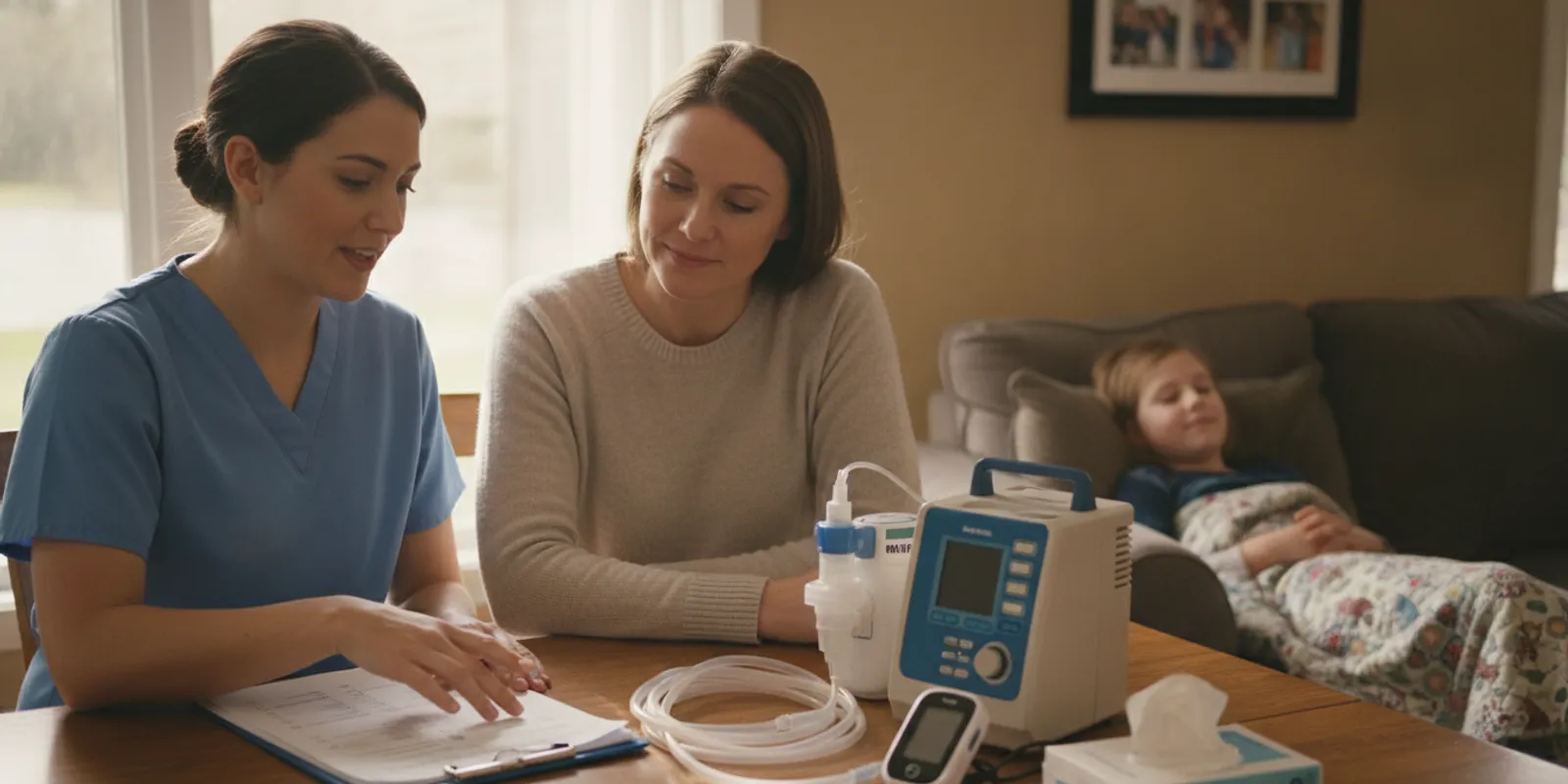
For families considering pediatric home nursing in Georgia, equipment coordination means keeping the child’s equipment information, nursing routines, and care-team communication organized. It does not replace clinical direction; it helps families and the child’s care team work from clear, current information.
Talk with our team about your child’s home nursing needs
What does pediatric home nursing medical equipment coordination Georgia involve?
It is the practical work of making sure the people involved in a child’s home care understand what equipment is used. Where reliable instructions are kept, who to contact with questions, and how updates reach the appropriate clinical team. The exact process depends on the child’s needs and care plan. A family does not need to solve every equipment question alone: organize the information you have. Identify what is unclear, and ask the child’s clinician or nursing team for direction.
Home health care can form an important part of support for children with disabilities and medical complexity, as described in this review of pediatric home health care. Research has also examined how pediatric home health care is planned and maintained from family and professional perspectives; see the Pediatrics article on the pediatric home health care process. For an individual child, however, equipment decisions and clinical instructions must come from the child’s treating professionals.
Why organize equipment information before a nursing start or change?
Home care can involve several people: a parent or guardian, the child’s medical providers, nurses, equipment suppliers, and other caregivers. Each may hold a different piece of information. An organized reference can help the family explain what is currently in the home, point out missing or outdated instructions, and direct questions to the right person. It can also make a conversation with a prospective provider more specific.
Coordination is not the same as deciding whether a device is medically necessary, changing how it is used, or troubleshooting it independently. Those are clinical or equipment-provider questions. The family’s role is to share accurate observations and current documents, then get direction from the appropriate professional.
- For a first conversation: An inventory helps explain the equipment and routines that are part of the child’s day.
- When care changes: A dated note about a new device, revised instructions, or a concern helps the team understand what prompted the question.
- When several people provide support: A shared, approved information source can reduce confusion about where current instructions are kept.
Families exploring GAPP can review the agency’s Georgia Pediatric Program (GAPP) service information and its family guide to what GAPP is. Program participation and service decisions require review; an equipment list by itself does not establish eligibility or a nursing schedule.
What equipment details can families gather?
Start with what is already documented. You do not need to create technical instructions or interpret device settings. Record enough identifying information so the care team can understand which equipment you mean and where to find its instructions.
- Device or equipment name: Use the name on the device paperwork or the term your clinical team uses. If you are unsure, take note of the label and ask for help identifying it.
- Purpose as explained by the care team: Use the clinician’s wording when available. Do not guess at a diagnosis or device function.
- Current written directions: Note where the most recent clinician-approved instructions are stored and when they were last reviewed, if known.
- Supplier and support route: Keep contact details for the equipment supplier or other designated support contact with the appropriate paperwork.
- Routine and responsible person: Record which parts of the established routine are handled by family or trained staff, following the care plan and professional guidance.
- Open questions: List anything unclear, including a missing document, a change the family has noticed, or an issue that needs follow-up.
For equipment connected to respiratory support, airway care, or nutrition, avoid relying on memory when the team has supplied written directions. The child’s clinicians determine the correct care and response steps. A nurse can help communicate observations and coordinate within the nurse’s scope and the child’s approved plan; the nurse should not replace the treating clinician or equipment supplier.
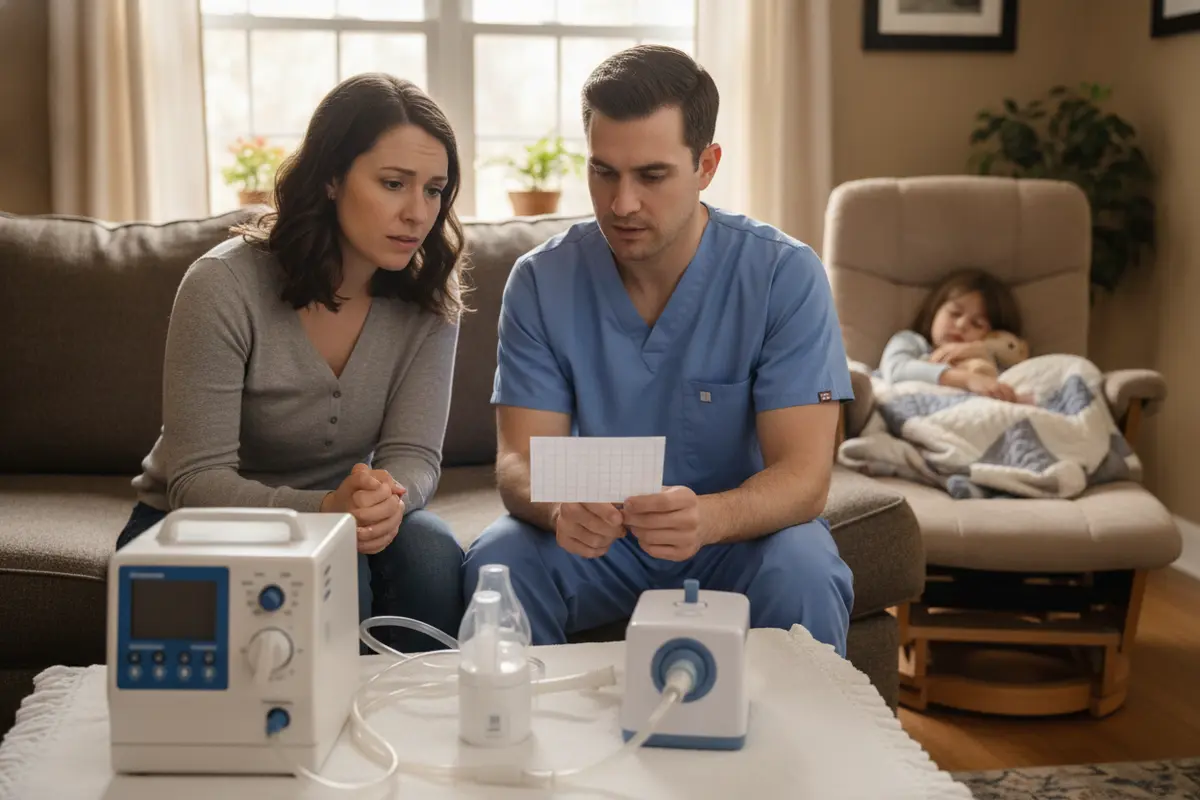
How can a family build a useful equipment reference?
A one-page index can make it easier to locate the right records without attempting to rewrite them. Keep the original instructions intact. Ask the care team how they prefer to receive updates and where copies should be stored. If a detail is unknown, mark it as a question rather than filling in a guess.
- Choose a central place. Keep the index and current care documents in a secure, known location at home. If the team uses an approved electronic record or communication method, ask how the family should share updates there.
- List each item separately. Include the common name, the place where its instructions are kept, and the person or organization to contact for equipment questions.
- Separate confirmed information from questions. Label information that came from the care plan or clinician. Put anything uncertain on a question list for follow-up.
- Add a review date. When the team confirms or updates information, note when the family received the update and where the current document is stored.
- Share only through appropriate channels. Medical records and personal details deserve care. Ask the provider how to transmit documents securely and which people need access.
Families already working on broader care planning may find it helpful to review this guide to a GAPP Model of Care plan in Georgia. The article can help frame what to discuss, but the child’s clinical team remains responsible for the plan and individualized care direction.
Which questions should families ask the care team?
Good coordination begins with questions that make responsibilities and communication routes clear. Write down the answer and who provided it, especially when the answer changes an established routine. If a question concerns a device’s operation or a clinical decision, ask the clinician or supplier identified by the care team rather than improvising.
- Which written instructions should the family keep with this equipment, and who can confirm that they are current?
- Who should we contact for a clinical question, and who handles equipment or supplier questions?
- How should we report a change we notice or a problem locating an instruction?
- Which members of the child’s team need an update, and what is the preferred communication method?
- How should the family share updates when a device, order, or routine changes?
- What should we do if the written instructions seem to conflict or we cannot reach the usual contact?
- How does the information fit into the child’s current nursing plan and any GAPP documentation?
Greater Living Home Care describes its work as in-home pediatric skilled nursing and clinical oversight. Its nurses develop individualized Model of Care plans; families can ask how equipment-related information should be communicated within the child’s care arrangement. To prepare for a discussion, this guide to preparing for a pediatric home nurse offers useful household-planning prompts.
Before the call, put the child’s current care documents, equipment list, and question list together. You might open with: “Here is the equipment our child uses at home, and these are the written directions we have. Can you tell us which clinical documents you need and who should answer our open questions?” Then ask how updates should reach the nurse or clinical team. And whether the family should send a copy through a secure channel or bring it to a discussion. If the family does not have a document, say so plainly rather than recreating it. If details seem inconsistent, identify the documents or instructions and ask the responsible clinician to clarify which one is current. This keeps the conversation focused on confirming information, not asking a new provider to make an unsupported assumption.
It can also help to agree on a simple method for tracking follow-up. Write down the question, the person or team expected to answer, the date you asked, and any next step the team gave you. Do not record private medical details in a place that people outside the child’s care team can access. If more than one caregiver helps with communication, decide who will relay updates so the team receives a clear, consistent message. The right workflow will vary by family and provider; ask the clinical team which approach it prefers.
How do equipment coordination and nursing roles fit together?
A family may want to understand who handles which part of the work before care begins. The answer depends on the child’s orders, approved plan, provider arrangements, and the professionals involved. Nurses provide care within their licensure, training, and assigned plan; equipment suppliers address equipment-related matters within their role; clinicians make medical decisions. A caregiver’s observations and questions help connect those conversations.
| Coordination need. | Family preparation and where to ask. |
|---|---|
| Identify equipment and records. | List names and where current instructions are stored. Ask: The child’s nurse or clinical team if identification or documentation is unclear. |
| Understand clinical instructions. | Keep the original written directions and note questions. Ask: The child’s treating clinician or the professional designated by the care team. |
| Ask about equipment operation or support. | Have relevant equipment details and supplier documents ready. Ask: The equipment supplier or designated technical support contact. |
| Communicate a change in the care plan. | Record what changed, when it occurred, and who was informed. Ask: The clinical team and nursing provider through the agreed communication route. |
| Discuss GAPP services. | Gather current program and care documents and list questions. Ask: A GAPP-related provider or appropriate Georgia program contact. |
This table is a communication aid, not a clinical protocol. It does not assign legal responsibility or replace the instructions of the child’s clinicians. If the family is unsure which contact applies, ask the child’s care team to clarify the route before an issue arises.
Families comparing nursing support can read about pediatric private duty nursing and the role of RN care coordination. These explain service context; the child’s team can clarify which options may fit the child’s circumstances.
What if equipment, instructions, or routines change?
When something changes, focus first on communicating the change to the appropriate professional. Do not adjust a device or depart from the child’s directions based on an article or a checklist. If the issue is urgent or the child may be in immediate danger, follow the child’s emergency instructions and contact emergency services as appropriate.
For a non-emergency update, families can use a simple record:
- What changed or what did you notice?
- When did it happen, and how often has it happened?
- Which equipment or written instruction is involved?
- Who has already been contacted, and what follow-up was requested?
- Is a new document or plan update available, and where is the current version stored?
Keep the wording factual. For example, report what you observed rather than assigning a cause. If a clinician or nurse gives an updated direction, ask where the written version will be recorded and who needs to receive it. Families navigating a change in nursing coverage may also review the guidance on continuity of care for GAPP nursing in Georgia.
How does GAPP relate to pediatric home nursing equipment coordination?
GAPP is a Georgia Medicaid program for eligible children with qualifying medical needs. Program requirements and an individual child’s services must be confirmed through the appropriate review process. Neither a particular diagnosis nor the presence of equipment alone guarantees eligibility, hours, or authorization. Families can use the GAPP application checklist to organize questions and records as they learn about the process.
Equipment details may be relevant to explaining a child’s care needs. But families should submit only the information requested through the applicable process and confirm questions with the provider or program contact. A provider’s clinical team can explain how it handles care planning and coordination; it cannot promise a specific program decision. For a broader overview, see the company’s family guide to pediatric home care.
Greater Living Home Care provides pediatric in-home skilled nursing in Georgia through GAPP, subject to program requirements and the child’s individual review. Families can ask the agency what documentation may help begin a discussion, how clinical questions are routed, and what steps remain before a service decision is made.
Contact Greater Living Home Care to discuss pediatric nursing support
Frequently Asked Questions
Does an equipment list determine whether a child qualifies for GAPP?
No. An equipment list can help a family organize information, but it does not determine program eligibility, authorization, or nursing hours. Georgia Medicaid and GAPP requirements, clinical documentation, and the applicable review process determine a child’s situation. Ask the provider or appropriate program contact what information is needed.
Should parents write their own equipment instructions?
Families can organize existing documents and write down questions, but should not create or change clinical instructions. Keep the clinician-approved directions intact and ask the child’s care team to clarify anything that is missing, outdated, or unclear.
Who should a family contact about a device concern?
Use the contact route provided by the child’s care team. Clinical questions should go to the clinician or professional designated by that team; equipment operation or supplier questions may need the supplier. If you are unsure, ask the team to identify the right contact. For urgent danger, follow the child’s emergency instructions and seek emergency help as appropriate.
How often should the family review its equipment information?
Review it whenever the child’s equipment, written directions, care plan, or responsible contacts change, and ask the care team how often it wants routine updates. Date confirmed updates and remove or clearly mark superseded copies according to the team’s guidance, so people can find the current information.
Clear equipment coordination starts with accurate records, specific questions, and communication with the child’s clinical team. Families can take it one step at a time while keeping clinical decisions with the professionals responsible for the child’s care.
